
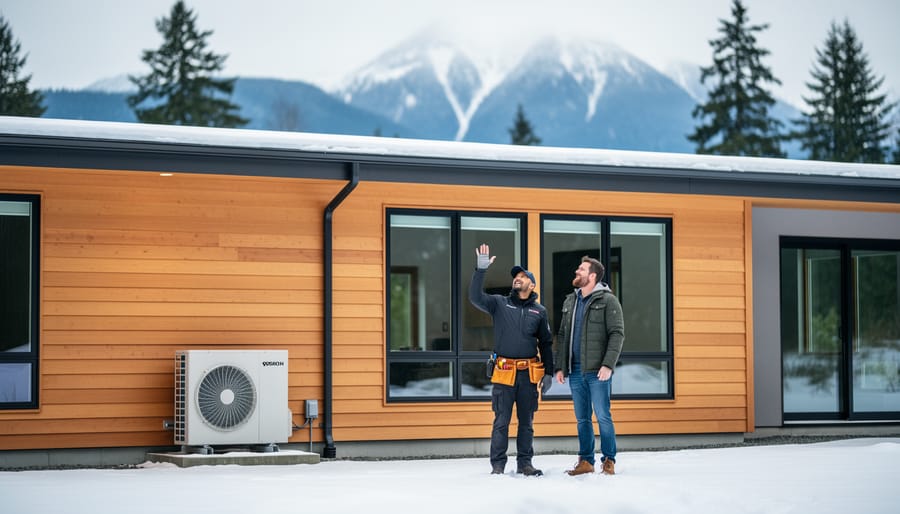
Calculate your home’s heating load by measuring total square footage, noting insulation quality, and counting windows and doors. This determines the BTU capacity your heat pump needs—too small means inefficient operation during cold snaps, while oversized units cycle frequently and waste energy.
Multiply your square footage by 25-30 BTUs per square foot as a baseline for BC homes built after 2000. Older homes with minimal insulation may require 35-40 BTUs per square foot. Factor in your ceiling height, local climate zone, and whether you’re replacing existing heating or supplementing it.
Account for BC’s coastal and interior temperature variations when selecting capacity. Homes in Vancouver need different sizing than properties in Prince George, where winter temperatures drop significantly lower. Most BC residents benefit from cold-climate heat pumps rated for efficient operation down to -25°C, ensuring consistent performance during winter months.
Use online sizing calculators as starting points, but verify results against your home’s specific characteristics. Input accurate insulation R-values, air leakage rates, and sun exposure to avoid the common mistake of relying solely on square footage. Many BC homeowners discover they can downsize from their original furnace capacity because modern heat pumps operate more efficiently than older systems.
Consider professional heat loss calculations for homes over 2,500 square feet or properties with unique features like vaulted ceilings, large glass walls, or poor insulation. Proper sizing directly impacts your eligibility for CleanBC rebates and determines your actual energy savings over the system’s 15-20 year lifespan.
Why Heat Pump Size Actually Matters in BC
Getting the right size heat pump isn’t just about comfort—it directly impacts your wallet, your home’s efficiency, and even your eligibility for provincial rebates. In BC’s diverse climate zones, from coastal Vancouver to the interior’s cold winters, the stakes are particularly high.
When a heat pump is oversized for your home, it cycles on and off too frequently. This short-cycling wastes energy and drives up your electricity bills. Sarah from Burnaby learned this the hard way when her contractor installed a unit 50% larger than needed. “Our bills were higher than with our old furnace,” she recalls. “Plus, some rooms felt clammy while others were too warm.” Oversized units also wear out faster due to constant stopping and starting, potentially cutting your equipment’s lifespan in half.
Undersized heat pumps create different problems. Take James in Kelowna, who chose a smaller unit to save on upfront costs. During cold snaps, his heat pump ran continuously but couldn’t maintain comfortable temperatures. “We had to run expensive backup electric heating all winter,” he says. “The savings we thought we’d get never materialized.” In BC’s interior regions, where temperatures regularly drop below -15°C, an undersized system simply can’t keep up.
Beyond comfort and costs, incorrect sizing can disqualify you from CleanBC rebates. The provincial program requires proper load calculations and appropriately sized equipment. Homeowners who skip this step often discover they’ve left thousands of dollars on the table.
The good news? These problems are entirely preventable. Using a proper sizing calculator that accounts for BC’s specific climate zones, your home’s insulation, and heating patterns ensures you get exactly what you need. The few hours spent on accurate sizing can save you decades of frustration and unnecessary expenses. BC homeowners who take this step report consistent comfort, lower energy bills, and peace of mind knowing their investment was sized right from the start.
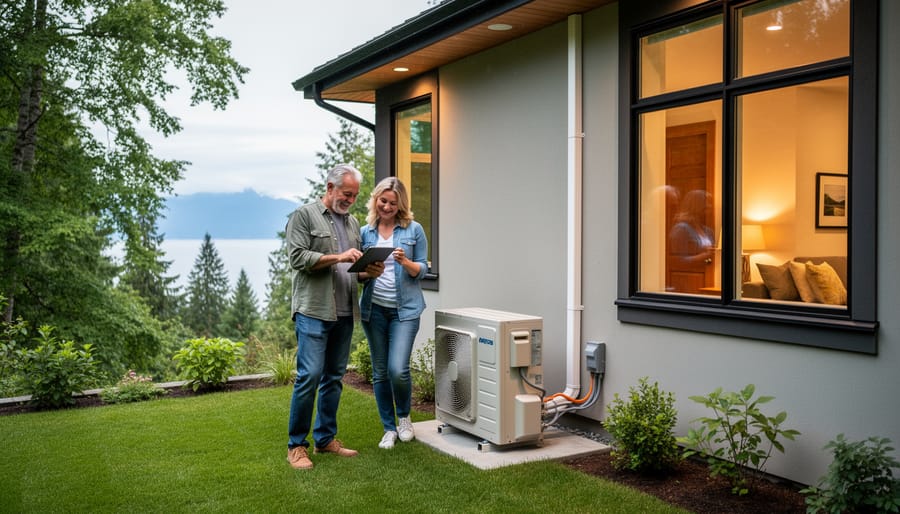
What Goes Into Sizing a Heat Pump for Your Home
Your Home’s Heat Loss Characteristics
Your home’s unique heat loss characteristics play a crucial role in determining the right heat pump size. Think of heat loss like a leaky bucket – the more gaps and thin spots, the harder your heating system works to maintain comfort.
Four key factors influence how quickly your BC home loses heat:
Insulation levels in your walls, attic, and floors act as your primary defense against heat loss. Many older BC homes, particularly character homes built before 1980, often have minimal insulation by today’s standards. Newer homes constructed after 2010 typically meet higher building code requirements and retain heat much more effectively.
Window quality makes a significant difference too. Single-pane windows common in heritage Vancouver homes allow substantial heat escape compared to modern double or triple-paned units with low-E coatings found in recent construction.
Air leakage through gaps around doors, windows, and electrical outlets can account for 25-40% of heat loss in older homes. Even if you can’t see these gaps, air constantly moves through them, carrying warmth outside during winter.
Home age serves as a general indicator combining these factors. A 1920s Kitsilano character home with original windows and uninsulated walls will have dramatically different heat loss than a 2015 Coquitlam townhouse built to modern energy codes.
Understanding your home’s heat loss profile helps the calculator recommend a properly sized heat pump – one that won’t struggle on cold days or waste energy by being oversized. This ensures maximum efficiency and comfort year-round.
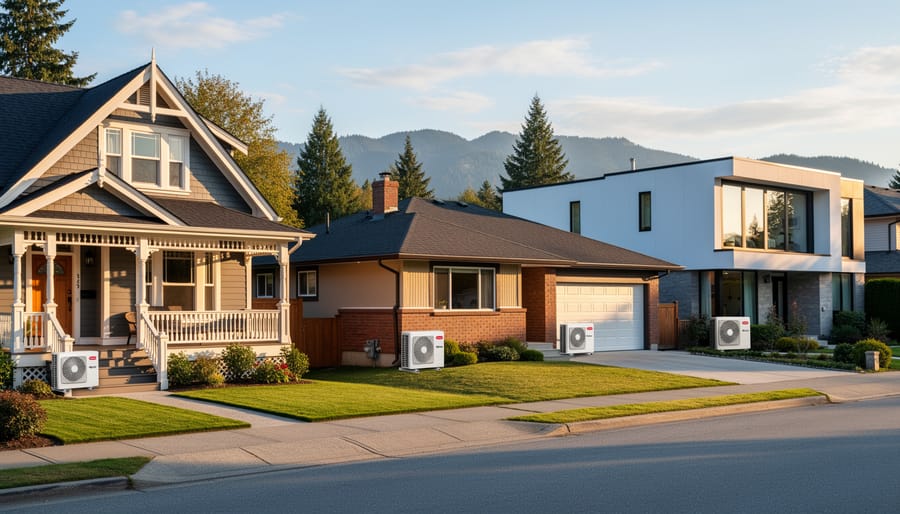
BC’s Climate Zones and Design Temperatures
British Columbia’s diverse climate means a heat pump that works perfectly in Victoria might struggle in Prince George. Understanding your region’s design temperature is the foundation of accurate heat pump sizing.
Design temperature refers to the coldest outdoor temperature your heating system needs to handle during a typical winter. This isn’t the absolute coldest day on record, but rather the temperature that’s exceeded about 99% of the time during heating season. Using this benchmark ensures your system keeps you comfortable without being unnecessarily oversized.
The Lower Mainland and coastal areas enjoy relatively mild winters, with design temperatures typically ranging from -5°C to -10°C. A homeowner in Vancouver might need a 2-ton heat pump for a 1,500 square foot home. That same home in the Interior, where design temperatures drop to -15°C to -25°C, would require a larger system or supplemental heating to maintain comfort.
Northern BC presents the biggest challenge, with design temperatures often reaching -30°C or colder. Prince George residents have successfully addressed this through dual-fuel systems, pairing efficient heat pumps with backup heating for extreme cold snaps.
When using a heat pump sizing calculator, always input your specific location rather than estimating. The difference between Kamloops (-22°C) and Kelowna (-18°C) significantly impacts sizing requirements. Many BC homeowners have discovered their existing systems were undersized simply because installers used generic assumptions instead of local climate data.
Getting your region’s design temperature right from the start means consistent comfort, lower energy bills, and a heat pump that performs as promised throughout our varied BC winters.
Your Current Heating System and Usage Patterns
Understanding your current heating system and usage patterns is essential for accurate heat pump sizing. The calculator takes into account what you’re currently spending on heating—whether that’s natural gas, electric baseboard, or oil—to establish a baseline for comparison. This helps determine not just the right size heat pump, but also your potential energy savings.
Your existing comfort issues provide valuable clues too. Do certain rooms stay cold while others overheat? Does your furnace run constantly on the coldest days? These patterns reveal whether your current system is undersized, oversized, or poorly distributed. A properly sized heat pump addresses these inefficiencies while reducing your carbon footprint.
The calculator also considers how you use your home. A family that keeps the thermostat at 22°C all winter has different needs than someone who prefers 18°C. Your daily routines, number of occupants, and any recent home improvements all factor into the recommendation.
For homes with older heating systems, you might discover that electrical panel upgrades are necessary before installing a heat pump, particularly if you’re considering a fully electric heating solution.
By inputting this information honestly, you’ll receive a personalized sizing recommendation that matches your actual needs—not a one-size-fits-all estimate. This precision ensures optimal comfort, maximum efficiency, and the best return on your investment in clean heating technology for your BC home.
How the Heat Pump Sizing and Savings Calculator Works
Getting started with our heat pump sizing calculator is straightforward, and having the right information on hand will help you receive the most accurate recommendations for your BC home.
Before you begin, gather a few key pieces of information. You’ll need your recent utility bills, preferably covering several months to show seasonal variations in energy use. These bills reveal your current heating costs and energy consumption patterns. Next, collect your home specifications: square footage, number of rooms, ceiling height, insulation type, and window quality. If you’ve had an energy audit done, keep those results handy. Finally, note details about your current heating system, including its age, fuel type (natural gas, oil, electric baseboard, or propane), and approximate annual maintenance costs.
Once you have this information ready, simply input it into our calculator. The tool walks you through each step with clear prompts. Start by entering your home’s basic dimensions and layout. Then add information about your current heating system and monthly energy costs. The calculator also asks about your home’s insulation quality and whether you have 200 amp service, which may be necessary for larger heat pump installations or if you’re planning future upgrades.
After you’ve entered your details, the calculator generates a personalized report tailored to British Columbia’s climate zones and energy landscape. Your results include specific equipment recommendations showing which heat pump capacity matches your home’s needs, whether that’s a ductless mini-split, ducted system, or hybrid setup. You’ll see estimated annual savings comparing your current heating costs to projected heat pump operating costs using BC Hydro’s residential rates.
The calculator also displays your potential payback period, factoring in both provincial and federal rebates available to BC residents. CleanBC offers rebates up to $6,000 for heat pump installations, and the federal government provides additional incentives through the Canada Greener Homes Grant. These substantial rebates significantly reduce your upfront investment and accelerate your return.
Your personalized report breaks down estimated installation costs, projected monthly savings throughout the year, and total energy reduction measured in kilowatt-hours. This transparency helps you make an informed decision about whether a heat pump makes financial sense for your household. You can adjust variables to explore different scenarios, such as improving insulation first or comparing equipment options, giving you complete control over planning your energy transition.
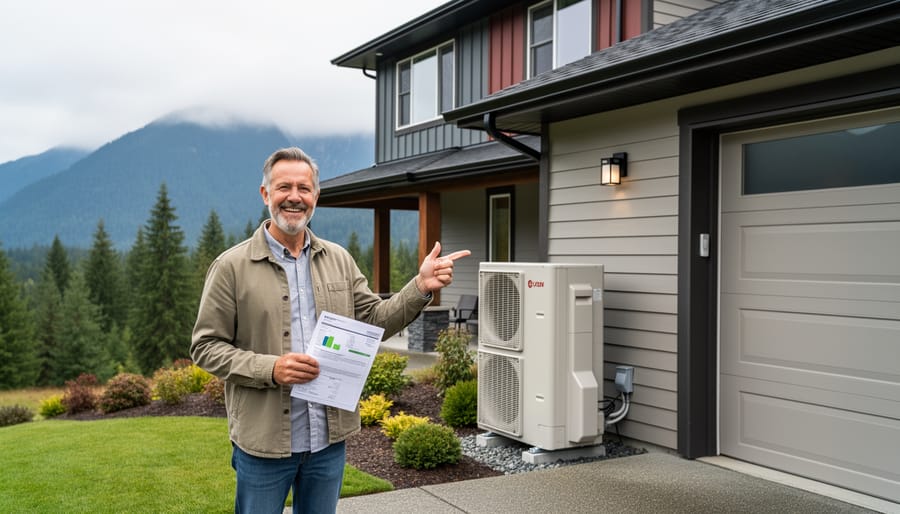
Real BC Families Who Got Their Sizing Right
When the Chen family in East Vancouver decided to replace their aging furnace in their 1964 split-level home, they were nervous about getting the sizing right. Their 1,800-square-foot home had decent insulation but original single-pane windows in some rooms. After using a heat pump sizing calculator and confirming with their installer, they opted for a properly sized 2-ton unit rather than the 3-ton system their neighbour recommended. The result? Their energy bills dropped by $145 per month compared to their old gas furnace, and every room maintains consistent temperatures year-round. “We were worried about cold spots in the bedrooms, but the right-sized unit actually keeps things more comfortable than our old system ever did,” says Michelle Chen. The family also qualified for BC Hydro rebates that covered nearly 40% of their installation costs.
Over in Kelowna, the Patels faced a different challenge with their 2015-built 2,400-square-foot home. Their builder had installed electric baseboard heating, and winter electricity bills were climbing above $350 monthly. A sizing calculator helped them understand that their well-insulated newer construction needed less heating capacity than they initially assumed. They installed a 2.5-ton heat pump system, and their first winter saw heating costs drop to around $180 per month, even during the cold snaps Kelowna experiences. “The calculator gave us confidence we weren’t over-buying,” explains Raj Patel. “Our installer confirmed the sizing, and we’ve had zero regrets.”
In Victoria, retired teacher Sandra Morrison replaced her electric baseboard system in her 1,100-square-foot bungalow. The sizing calculator indicated a smaller 1.5-ton unit would be sufficient for Victoria’s milder climate, despite some contractors suggesting she go bigger. Two years later, her annual heating costs have dropped from approximately $2,100 to just $800. “I was skeptical about going smaller, but understanding the math behind proper sizing made all the difference,” she notes. “My home stays at a perfect 21 degrees all winter, and I’m saving enough to take an extra vacation each year.”
What to Do After You Get Your Results
Now that you have your heat pump sizing results, you’re ready to take the next important steps toward making your home more energy-efficient. Your calculator results provide a solid foundation for conversations with installation professionals, but remember that these figures are preliminary estimates that should be verified by certified installers who can assess your specific situation.
Start by reaching out to at least three qualified heat pump installers in your area. Share your calculator results and ask them to conduct an on-site assessment. During these consultations, ask contractors about their Manual J calculations, how they account for your home’s insulation levels, and whether any improvements like upgrading your electrical panel might be necessary. Don’t hesitate to inquire about their certification through programs like the Heat Pump Ready program or their experience with BC’s climate conditions.
Compare the professional assessments with your calculator results. Minor differences are normal, but significant discrepancies deserve discussion. A good installer will explain their reasoning and help you understand factors the calculator couldn’t capture, such as unusual room layouts or specific architectural features.
Make sure to explore available financial incentives. BC Hydro offers rebates up to $6,000 for qualified heat pumps, while the CleanBC Income Qualified Program provides additional support for eligible households. Your installer should be familiar with these programs and can often help with paperwork.
Finally, verify that your chosen contractor is registered with BC Housing’s Heat Pump Ready program and carries proper licensing and insurance. This ensures quality installation and protects your investment. Taking these steps transforms your calculator results into real energy savings and improved home comfort.
Getting your heat pump sizing right isn’t just about comfort—it’s about maximizing your investment while reducing your environmental footprint. A properly sized heat pump can reduce your heating costs by up to 50% compared to traditional systems, while cutting your household carbon emissions significantly. For British Columbia homeowners committed to sustainability, this represents a meaningful step toward our collective climate goals.
The Heat Pump Sizing and Savings Calculator for BC takes the guesswork out of this important decision. In just a few minutes, you’ll receive personalized recommendations based on your home’s specific characteristics and local climate conditions. You’ll see potential savings, eligible rebates, and realistic payback timelines—all the information you need to move forward with confidence.
Ready to start your heat pump journey? Use the calculator today to discover your home’s ideal heat pump size and potential savings. Once you have your results, connect with certified local installers through Solar BC who understand our province’s unique climate and can bring your sustainable heating vision to life. Your more comfortable, cost-effective, and environmentally-friendly home is just one calculation away.