
Choosing the right solar energy contractor in British Columbia means finding a qualified professional who holds current HPCN (Home Performance Contractor Network) membership, understands BC’s rebate landscape, and has a proven track record with residential installations similar to yours. As of 2026, the provincial government requires HPCN certification for contractors to qualify homeowners for CleanBC rebates, making this credential non-negotiable if you want to access up to $5,000 in available incentives.
The stakes are higher than most homeowners realize. A poorly chosen contractor can leave you with underperforming panels, voided warranties, or rebate applications that get rejected months after installation. Meanwhile, BC’s solar market has grown rapidly over the past two years, bringing both exceptional installers and fly-by-night operators into the mix. The difference often comes down to asking the right questions before signing a contract.
This guide walks you through the essential criteria for evaluating solar contractors in BC, from verifying credentials and comparing installer types to recognizing red flags that signal trouble ahead. You’ll learn what separates a qualified residential installer from a commercial-focused contractor, how to read quotes accurately, and which mistakes cause the most regret among homeowners who’ve already gone solar.
The evaluation process takes about two to three weeks if you approach it systematically, requesting quotes from three to five contractors and checking references thoroughly. Most homeowners find that investing this time upfront saves them thousands in avoided problems and ensures their system performs as promised for the next 25 years.
What Makes a Qualified Solar Energy Contractor in BC
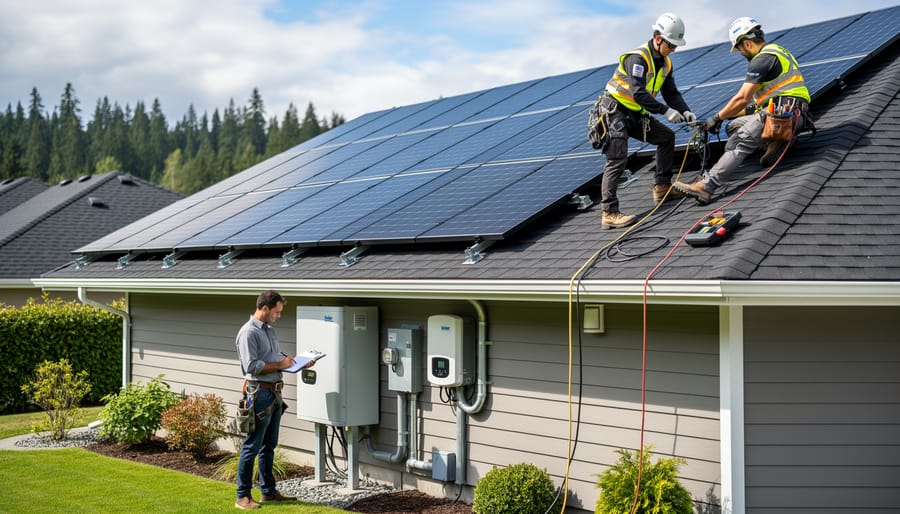
A qualified solar energy contractor in BC must meet several key requirements that protect homeowners and ensure professional installation standards. As of June 1, 2026, the most critical credential is membership in the Home Performance Contractor Network (HPCN), which has become mandatory for any installation to qualify for provincial rebates, up to $5,000 for solar panels and up to $5,000 for battery storage systems.
Before that date, BC didn’t impose solar-specific licensing requirements beyond standard electrical credentials, but the HPCN membership now serves as the industry benchmark. This requirement exists because rebate programs need to verify that contractors meet consistent standards for installation quality, safety compliance, and customer service. Without an HPCN-certified contractor, homeowners forfeit thousands in available rebates, regardless of how well the system performs.
Essential qualifications for BC solar contractors include:
- Current HPCN membership with verification number (mandatory for rebate eligibility starting June 1, 2026)
- Comprehensive liability insurance covering property damage and installation errors
- Bonding that protects homeowners if the contractor fails to complete the project
- Proof of technical certifications through recognized solar training programs
- Demonstrated experience with BC’s climate conditions and building codes
- Certificate of insurance showing coverage amounts adequate for residential projects
These credentials matter because solar installations involve complex electrical work, roof penetrations, and grid connections that can cause serious damage if done incorrectly. Insurance and bonding protect you financially if something goes wrong during installation or in the immediate aftermath. HPCN membership signals that the contractor has passed screening for technical competence and business practices, giving you recourse through the network if disputes arise.
When evaluating contractors, ask to see current proof of each credential, not just claims that they have them. HPCN membership can be verified through the network’s online directory, and insurance certificates should list you as an additional named insured for the project duration. Legitimate contractors provide this documentation without hesitation. Skipping this verification step is the fastest way to end up with either substandard work or a system that doesn’t qualify for the rebates you were counting on to make the numbers work.
Key Buying Factors When Evaluating Solar Contractors
Experience and Track Record in BC
A contractor’s experience navigating BC’s unique conditions, from coastal humidity to Interior temperature swings, directly affects your system’s performance and longevity. Start by asking how many residential installations they’ve completed in British Columbia specifically, not just their total project count. A contractor who routinely works with BC Building Code requirements and local utility interconnection processes will move your project through permitting faster and avoid costly installation errors.
Request references from homeowners in your region, ideally within the past two years. Contact at least three and ask specific questions: Did the system perform as promised through BC’s rainy winters? How quickly did the contractor respond to post-installation questions? Were local rebates processed correctly? These conversations reveal far more than generic online reviews.
Examine their portfolio for installations similar to yours in roof type, shading conditions, and system size. A contractor experienced with BC’s steep-pitched roofs and frequent rainfall should demonstrate proper flashing techniques and waterproofing standards specific to our climate. Ask to see photos of completed local projects, not stock images from their website.
Verify their understanding of current BC rebate requirements. Since June 1, 2026, contractors must hold HPCN membership for installations to qualify for the up to $5,000 grid-connected solar rebate and up to $5,000 battery storage rebate. A contractor unfamiliar with this requirement signals they’re not actively working in BC’s residential solar market, a significant red flag for homeowners planning to claim these incentives.
Warranties, Guarantees, and Post-Installation Support
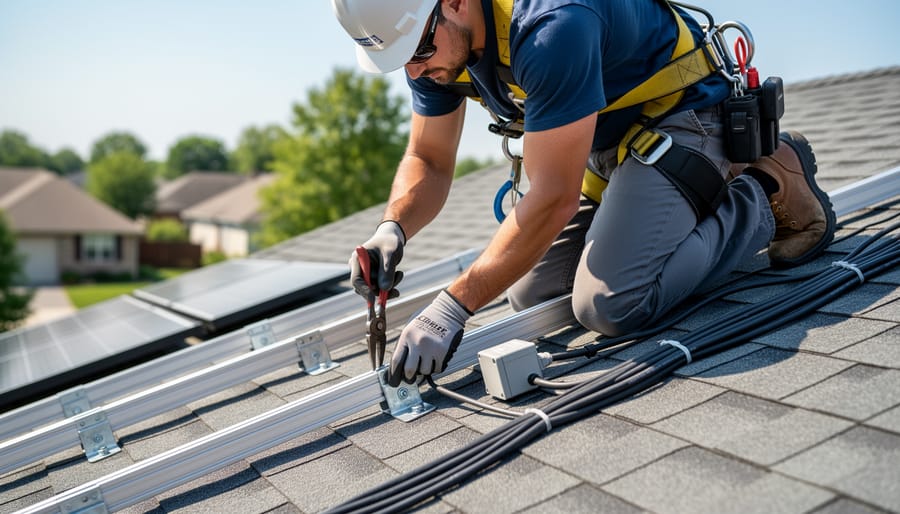
When evaluating solar energy contractors, understanding warranty coverage separates reputable installers from those cutting corners. You’ll encounter two distinct warranty types: equipment warranties covering solar panels and inverters (typically 20-25 years for panels, 10-15 years for inverters), and workmanship warranties protecting the installation itself.
Workmanship warranties vary dramatically between contractors, anywhere from two years to a lifetime guarantee. This coverage protects you if roof penetrations leak, mounting systems fail, or wiring issues emerge due to poor installation. Ask specifically what’s covered: does it include labour costs to diagnose and fix problems, or just materials? Will they address electrical panel readiness issues that surface post-installation?
Manufacturer equipment warranties only matter if your contractor will still be around to facilitate claims. A 25-year panel warranty means little if the installer vanishes in five years. Verify the contractor’s longevity, how long have they operated in BC? Do they maintain a local office?
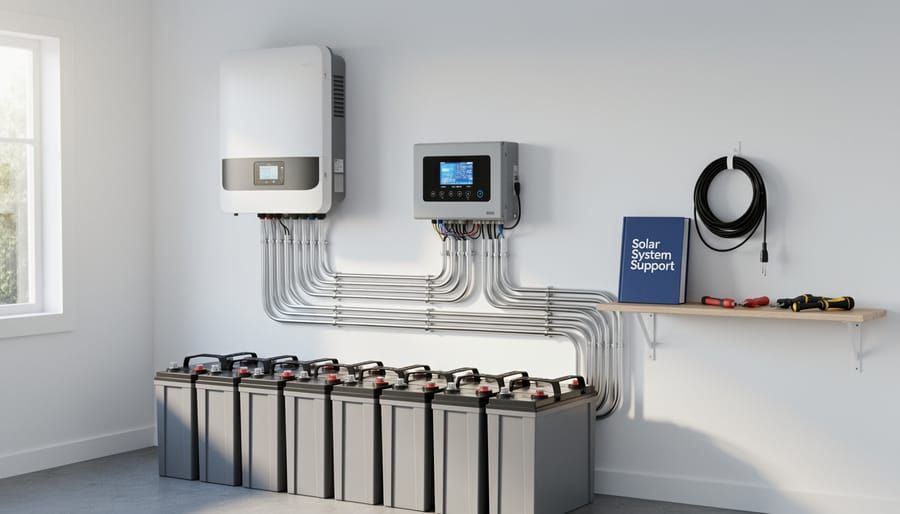
Post-installation support proves equally critical. Quality contractors offer ongoing maintenance packages, system monitoring assistance, and prompt responses when production drops unexpectedly. They should provide clear contacts for warranty claims and be transparent about response times. During your initial consultations, ask how they handle service calls after installation and whether they charge for routine maintenance visits. Contractors confident in their work typically offer comprehensive support without hesitation.
Installation Timeline and Project Management
Most BC homeowners can expect their solar installation to take between six and twelve weeks from contract signing to system activation, though timeline varies based on project size, roof complexity, and current contractor workload. A straightforward residential installation typically breaks down into three phases: permitting and design (two to four weeks), physical installation (one to three days for the actual work), and inspection plus grid connection (two to four weeks).
Permitting represents the longest variable in the timeline. A qualified contractor handles all documentation with BC Hydro, local building departments, and the Authority Having Jurisdiction, but approval times differ significantly across municipalities. Urban areas like Vancouver or Victoria may process permits within two weeks, while smaller communities can take a month or longer. Your contractor should provide a realistic estimate based on their experience with your specific municipality and outline exactly which permits they’ll manage.
Weather rarely disrupts BC installations between May and October, but winter projects face potential delays from snow, ice, or reduced daylight hours for roofing work. Strong contractors build buffer time into their schedules and communicate proactively when conditions push timelines back. Ask prospective contractors how they handle scheduling changes, what their current project backlog looks like, and whether they guarantee installation windows or work on a first-available basis. The contractor’s project management approach matters as much as their technical skills, since poor communication turns a straightforward eight-week process into months of frustration.
Types of Solar Energy Contractors Compared
BC’s solar contractor market includes several distinct types of companies, each with different strengths. Understanding these categories helps homeowners match their project needs with the right installer.
National Solar Companies
Large national firms operate across Canada with standardized processes and procurement power. They handle volume installations and can offer competitive pricing on equipment through bulk purchasing. These companies work well for straightforward residential installations where homeowners value brand recognition and established workflows.
Their scale brings buying power and proven systems, but BC-specific experience varies significantly between crews. Project coordination sometimes involves out-of-province teams less familiar with regional building codes or climate considerations like coastal salt exposure and snow load requirements for Fraser Valley installations.
Regional BC Specialists
Mid-sized contractors focused exclusively on British Columbia combine meaningful scale with local expertise. They understand BC’s climate zones, municipal permitting variations between Vancouver, Victoria, and Kelowna, and have established relationships with local inspectors.
These firms typically complete 50-200 installations annually, making them large enough for competitive pricing while maintaining hands-on project management. They’re particularly strong for homeowners wanting BC-specific experience without sacrificing the resources and warranties larger companies provide. Many have been operating in the province for a decade or more, giving them deep knowledge of how systems perform through BC winters.
Local Boutique Installers
Smaller local contractors, often owner-operated with two to ten employees, excel at personalized service and custom installations. They’re ideal for complex projects like heritage homes, properties with challenging roof angles, or off-grid systems requiring specialized design.
Response times and personal attention typically surpass larger competitors. The owner often manages your project directly and remains your long-term contact for maintenance. However, project timelines can extend if they’re balancing multiple installations, and equipment pricing may run slightly higher without bulk purchasing agreements.
| Contractor Type | Typical Project Size | Best For | Key Strengths | Considerations |
|---|---|---|---|---|
| National Companies | Standard residential (5-10 kW) | Straightforward installs, brand preference | Competitive pricing, established processes | Variable BC experience, less personalized service |
| Regional BC Specialists | Residential to small commercial | Most BC homeowners | Local expertise, balanced scale and service | Mid-range pricing |
| Local Boutique | Custom residential, complex projects | Unique properties, personalized attention | High-touch service, flexibility | Longer timelines, potentially higher costs |
| Integrated Energy Firms | Whole-home retrofits | Comprehensive energy upgrades | Coordinated upgrades, single contractor | Solar may not be primary specialty |
Integrated Energy Companies
Some contractors offer solar as part of broader home energy services including heat pumps, insulation upgrades, and whole-home energy audits. This approach works well for homeowners tackling comprehensive retrofits where solar integrates with other efficiency improvements.
The advantage is coordinated planning. A single company managing your heat pump installation, electrical panel upgrade, and solar system avoids the coordination headaches of multiple contractors. The trade-off is that solar might not be their core specialty compared to dedicated solar installers.
Regardless of contractor type, verify Home Performance Contractor Network membership before signing anything. Starting June 1, 2026, only HPCN members qualify you for BC’s solar rebates of up to $5,000 for panels and up to $5,000 for battery storage. A contractor’s size matters far less than their HPCN status and proven track record with installations similar to yours.
Understanding BC Solar Rebates and Contractor Eligibility
BC homeowners exploring solar installation in 2026 can access substantial financial support through provincial rebate programs, but accessing these BC solar rebates requires choosing a contractor who meets specific eligibility criteria. Understanding both the available incentives and the contractor requirements ensures you maximize your savings while protecting your investment.
The province currently offers three primary rebate pathways for residential solar projects:
- Up to $5,000 for grid-connected solar panel installations
- Up to $1,500 for battery storage systems paired with solar (as of April 1, 2026)
- Up to $5,000 for battery storage enrolled in the Peak Saver program, with or without solar
These rebates can combine when you install both solar panels and battery storage, potentially reducing your upfront costs by $10,000 or more. The Peak Saver program offers the highest battery rebate because it allows BC Hydro to manage your battery during peak demand periods, helping stabilize the grid while compensating you for participating.
Here’s the critical detail many homeowners miss: starting June 1, 2026, your solar or battery installation must be completed by a Home Performance Contractor Network (HPCN) member to qualify for any rebate. This isn’t a suggestion, it’s a hard requirement. If your contractor isn’t HPCN-certified when they complete the work, you won’t receive the rebate regardless of how perfect the installation is.
HPCN membership demonstrates that a contractor has met rigorous standards for experience, passed examinations, holds appropriate bonding and insurance, and maintains ongoing certification. Before signing any contract, ask your prospective contractor for their HPCN membership number and verify it directly with the network. Don’t accept vague promises that they’re “applying” or “getting certified soon.”
The documentation process for claiming rebates is straightforward when you work with an HPCN contractor. You’ll need invoices showing the equipment and installation costs, proof of HPCN membership for your contractor, and technical specifications for the panels or batteries installed. Your contractor should guide you through this paperwork, if they seem unfamiliar with the rebate documentation process, that’s a warning sign they may not be experienced with residential installations.
The June 1 implementation date means any project starting now should only use HPCN contractors. Even if you get quotes from non-HPCN installers who seem cheaper upfront, losing $5,000 to $10,000 in rebates makes them dramatically more expensive in reality.
Recommended Steps for Choosing Your Solar Contractor
Start by reviewing your solar installation blueprint to understand the full scope of your project. Before contacting any contractors, get a home energy audit to determine your household’s actual energy needs and optimal system size. This upfront work prevents contractors from overselling you on capacity you don’t need.
Gather at least three detailed quotes from HPCN-certified contractors. Two quotes leave you with a binary choice; three give you perspective on market rates and help identify outliers. Request written proposals that break down equipment costs, labor, permits, and timelines separately rather than just a lump sum. Watch for contractors who refuse to itemize or push for immediate decisions.
Ask each contractor specific questions about their BC experience: How many residential installations have they completed in your municipality? Can they provide references from homeowners in similar climate zones? What’s their typical timeline from contract signing to system activation? A contractor who’s vague about local permitting processes or can’t name recent BC projects raises red flags.
Verify HPCN membership directly rather than taking their word for it. Starting June 1, 2026, only installations by HPCN members qualify for the up to $5,000 grid-connected solar rebate and the additional battery storage rebates. A contractor who’s unfamiliar with these requirements or dismisses their importance will jeopardize your rebate eligibility.
Review contract details carefully before signing. The agreement should specify equipment brands and models, not just generic descriptions. It must outline warranty coverage separately for panels, inverters, and installation workmanship. Confirm who handles permit applications and utility interconnection paperwork. If the contractor requires a large upfront deposit beyond what’s needed for equipment ordering, that’s a warning sign.
Discuss solar financing options openly. Reputable contractors present multiple payment paths without steering you toward financing that benefits them most. They’ll explain how different payment structures affect rebate timing and won’t pressure you into loans with terms you haven’t fully reviewed.
Trust your gut on communication quality. Contractors who answer questions thoroughly, respond promptly, and explain technical details in plain language tend to deliver better customer service throughout the installation and beyond.
Common Mistakes to Avoid When Hiring Solar Contractors
Choosing based on the lowest bid without comparing qualifications is one of the most expensive mistakes BC homeowners make. A contractor who underbids competitors by thousands may be cutting corners on equipment quality, skipping necessary permits, or lacking proper insurance, any of which will cost you far more in the long run than the initial savings.
Skipping HPCN verification before signing a contract is equally costly. Starting June 1, 2026, your installation must be completed by a Home Performance Contractor Network member to qualify for the up to $5,000 rebate for grid-connected solar panels and the additional battery storage rebates. Don’t assume your contractor is certified, verify their current HPCN membership directly before making any commitments.
Many homeowners sign contracts without understanding warranty terms, then discover too late that their workmanship warranty only covers one year while their panels last 25. Read the fine print on what’s covered versus excluded, who handles warranty claims when equipment fails, and whether the contractor will still be around to honour those promises. Ask specifically about post-installation support for issues like inverter failures or unexpected production drops.
Failing to confirm rebate eligibility details before installation creates painful surprises. Some homeowners proceed with installations only to learn their specific system configuration doesn’t qualify, or that required documentation wasn’t collected during the work. Have your contractor walk you through the complete rebate application process before they start, including what paperwork you’ll receive and when you can expect to submit your claim.
Another common error is ignoring the end-of-life plan. Ask contractors how they handle system upgrades, component replacements, and eventual solar panel decommissioning. A contractor who can’t answer these questions clearly may not be planning for your long-term relationship with your solar system, leaving you to figure out the disposal or recycling process on your own decades down the road.
Frequently Asked Questions About BC Solar Contractors
How do I verify that a contractor is an HPCN member?
Ask the contractor directly for their HPCN membership number and confirmation. You can also contact the Home Performance Contractor Network to verify active membership status before signing any contracts, which is critical since only HPCN member installations qualify for rebates starting June 1, 2026.
When should I apply for BC solar rebates?
Most rebate applications happen after installation is complete and your system passes inspection. Your HPCN-certified contractor typically handles the paperwork as part of their service, but confirm this upfront so you understand your role in the process.
What’s a realistic timeline for solar installation in BC?
From signing a contract to system activation, expect 8-12 weeks on average. This includes permitting (2-4 weeks), installation itself (1-3 days for most residential systems), inspection, and utility connection approval, though timelines vary by municipality and contractor workload.
What happens if I have problems during or after installation?
Contact your contractor immediately if issues arise. Reputable contractors carry liability insurance and offer workmanship warranties that cover installation defects. For unresolved disputes, BC’s bonding requirements provide financial protection, and you can escalate to industry associations or consumer protection services.
Beyond these common questions, homeowners often wonder about combining multiple rebate programs. The good news: you can stack incentives. The up to $5,000 for grid-connected solar panels is separate from battery storage rebates, which now include up to $1,500 for batteries paired with solar or up to $5,000 for batteries enrolled in the Peak Saver program as of April 1, 2026. Your contractor should identify every rebate you qualify for and help you maximize the combined savings.
Another frequent concern involves what happens if your chosen contractor goes out of business mid-project or shortly after installation. This is why verifying proper bonding matters. BC bonding requirements protect homeowners financially if a contractor fails to complete work or fix defects covered under warranty. Check that your contract clearly states the bond amount and issuer.
Homeowners also ask whether they can change contractors partway through the selection process. Yes, you’re not obligated to any contractor until you sign a formal agreement. If you receive a quote but later find a better-qualified HPCN member, you’re free to switch. Just be professional about communicating your decision, and never pay deposits before you’re certain about your choice.
One practical question that surfaces often: can you hire separate contractors for solar panels versus battery storage? Technically yes, but it complicates warranty coverage and coordination. A single HPCN contractor handling both systems ensures integrated design, streamlined permitting, and clear responsibility if anything goes wrong. The slight cost savings from splitting the work rarely justify the added complexity and potential coverage gaps.

recommendations
After evaluating contractor options using the criteria outlined above, here are our recommended approaches for different homeowner situations:
Best for Rural and Remote Installations: Contractors with demonstrated experience in off-grid or hybrid systems and proven track records in areas with challenging access or weather conditions.
Best for Budget-Conscious Homeowners: Mid-sized regional installers who offer competitive pricing while maintaining HPCN certification, typically providing strong value on residential systems between 5-10 kW.
Best for Premium Service and Support: Established local contractors offering extended warranties beyond industry standards (25+ years on equipment, 10+ years on workmanship) and comprehensive maintenance packages.
Best for Quick Turnaround: Smaller boutique installers who can often schedule residential projects within 4-6 weeks and provide direct owner involvement throughout the process.
Regardless of contractor size, verify HPCN membership before signing any contract to ensure your installation qualifies for the up to $5,000 solar rebate and up to $5,000 battery storage rebate available to BC homeowners in 2026.
Choosing the right solar energy contractor isn’t just about finding the lowest quote, it’s about protecting your investment and ensuring you can access the significant rebate programs available to BC homeowners. With the new HPCN membership requirement in effect since June 1, 2026, selecting a certified contractor is now essential for maintaining eligibility for up to $5,000 in grid-connected solar panel rebates and an additional $5,000 for battery storage systems.
The selection criteria we’ve covered, verified HPCN certification, proven experience with BC installations, comprehensive warranties, transparent project timelines, and clear rebate processing procedures, form the foundation of a confident contractor choice. Each factor works together to minimize risk and maximize the long-term performance of your residential solar system. Skipping verification steps or choosing based on price alone can cost you thousands in lost rebates and potentially compromise installation quality.
Solar BC’s network of certified installers provides a vetted starting point for homeowners ready to move forward. These contractors understand BC’s climate challenges, local building codes, and the specific documentation required for rebate applications. They’re equipped to guide you through the entire process, from initial site assessment through final utility interconnection.
Take the next step by exploring qualified contractors in your area and using available solar savings calculators to understand your project’s potential return. The combination of dropping equipment costs, rising electricity rates, and substantial provincial rebates makes 2026 an opportune time to go solar, provided you choose a contractor who can deliver both quality installation and full rebate access. Your investment in careful contractor selection pays dividends for decades to come.