
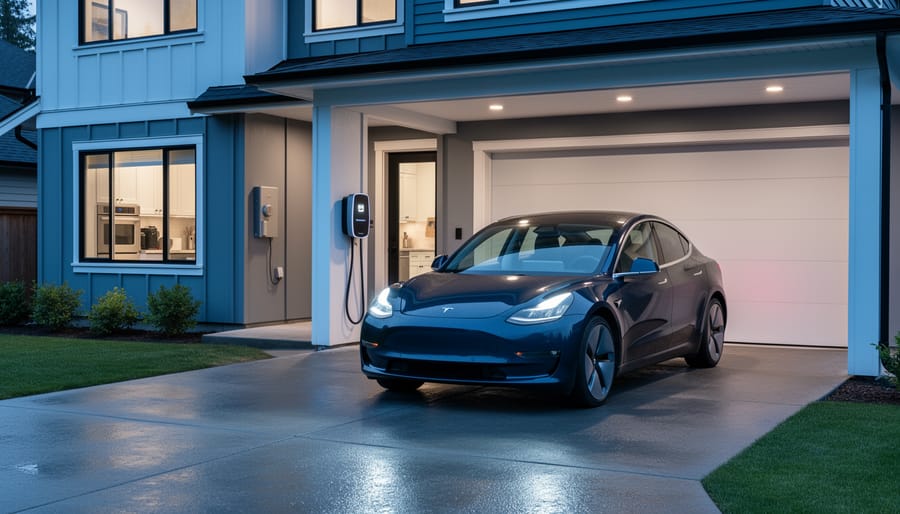
EV charging load management is a smart control system that prevents your home or business electrical panel from overloading when charging electric vehicles, automatically distributing available power without requiring expensive panel upgrades. Instead of installing a larger electrical service to accommodate a new EV charger, load management monitors your existing capacity and adjusts charging speed based on real-time demand from other appliances and systems.
For British Columbia homeowners and businesses adding EV infrastructure in 2026, this technology solves a common bottleneck: most electrical panels were sized for pre-EV consumption patterns. When you plug in an electric vehicle while running everyday appliances, you risk tripping breakers or exceeding your panel’s rated capacity. Load management systems communicate with your charger to throttle or pause charging when demand peaks, then resume at full speed when capacity becomes available.
This approach matters because upgrading an electrical panel to accommodate dedicated EV charging can require significant investment and permitting time. Load management offers an alternative path, letting you install charging infrastructure within your current electrical footprint. The technology has proven particularly valuable for strata properties, workplaces with multiple charging stations, and homes where understanding how much power a home uses reveals limited headroom for additional loads.
The following guide breaks down how load management works in practice, what BC residents should know when working with installers, and how to determine whether your property needs this solution.
What Is EV Charging Load Management?
EV charging load management is a technology that prevents your home’s electrical system from being overwhelmed when charging your vehicle. Think of it as a smart traffic controller for electricity: it monitors how much power your home is using at any given moment and adjusts your EV charger’s output to stay within safe limits.
When you plug in your EV, the charger doesn’t necessarily draw power at full speed all the time. A load management system watches your household’s total electrical consumption and automatically slows down charging when you’re running other high-demand appliances like your dryer, oven, or water heater. When those appliances shut off, the system allows your EV to charge faster again.
- Electrical Load
- The total amount of power your home draws from the electrical grid at any moment, measured across all active appliances and devices.
- Circuit Capacity
- The maximum amount of electrical current your home’s electrical panel and wiring can safely handle without tripping breakers or overheating.
- Static Load Management
- A basic system that sets a fixed charging limit based on your home’s available capacity, preventing the charger from exceeding that preset threshold.
- Dynamic Load Management
- An advanced system that continuously monitors real-time household consumption and adjusts EV charging speed up or down to optimize available capacity.
Static load management works like setting a speed limit: your charger never exceeds a predetermined power level, leaving a safety buffer for other household needs. This approach is simple and affordable but doesn’t adapt to changing conditions throughout the day.
Dynamic load management is more sophisticated. It actively measures your home’s power consumption in real-time and adjusts charging accordingly. If you’re using minimal electricity at midnight, your EV charges faster. When you start cooking dinner and running the dishwasher, the system automatically reduces charging speed to prevent overload.
Why BC Homeowners Need Load Management
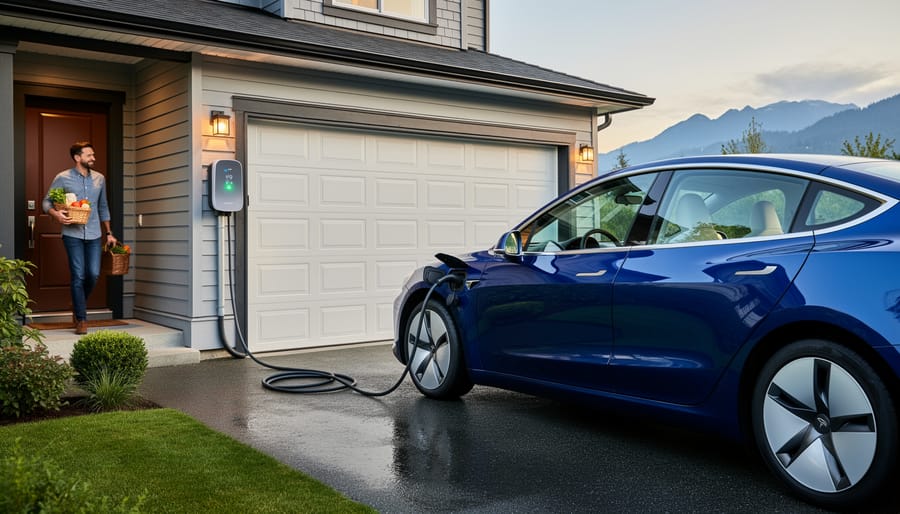
Avoiding Costly Electrical Panel Upgrades
When you install an EV charger, your electrician first assesses whether your existing electrical panel has enough capacity. Many BC homes, particularly those built before the 1990s, have 100-amp or 125-amp service panels that are already near their limit with everyday appliances and heating systems.
Load management systems let you add EV charging without necessarily upgrading to a larger panel. Instead of drawing maximum power continuously, the system monitors your home’s total electrical usage and adjusts the charging rate to stay within your panel’s capacity. Think of it as smart traffic control for your electrical system, everyone gets where they need to go, just not all at full speed simultaneously.
This approach works well when your panel has some available capacity but not quite enough for a dedicated high-power EV circuit. The charger operates at full speed when demand is low (typically overnight) and automatically throttles back when you’re running the dryer, oven, or other major appliances.
However, load management isn’t always the complete answer. If your panel is genuinely maxed out, outdated, or doesn’t meet current electrical codes, an upgrade may still be necessary for safety and long-term reliability. A certified electrician can assess your specific situation and recommend whether load management alone will suffice or if panel work is required.
Supporting Multiple EVs and High-Demand Appliances
Load management becomes especially valuable when you’re charging more than one EV or when your charging schedule overlaps with high-energy household activities. Modern systems continuously monitor your home’s electrical demand and adjust charging rates to prevent overloading your panel.
Consider a typical evening scenario: you arrive home and plug in your EV while running the oven for dinner, the dryer is finishing a load, and someone starts the dishwasher. Without load management, this combination could push your electrical system beyond its safe capacity. A load management system recognizes the increased demand and temporarily reduces charging speed to your EV, ensuring all your appliances run safely without tripping breakers or requiring manual intervention.
For households with two EVs, load management coordinates charging between vehicles automatically. The system might charge one vehicle fully before switching to the second, or it might split available capacity between both, depending on how you’ve configured your preferences and your overnight charging window.
This automated balancing not only protects your electrical system but also helps you reduce household energy use more strategically. Your vehicles still receive a full charge by morning, while your existing electrical infrastructure handles everything safely within its designed capacity.
How Load Management Systems Work
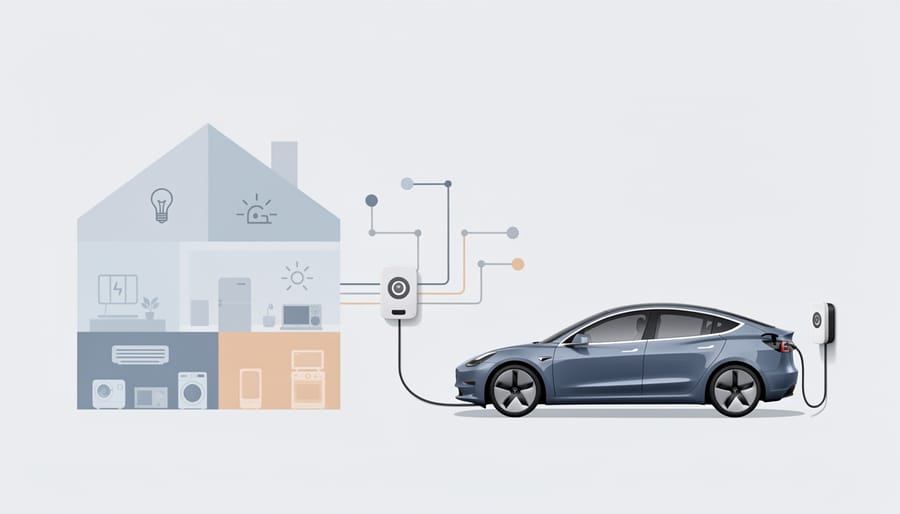
Think of a load management system as a smart traffic controller for your home’s electricity. Instead of letting every appliance and charger draw power at full speed all the time, the system actively monitors what’s happening and makes real-time adjustments to prevent overload.
Here’s how it works in practice. The load management system connects to your home’s electrical panel and continuously measures how much power your household is using at any given moment. It tracks the total draw from everything running simultaneously, your lights, heating, appliances, and your EV charger.
When you plug in your electric vehicle, the system calculates how much available capacity remains before you’d exceed your home’s electrical limit. Rather than letting the charger pull maximum power regardless of what else is running, dynamic load management controls adjust the charging rate to fit within the available headroom.
The system follows a simple priority hierarchy. Essential household functions come first. If you start cooking dinner or running the dryer while your EV is charging, the system automatically dials back the charging speed to accommodate those demands. Your car still charges, just at a slower rate temporarily.
Once those high-demand appliances finish their cycles and switch off, the system detects the freed-up capacity and allows the EV charger to ramp back up to a faster speed. This balancing act happens continuously throughout the charging session, all without any action required from you.
Most systems include a control interface, either through a dedicated panel or a smartphone app, where you can see current power usage and set preferences. You might choose to prioritize faster charging during certain hours or ensure the car is fully charged by morning regardless of how long it takes.
The entire process is automatic and seamless. You won’t notice the speed adjustments happening behind the scenes, you’ll just wake up to a fully charged vehicle without having stressed your electrical system overnight.
Types of Load Management Solutions
BC homeowners have several load management options to choose from, each suited to different household situations and budgets. Understanding these approaches helps you select the solution that best matches your electrical capacity, number of EVs, and lifestyle.
Basic Time-of-Use Scheduling
The simplest approach uses programmable timers built into many modern EV chargers. You set specific charging windows, typically overnight when household electricity demand is lowest, ensuring your charger doesn’t compete with appliances like your stove, dryer, or water heater during peak usage hours. This straightforward method works well if you have one EV and a relatively predictable daily routine.
Single-Charger Load Management
Mid-range systems integrate directly with your electrical panel through a current transformer that monitors real-time household usage. When overall demand rises, the charger automatically reduces its charging rate or pauses briefly, then ramps back up as other loads decrease. These systems handle the balancing act without requiring you to think about it, making them ideal for households with varying usage patterns or higher-capacity needs.
Multi-Device Dynamic Management
The most sophisticated approach coordinates multiple charging points and can prioritize between them. If you have two EVs and limited capacity, the system can charge one vehicle fully before moving to the second, or split available power between them based on your preferences. Some implementations also coordinate with home batteries or solar systems, optimizing when and how charging occurs.
| Approach | Best For | Key Considerations |
|---|---|---|
| Time-of-Use Scheduling | Single EV, predictable schedules, budget-conscious installations | Requires manual adjustment if routines change; no real-time adaptation |
| Single-Charger Management | One EV, variable household loads, desire for automatic operation | Monitors and responds to actual usage; works within existing panel capacity |
| Multi-Device Dynamic Management | Multiple EVs, complex energy systems, maximum flexibility | Higher upfront investment; requires compatible hardware across charging points |
When choosing your approach, consider how many EVs you plan to charge now and in the near future. A household expecting to add a second EV within a couple of years benefits from selecting a system that can scale up rather than replacing equipment later. Similarly, if you have solar panels or plan to add them, look for load management solutions that can integrate with renewable energy sources.
Your existing electrical service capacity matters too. Homes with more headroom in their panel can sometimes use simpler solutions, while those already near capacity benefit from more responsive systems. A certified installer can assess your specific situation and recommend the most appropriate approach for your home.
Real-World Example: Load Management in a Vancouver Home
When Sarah Chen purchased her 1970s-era home in East Vancouver in 2025, she knew adding an EV charger would be challenging. Her 100-amp electrical panel already powered a typical household load, and her electrician initially suggested a full panel upgrade to accommodate Level 2 charging.
Instead, Sarah opted for a load management solution. Working with a certified installer, she had a smart load management system installed that monitors her home’s electrical usage in real-time. The system automatically adjusts her EV’s charging speed based on what else is running in the house.
The implementation proved straightforward. Her installer assessed her existing electrical capacity, confirmed her panel could safely support load-managed charging, and integrated the system with her Level 2 charger. The entire process took less than a day.
Sarah charges her vehicle overnight when household demand is lowest, and the system occasionally reduces charging speed during peak usage times. She hasn’t noticed any practical impact on her daily routine, her car is fully charged each morning for her commute.
What impressed Sarah most was the flexibility. When her family adds a second EV, the same load management system can coordinate charging between both vehicles without additional electrical work. Her experience demonstrates how load management transforms a potential obstacle into a workable solution, particularly in BC’s aging housing stock where many homes face similar capacity constraints.
Safety Considerations and Maintenance
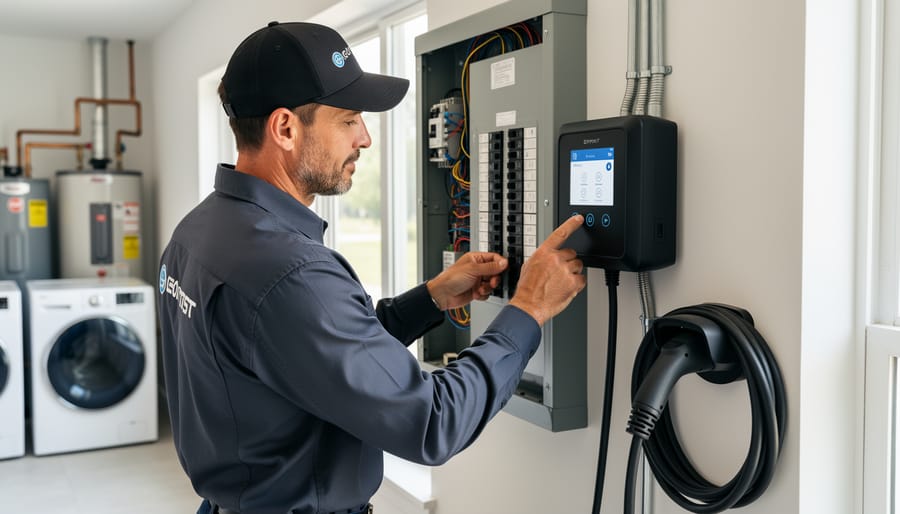
Safety must come first with any electrical system modification, and EV charging load management is no exception. While these systems are designed with multiple safeguards, proper installation and regular maintenance are essential to protect your home and family.
Only work with qualified EV charger installers who hold current BC electrical certifications. A certified electrician will verify that your existing panel can safely support load management, ensure all connections meet BC Electrical Code requirements, and properly configure the system to prevent overload conditions. They’ll also confirm that the load management device communicates correctly with your charger and responds appropriately when your household demand changes.
The installation should include proper grounding, appropriate circuit protection, and secure mounting of all equipment. Your installer should test the system under various load conditions before considering the job complete, demonstrating how it behaves when major appliances run alongside your EV charger.
Ongoing maintenance is straightforward but important. Check monthly that your load management system’s indicator lights or display show normal operation. Watch for any unusual behaviour like inconsistent charging speeds unrelated to your household usage patterns, error messages, or the system failing to respond when other large loads start.
Schedule an annual inspection by a certified electrician to verify all connections remain tight, check for any signs of overheating, and confirm the system firmware is current. Many modern systems log their operation history, which your technician can review to catch potential issues before they become problems.
If you’ve integrated power outage backup systems with your load management setup, ensure your electrician understands how these systems interact during grid failures and normal operation.
Questions to Ask Your Installer
Before choosing a load management system, you’ll want to ensure your installer can address your specific household needs and future plans. Start by asking about compatibility with your existing electrical panel and whether they’ve worked with similar setups in BC homes. Understanding how the system will integrate with your current infrastructure helps avoid surprises during installation.
Ask your installer to explain how the load management system monitors and distributes power throughout your home. Will you be able to track energy usage in real-time through an app or display? Understanding the monitoring capabilities helps you make informed decisions about electrical capacity planning and daily charging schedules.
Will the load management system work with my current electrical panel?
Most modern load management systems can integrate with standard residential panels, but your installer should verify compatibility during the initial assessment. Older panels or certain configurations may require modifications before installation.
Can I monitor how the system manages power in real-time?
Many systems offer smartphone apps or web dashboards that show current energy distribution, charging status, and historical usage patterns. Ask your installer which monitoring features come standard and whether any require additional subscriptions.
What happens if I add a second EV or solar panels later?
Quality load management systems should accommodate future expansion, but it’s worth confirming upfront. Your installer can explain whether the system supports multiple chargers and integrates with renewable energy sources.
Discuss future expandability as well. If you’re considering adding solar panels, battery storage, or a second EV charger down the line, confirm the system can scale to meet those needs. A well-designed load management solution should grow with your household rather than requiring replacement when your energy needs change.
Finally, clarify what ongoing maintenance the system requires and what warranty coverage protects your investment. Understanding these details upfront ensures you’re prepared for the full lifecycle of your load management system.
EV charging load management represents a practical solution for BC homeowners who want to add electric vehicle charging without overhauling their electrical systems. By intelligently distributing power across your home’s existing capacity, these systems let you charge your EV safely while your household continues to operate normally.
The technology works quietly in the background, adjusting charging speeds based on real-time demand and protecting your electrical panel from overload. For many BC homes, especially older properties with limited electrical capacity, load management opens the door to EV ownership without the complexity and expense of major electrical upgrades.
The key to success lies in working with certified installers who understand both the technology and your home’s specific requirements. They can assess your current electrical setup, recommend appropriate solutions, and ensure everything is installed safely and complies with BC electrical codes.
Ready to explore your options? Solar BC’s network of certified installers can evaluate your home and recommend the right load management approach for your needs. Taking this step now sets you up for years of reliable, safe EV charging while protecting your home’s electrical infrastructure.