
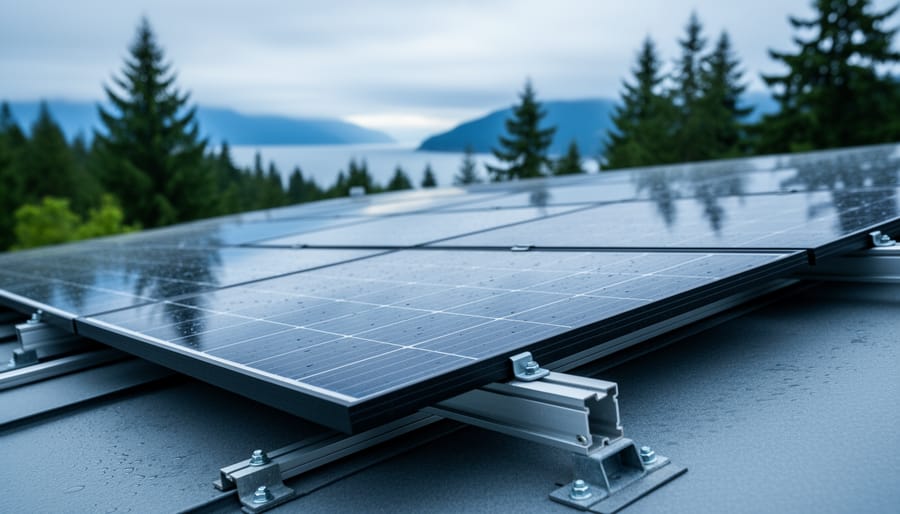
A solar panel’s journey spans roughly 25 to 30 years, moving through five distinct phases: manufacturing (where raw materials become photovoltaic cells), installation (when panels are mounted and connected), operation (the productive years of energy generation), performance degradation (gradual efficiency decline), and end-of-life management (decommissioning and recycling). Understanding this complete lifecycle helps British Columbia homeowners and businesses make informed decisions about solar investments, plan for long-term performance, and prepare for responsible disposal.
Most solar panels lose efficiency at a predictable rate over time. During the operational phase, panels typically experience a small decrease in output each year, meaning a system installed today will still generate substantial electricity two or three decades later. This degradation pattern influences when you might consider replacement and affects the total energy a system will produce over its lifespan.
The lifecycle doesn’t end when panels stop performing efficiently. Modern recycling processes can recover valuable materials from decommissioned panels, including silicon, glass, aluminum, and copper. In British Columbia, where environmental stewardship matters to communities, understanding the full lifecycle ensures you’re prepared for each stage, from selecting quality panels that will endure our climate to arranging proper recycling when the time comes.
This guide walks through each lifecycle stage in practical terms, explains what happens as panels age, outlines your responsibilities as an owner, and provides resources for end-of-life management in BC. Whether you’re considering solar for the first time or managing an existing system, knowing what to expect across the decades helps you maximize your investment and minimize environmental impact.
What Solar Panel Lifecycle Stages Are
A solar panel’s lifecycle unfolds through five distinct stages, each playing a role in the system’s overall performance and environmental footprint. Understanding these stages helps BC residents and businesses set realistic expectations and plan for the long-term management of their solar investment.
The first stage, manufacturing, transforms raw materials like silicon, glass, and aluminum into finished photovoltaic modules. This happens primarily in specialized factories, where cells are assembled, tested, and sealed into weatherproof frames. The manufacturing process is energy-intensive and creates the panel’s initial carbon footprint.
Transportation follows, moving panels from manufacturing facilities to distribution centers and ultimately to installation sites across BC. Panels typically travel by container ship and truck, with logistics varying based on whether they’re manufactured domestically or overseas. For BC installations, this often means cross-Pacific shipping followed by regional trucking.
Installation marks the transition from product to power generator. Certified installers mount panels on roofs or ground-mount structures, connect them to inverters, and integrate the system with BC’s electrical grid or off-grid battery storage. Proper installation sets the foundation for decades of reliable performance.
The operation and maintenance stage spans the longest period, typically 25 to 30 years or more. During this time, panels generate electricity with gradually declining efficiency while requiring minimal intervention. Routine maintenance includes occasional cleaning, monitoring output, and addressing any equipment issues. Most manufacturers back this stage with performance warranties.
End-of-life arrives when panels no longer produce sufficient energy to justify continued operation. Decommissioning involves safely disconnecting the system and removing panels from their mounts. The final step, recycling, recovers valuable materials like silicon, glass, and metals for reuse in new products, closing the lifecycle loop and reducing waste headed to landfills.
Manufacturing and Early Carbon Footprint
Solar panels begin their journey in specialized manufacturing facilities that produce photovoltaic cells from raw materials. The process starts with purifying silicon, one of the most abundant elements on Earth, into the ultra-refined crystalline silicon needed for solar cells. This purification requires significant energy, heating materials to extremely high temperatures. Manufacturers then slice the refined silicon into thin wafers, coat them with conductive materials, and assemble them into the familiar blue or black panels with protective glass and aluminum frames.
Most solar panel manufacturing happens in Asia, with substantial production also occurring in North America and Europe. The concentration of manufacturing in specific regions reflects both the availability of technical expertise and proximity to raw material processing facilities. For BC installations, panels typically travel across the Pacific Ocean before reaching Canadian distribution centres.
Manufacturing represents the most energy-intensive phase of a solar panel’s existence. Creating the panels requires electricity for the purification processes, material extraction, and assembly lines. When this electricity comes from fossil fuel sources in the manufacturing region, it creates carbon emissions that become part of the panel’s lifecycle carbon footprint.
This early carbon debt becomes the baseline for lifecycle carbon accounting. The emissions embedded in a new solar panel must be offset by the clean energy it produces over its working life. For BC buyers, understanding that your panels arrive with this initial carbon cost helps explain why lifecycle analysis matters. The panel doesn’t start delivering net climate benefits from day one, it first needs to generate enough clean electricity to balance the carbon released during its creation. Where and how your specific panels were manufactured influences how long this takes, though most panels installed in BC will offset their manufacturing emissions within their first several years of operation.
Transportation and Installation in BC
Most solar panels installed in BC are manufactured in Asia or North America, then shipped by container to West Coast ports, typically Vancouver or Seattle, before being trucked to distribution centres or directly to project sites. The transportation carbon footprint varies depending on origin and final destination, but represents a small fraction of total lifecycle emissions compared to manufacturing.
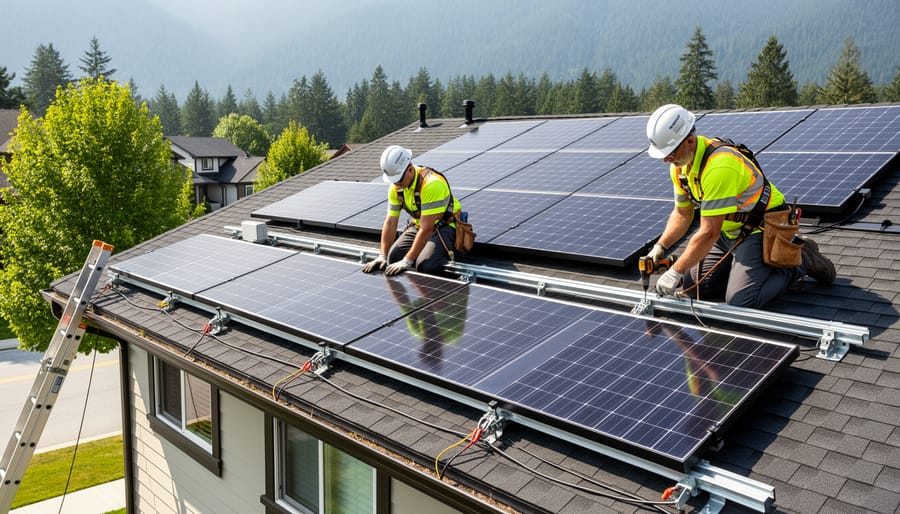
Once panels arrive in BC, certified installers handle the site assessment, permitting, and physical installation. The process typically begins with a roof inspection to verify structural capacity, followed by securing municipal permits and utility interconnection approvals. Installation itself usually takes one to three days for residential systems, though timelines stretch longer for commercial projects.
BC’s certified installer network ensures work meets electrical and building codes. While it’s technically possible to install solar panels yourself most homeowners hire professionals who handle permitting, grid connection paperwork, and warranty compliance. Licensed electricians connect the system to your home’s electrical panel and coordinate final inspection with BC Safety Authority.
Transportation logistics matter most for remote or island communities, where delivery costs and timelines increase. Installers in these regions often consolidate shipments to reduce trips and emissions, though this can extend project schedules by several weeks compared to urban installations.
Operational Performance Over Time
Understanding Panel Degradation
Solar panels lose a small fraction of their efficiency each year through a process called degradation. This happens because ultraviolet light, temperature cycling, and humidity gradually break down the panel’s materials, specifically the silicon cells and protective layers. Most modern panels degrade at roughly 0.5% per year, meaning a panel producing 100% of its rated capacity today might produce around 87-90% after 25 years.
In practical terms, if your 10-kilowatt system generates 12,000 kilowatt-hours in year one, you can expect around 10,400-10,800 kilowatt-hours in year 25. That’s still substantial output. BC’s moderate climate actually helps: extreme heat accelerates degradation faster than our typical temperatures do.
Degradation affects your performance ratio the real-world output compared to ideal conditions. Regular monitoring helps you spot unusual drops that signal problems rather than normal aging. Even with steady degradation, panels continue producing useful energy well past their 25-year warranties, and cloudy day performance remains proportional to the panel’s current efficiency level.
When Replacement Becomes Necessary
Solar panels rarely fail suddenly, but they do signal when replacement time is approaching. Most systems cross a practical threshold around the 25 to 30-year mark, though some continue producing useful power beyond that timeframe.
Watch for consistent output below 80 percent of the original rated capacity. If your monitoring shows year-over-year drops that exceed the typical 0.5 to 0.8 percent annual degradation, something more serious may be happening, either panel deterioration or component failure. Physical damage matters too: visible cracks, delamination, discoloration, or moisture intrusion inside the glass all shorten remaining service life.
Compare your current production against your original panel specs and the installer’s early performance data. If panels are producing significantly less than warranty guarantees (most promise at least 80 to 85 percent output after 25 years), you have grounds to claim warranty coverage or plan replacement.
BC system owners should factor in upcoming inverter replacements when considering panel replacement. If your inverter needs replacing around year 12 to 15 and your panels are already underperforming, replacing both together often makes more financial sense than staggered upgrades. Newer panels deliver better efficiency, so waiting for the right replacement window can maximize long-term value.
End-of-Life: Decommissioning and Recycling
Who Is Responsible for Panel Disposal in BC
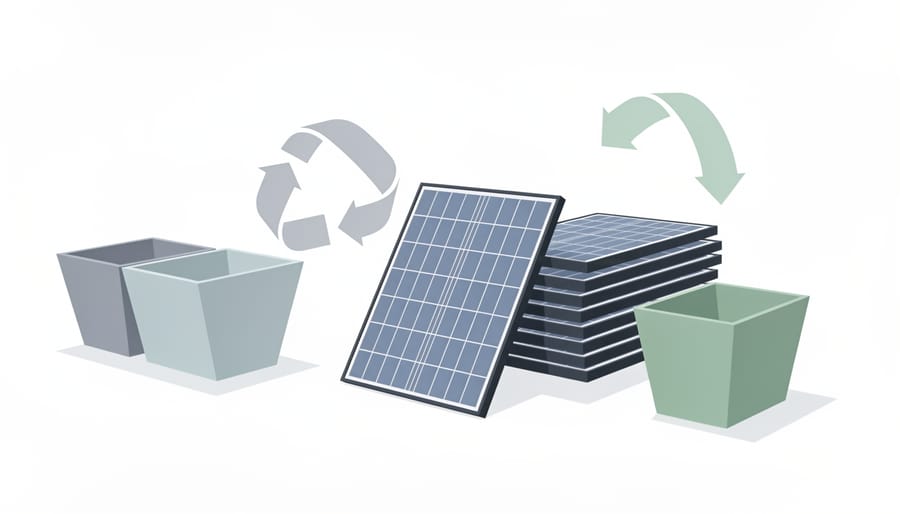
In BC, responsibility for solar panel disposal falls squarely on the system owner, whether residential homeowner or commercial property manager. Unlike some provinces with established extended producer responsibility (EPR) programs for electronics, BC does not yet have a dedicated provincial recycling scheme specifically for solar panels. This means you cannot simply drop old panels at a municipal recycling depot expecting them to be handled automatically.
For residential systems, homeowners who installed panels on their roof or ground mount lasts through the system’s lifetime are responsible for arranging proper disposal when panels reach end-of-life. If you sell your property before panels are decommissioned, this responsibility typically transfers to the new owner unless your purchase agreement specifies otherwise.
Commercial and industrial system owners face the same obligation but on a larger scale. Businesses must factor disposal costs and logistics into their solar investment planning, particularly for utility-scale installations with hundreds or thousands of panels that will eventually need recycling.
Federal regulations under the Canadian Environmental Protection Act classify solar panels as electronic waste, prohibiting landfill disposal in most jurisdictions. BC’s Hazardous Waste Regulation may apply since some older panels contain small amounts of lead or cadmium. However, enforcement and infrastructure for proper solar panel recycling remain underdeveloped compared to battery or appliance programs, leaving owners to proactively find certified recyclers rather than following a standardized provincial process.
How to Arrange Solar Panel Recycling
When your solar panels reach the end of their productive life in BC, arranging proper disposal takes a few straightforward steps. Start by contacting your original installer, many certified installers handle decommissioning and can connect you with recycling solar panels programs or take back old equipment. If your installer isn’t available, the Electronic Products Recycling Association (EPRA) operates a province-wide program that accepts solar panels at participating depots across BC.
Before scheduling removal, document your system’s specifications: panel make and model, quantity, installation date, and any performance records. This information helps recyclers process the materials efficiently. For residential systems, you’ll typically arrange a pickup date with the recycling provider, who will disconnect and remove the panels safely. Commercial-scale systems may require a licensed electrician to handle disconnection before the recycling crew arrives.
Most BC recycling depots don’t charge homeowners for dropping off solar panels, though commercial quantities may incur fees. Turnaround time from initial contact to removal usually spans two to four weeks, depending on your location and the recycler’s schedule. Keep copies of the recycling certificate or receipt, some BC municipalities require proof of proper disposal when closing permits, and documentation may be necessary for warranty claims or property transactions.
Contact Solar BC’s member directory if you need help locating certified decommissioning services in your region.
Your Rights and Responsibilities as a BC Solar Panel Owner
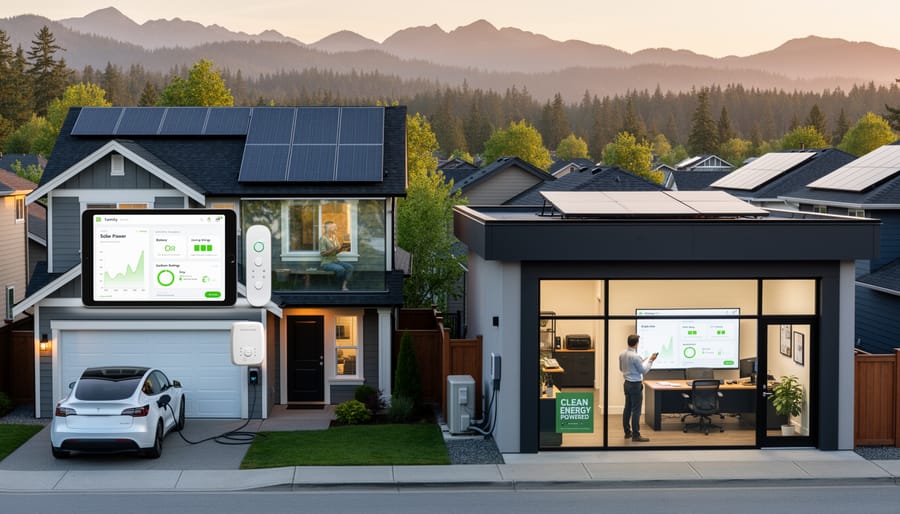
When you install solar panels in BC, you gain both rights and responsibilities that span the entire lifecycle of your system. Understanding these helps you protect your investment and stay compliant with local regulations.
Your primary rights as a solar panel owner center on warranty protection. Most solar panels come with two separate warranties: a 25-year performance warranty guaranteeing that panels will maintain a minimum efficiency level (typically around 80-85% of original output by year 25), and a product warranty covering defects in materials and workmanship for 10-25 years depending on the manufacturer. You also have the right to connect your system to BC Hydro’s grid under net metering agreements, allowing you to receive credits for excess electricity your panels generate.
On the responsibility side, you must maintain your system to ensure safe operation throughout its lifecycle. This includes keeping panels reasonably clean, monitoring for damage after severe weather, and ensuring inverters and electrical connections remain in good condition. You’re required to use certified electricians for any repairs or modifications, and your system must meet BC electrical and building codes at all times.
When panels reach end-of-life, disposal responsibilities fall on you as the system owner. BC currently has no mandatory solar panel recycling program, but you cannot simply discard panels as regular waste due to the materials they contain. You must arrange for proper recycling or disposal through authorized facilities, which may involve transportation costs and processing fees. For commercial installations, additional documentation and compliance requirements may apply depending on system size and location.
Lifecycle Carbon Accounting for BC Installations
Lifecycle carbon accounting measures the total greenhouse gas emissions associated with your solar installation across every stage, from the mining of raw materials and panel manufacturing, through transportation and installation, to decades of operation and eventual recycling. For BC installations, this framework provides a complete picture of climate impact rather than looking at only one phase.
The accounting process tracks embodied carbon (emissions “locked in” during manufacturing and installation) and operational carbon (ongoing emissions or savings during use). Manufacturing panels requires significant energy, particularly for refining silicon and assembling components. Transportation adds emissions based on distance and shipping method. Installation generates modest emissions from equipment use and mounting system production. During operation, solar panels generate electricity with no direct emissions, offsetting grid power that would otherwise come from BC’s electricity mix. End-of-life accounting includes decommissioning and recycling, where recovered materials can reduce future manufacturing emissions.
Carbon payback represents the point when your solar system’s clean electricity generation has offset the emissions created during manufacturing and installation. This calculation compares the embodied carbon against avoided emissions from displacing grid electricity. In BC, the equation differs from many regions because our grid already relies heavily on hydroelectric power, which produces relatively low emissions compared to fossil-fuel grids. This means BC solar installations may take longer to achieve carbon payback than systems in coal- or gas-heavy jurisdictions, though they still deliver net carbon savings over their operational lifetime.
How long does carbon payback typically take for BC solar installations?
Payback periods vary based on panel type, manufacturing location, system size, and BC’s relatively clean grid mix, but solar systems do achieve carbon neutrality during their operational life. The timeline depends on how much fossil-fuel electricity your system displaces.
Do solar panels save carbon in BC despite our clean hydroelectric grid?
Yes. While BC’s grid is cleaner than most, solar installations still offset emissions from natural gas generation, reduce strain during peak demand periods, and contribute to provincial climate targets by expanding renewable capacity.
What factors affect lifecycle carbon accounting for my installation?
Manufacturing location and methods, transportation distance, panel efficiency, system size, local climate conditions affecting energy production, and end-of-life recycling rates all influence total lifecycle emissions.
Understanding lifecycle carbon accounting helps you evaluate solar investments within BC’s climate context. While our province benefits from abundant hydropower, adding solar capacity supports CleanBC goals, reduces reliance on imported electricity during peak periods, and builds grid resilience. The framework also guides purchasing decisions, panels manufactured with renewable energy or locally-sourced materials carry lower embodied carbon, improving overall lifecycle performance.
Where to Get Help with Solar Panel Lifecycle Questions in BC
When you have questions about any stage of your solar panels’ life, BC offers several dedicated support channels to help you find answers and take action.
For installation planning and certified installer connections, the Solar BC network () maintains a directory of accredited professionals who can guide you through system design, installation requirements, and long-term performance expectations. BC Hydro’s Power Smart programs () provide resources on residential and commercial solar integration, including net metering requirements and grid connection processes.
For warranty claims, performance monitoring questions, or technical issues with your existing system, contact your panel manufacturer directly, most major brands maintain dedicated customer service lines and online portals for registered systems. Your original installer should also remain your first point of contact for performance concerns during warranty periods, as they often handle manufacturer liaison and troubleshooting.
When panels approach end-of-life, BC’s regulated recycling landscape is evolving. Check the Recycle BC website () for current solar panel disposal guidance, and contact the Canadian Solar Industries Association () for updates on provincial stewardship programs. Some municipalities now offer hazardous waste collection events that accept solar panels, though specialized electronic recyclers provide more comprehensive service.
- Solar BC (), installer directory and installation guidance
- BC Hydro Power Smart, net metering and grid connection support
- Panel manufacturers, warranty claims and technical support
- Canadian Solar Industries Association, industry standards and recycling program updates
- Recycle BC, disposal and recycling guidance for electronic waste
- Municipal sustainability offices, local rebates and decommissioning assistance
The BC Sustainable Energy Association () offers educational resources on system maintenance, performance optimization, and lifecycle planning. Municipal sustainability offices throughout BC can also connect you with local solar cooperatives, community energy programs, and region-specific incentives that support responsible solar ownership from installation through retirement.
Who Qualifies and What You Need
Understanding solar panel lifecycle in BC isn’t restricted to specific property types or customer categories. Any BC resident or business that owns or is considering a solar installation should grasp these lifecycle stages, whether you’re installing a 3-kilowatt residential system or a multi-megawatt commercial array.
For new installations, you’ll need a certified installer registered with BC Safety Authority to ensure proper setup and compliance with electrical codes. Existing system owners should have their original installation documentation, warranty papers from the manufacturer and installer, and performance monitoring records if available, these documents help track degradation over time and support warranty claims if panels underperform.
When planning for end-of-life disposal, commercial property owners with systems over a certain size may face different regulatory requirements than residential owners, though specific BC regulations for solar panel recycling are still evolving. Keep purchase receipts, installation permits, and any inspection reports; these prove ownership and system specifications, which recyclers will need to properly handle your panels when they reach retirement age.
No income thresholds or property qualifications restrict who can arrange panel recycling. The key requirement is demonstrating you’re the legitimate system owner and following proper decommissioning procedures through certified professionals rather than attempting DIY removal of grid-connected equipment.
How to Apply or Complete the Process
Since solar panel systems in BC don’t require a formal application process for ownership or installation beyond standard building permits, your path forward centres on working with certified installers who handle compliance requirements on your behalf.
Start by selecting a Clean Energy BC member installer or a BC Hydro-approved contractor. They’ll assess your property, submit the electrical permit application to your local municipality, and coordinate utility interconnection paperwork with BC Hydro or FortisBC. You’ll need to provide proof of property ownership and homeowner’s insurance information.
Your installer manages the engineering review and structural assessment, ensuring your roof or ground mount meets building code standards. They’ll also file the interconnection application with your utility, which reviews your system design and approves grid connection.
Once installation is complete, your municipality conducts an electrical inspection. After passing, your installer arranges the final utility connection. BC Hydro requires a net metering agreement if you’re feeding excess power to the grid, your installer typically submits this on your behalf.
For end-of-life management decades later, contact the Product Care Association’s recycling program or your original installer’s decommissioning service. They’ll schedule panel removal and transport to an approved recycling facility. Keep your original installation documents, warranties, and net metering agreement for future reference, you’ll need these when arranging maintenance, warranty claims, or eventual recycling.
Understanding every stage of a solar panel’s journey, from factory floor to eventual recycling, gives you the knowledge to make smarter decisions about your BC installation. When you know what to expect during manufacturing, installation, the 25-30 year operational period, and the end-of-life process, you can plan maintenance properly, spot performance issues early, and arrange responsible disposal when the time comes.
This lifecycle awareness matters for more than just your individual system. Every solar installation in BC contributes to the province’s clean energy transition, and responsible management throughout each stage, choosing quality panels, maintaining them well, and ensuring proper recycling, strengthens that collective impact. The recycling infrastructure is developing rapidly, making it easier to recover valuable materials and close the loop on solar technology.
Ready to start your solar journey with confidence? Connect with certified installers through Solar BC who can guide you through every lifecycle stage, from initial design through long-term performance monitoring. They’ll help you select panels built to last in BC’s climate and ensure you understand your responsibilities as a system owner from day one.