
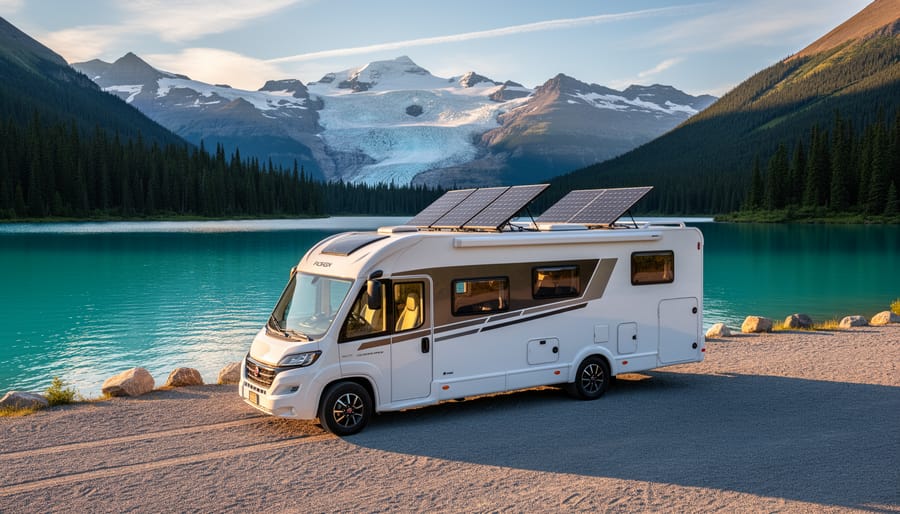
Calculate your daily power consumption by listing every device you’ll run in your RV—from refrigerators and water pumps to phones and laptops—then multiply each item’s wattage by hours of daily use. This baseline number determines whether you need a compact 400-watt system for weekend warriors or a robust 1,200-watt setup for full-time living.
Choose lithium batteries over traditional lead-acid options when designing your off-grid solar systems for RV use, as they weigh 60% less, last three times longer, and charge faster—crucial advantages when you’re traveling British Columbia’s mountain highways and need reliable power at remote campsites.
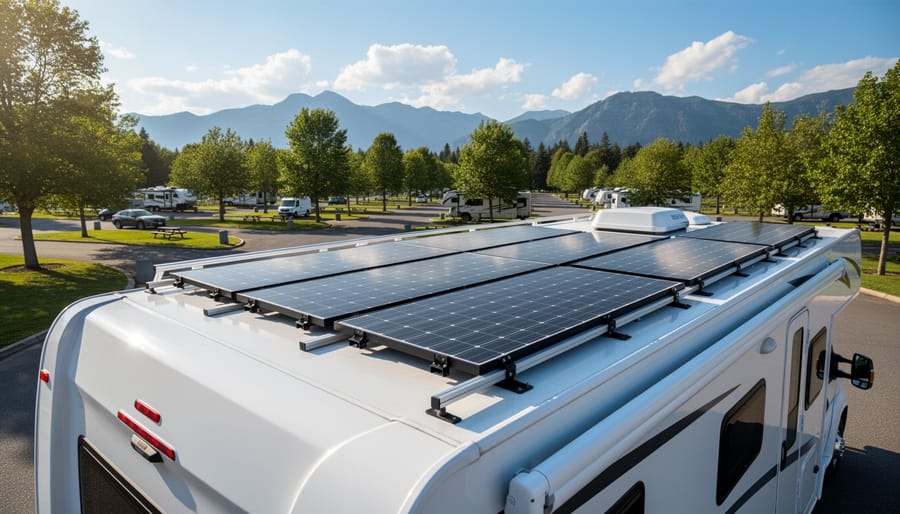
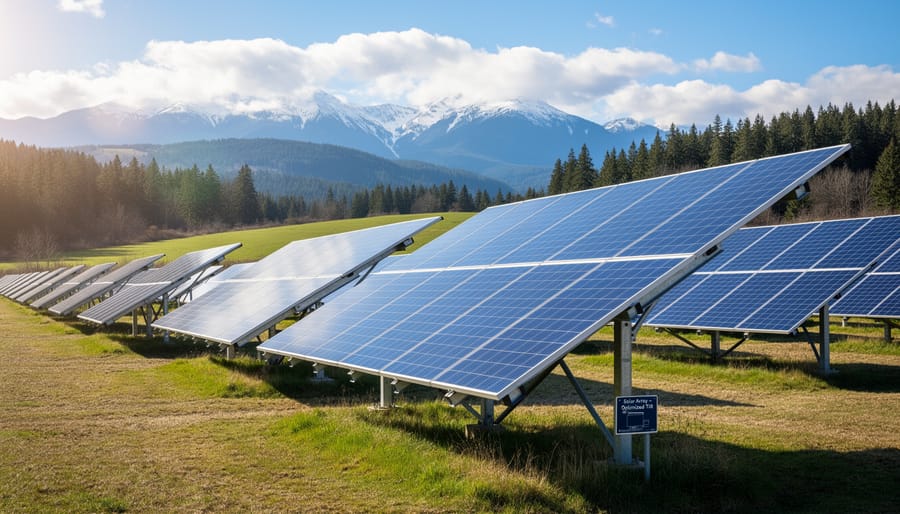
Install tiltable solar panel mounts that let you adjust angles throughout the day, capturing up to 40% more energy than fixed panels during BC’s varied seasons. Position panels to avoid shade from roof vents, AC units, and satellite dishes, since even partial shading on one panel can reduce your entire array’s output by half.
Budget between $2,500 and $8,000 for a complete system depending on your power needs, with most BC RVers finding that a mid-range 800-watt setup with 400 amp-hours of lithium storage covers essentials like lighting, charging devices, running a 12-volt refrigerator, and occasional use of small appliances. This investment typically pays for itself within two to four years compared to campground electrical hookup fees, while giving you freedom to explore BC’s stunning provincial parks and crown land camping areas without worrying about finding power sources.
Why RV Owners in BC Are Making the Switch to Solar
RV enthusiasts across British Columbia are increasingly embracing solar power, and the reasons go far beyond simply saving money on fuel for generators. The shift represents a fundamental change in how people experience the province’s stunning wilderness.
One of the most compelling benefits is the extended camping season. With a properly sized solar system, BC RV owners can comfortably camp through shoulder seasons when temperatures drop and daylight hours shorten. Solar panels continue generating power even on overcast days, which is particularly relevant in our coastal climate. This means you can explore the Okanagan in early spring or the Sunshine Coast in late fall without worrying about battery depletion.
Access to remote locations transforms the RV experience entirely. British Columbia boasts thousands of incredible Crown land camping spots and forest service roads that don’t offer electrical hookups. Solar power unlocks these destinations, allowing you to wake up beside pristine alpine lakes or park along rugged coastlines while maintaining all the comforts of home. No more limiting your adventures to developed campgrounds with power pedestals.
The financial benefits accumulate quickly. With BC campground fees ranging from thirty to seventy dollars per night for sites with electrical hookups, many RV owners calculate that their solar investment pays for itself within two to three camping seasons. After that, every trip represents pure savings.
Environmental impact matters deeply to BC’s outdoor community. Solar systems eliminate generator noise that disturbs wildlife and fellow campers while reducing your carbon footprint significantly. You’re experiencing nature without degrading it.
Take the example of the Morrison family from Victoria, who installed a 400-watt solar system on their fifth wheel last year. They’ve since spent over ninety nights off-grid across Vancouver Island and the Interior, saving approximately four thousand dollars in campground fees while creating memories in locations they never could have accessed before. Their system paid for itself in just eighteen months of regular use.
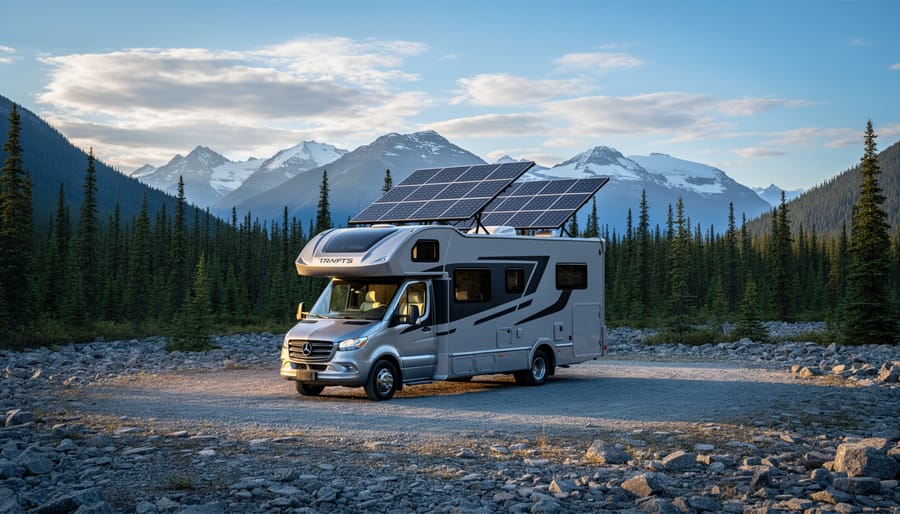
Understanding Your RV’s Energy Needs Before You Buy
What Actually Drains Your RV Battery
Understanding what consumes power in your RV helps you size your solar system appropriately and manage energy efficiently while exploring British Columbia’s beautiful wilderness.
Your refrigerator typically ranks as the biggest energy consumer, running 24/7 and drawing between 30-60 amp-hours daily depending on its size and efficiency. A BC couple who full-time in their RV near Kelowna shared that upgrading to a modern 12-volt compressor fridge reduced their consumption by nearly 40 percent compared to their older propane-electric model.
Lighting comes next, though LED bulbs have transformed this category. Where old incandescent bulbs drained batteries quickly, modern LEDs use roughly one-tenth the power. A typical evening with four LED lights running for three hours consumes only about 3 amp-hours total.
Water pumps draw 4-8 amps when running, but only operate intermittently. A family of four might use 5-10 amp-hours daily for showers, dishes, and handwashing.
Device charging adds up surprisingly fast. Laptops, phones, tablets, and cameras can collectively consume 15-20 amp-hours daily, especially important for remote workers enjoying BC’s scenic locations.
Heating fans in propane furnaces often catch RVers off-guard, drawing 5-7 amps while running. During chilly spring nights in the Rockies, this can mean 30-50 amp-hours overnight.
Entertainment systems, including TVs and sound systems, typically use 10-15 amp-hours for an evening’s entertainment. Small appliances like coffee makers and microwaves create brief but significant draws when operating.
Sizing Your System for BC’s Climate
British Columbia’s dramatic seasonal changes mean your RV solar system needs careful planning to work year-round. Understanding how sunlight varies throughout the year will help you size your system appropriately and set realistic expectations.
During summer months, BC enjoys extended daylight hours with the sun high in the sky. Your RV panels might generate power from 5 AM to 9 PM, making it easy to keep batteries topped up and run appliances without worry. However, winter tells a different story. Shorter days, lower sun angles, and frequent cloud cover can reduce solar production in BC’s climate by 70-80% compared to peak summer performance.
Consider Sarah from Kamloops, who initially installed a 400-watt system thinking it would suffice. She found her batteries barely charged during winter camping trips in the Interior. After upgrading to 600 watts and adding a second battery bank, she achieved reliable power year-round.
For BC RVers planning winter adventures, aim for at least 50% more solar capacity than you’d need in sunnier climates. A good rule of thumb: calculate your daily power needs, then multiply your panel requirements by 1.5 to 2 for winter resilience. If you typically need 200 watts of production, install 300-400 watts of panels.
Location matters too. Coastal areas experience more cloudy days than the sunny Okanagan or Peace River regions. Track your actual usage during a typical day, factor in seasonal variations for your favourite camping spots, and build in a buffer. This approach ensures you won’t be caught without power during those cozy winter camping trips or extended stays at remote locations throughout our beautiful province.
The Essential Components of an RV Solar System
Solar Panels: Rigid vs. Flexible Options
Choosing between rigid and flexible solar panels depends on your RV setup and travel plans. Rigid panels are the workhorses of RV solar systems. They’re more affordable, typically lasting 25-30 years, and handle BC’s variable weather beautifully, from coastal rain to interior snow. Mount them on roof racks with proper tilt for optimal sun exposure, especially important during our shorter winter days. They’re ideal if you have roof space and plan extended off-grid stays.
Flexible panels offer versatility for curved RV roofs or situations where weight matters. They’re lighter and can conform to irregular surfaces, making installation simpler. However, they cost more per watt and typically last 5-10 years because they trap heat without airflow underneath. In BC’s hot summer sun, particularly in the Okanagan, this reduces efficiency over time.
For most BC RVers, rigid panels provide better value and durability. A Campbell River couple recently shared how their rigid panel system survived five years of coastal weather without issues. Consider flexible panels if you have roof constraints or need portable options for awning mounting. Whichever you choose, ensure proper weatherproofing and ventilation to maximize performance in our diverse climate.
Charge Controllers That Protect Your Investment
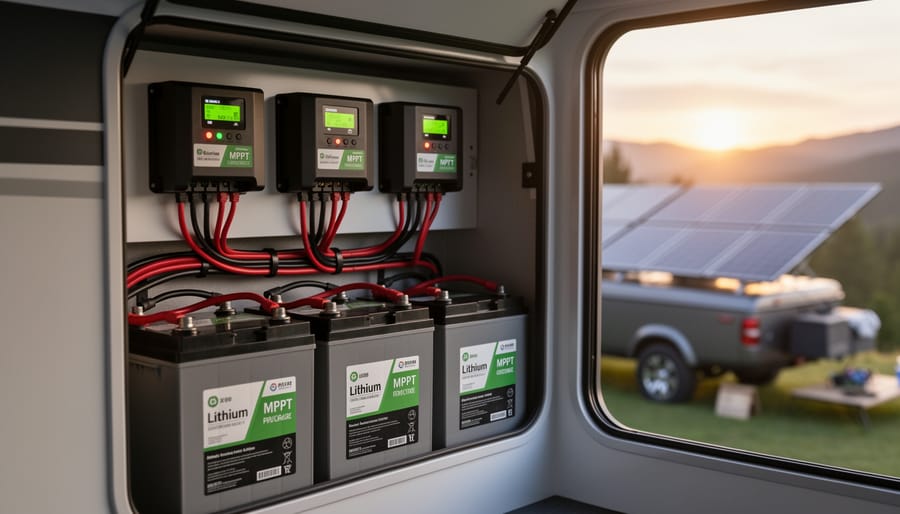
Your charge controller is the gatekeeper between your solar panels and batteries, preventing overcharging and extending battery life. Think of it as the brain of your system, and choosing the right one protects your investment while maximizing energy harvest.
There are two main types to consider. PWM (Pulse Width Modulation) controllers are the budget-friendly option, typically costing $50-150. They work well for smaller systems under 400 watts where your panel voltage closely matches your battery voltage. Many BC RVers start here when testing the solar waters with a basic setup.
MPPT (Maximum Power Point Tracking) controllers cost more upfront, usually $200-600, but they convert excess panel voltage into additional charging current, boosting efficiency by 15-30%. This matters during our cloudy BC winters or when you’re parked in partial shade at a forest service campsite. For systems over 400 watts, the extra harvest pays back the cost difference within a few years.
A Kelowna couple we worked with upgraded from PWM to MPPT and saw their charging time decrease by nearly two hours daily, meaning more power available for evening comfort. For serious off-grid living, MPPT makes practical sense. For weekend warriors with modest power needs, PWM offers reliable protection without breaking the bank.
Battery Storage: Your Energy Bank Account
Think of your battery bank as your RV’s energy savings account – it stores the power your solar panels generate during sunny days for use at night or on cloudy mornings. When choosing battery storage options for your RV system, you’ll encounter two main types.
Lithium batteries cost more upfront but typically last 10-15 years and handle BC’s varying temperatures better. They’re lighter, charge faster, and you can use about 80-90% of their capacity safely. Lead-acid batteries are budget-friendly initially but need replacing every 3-5 years and work best when you only use 50% of their stored energy.
For capacity planning, consider your daily power needs. A couple running basic appliances and lights might need 200-300 amp-hours, while full-timers with multiple devices could require 400-600 amp-hours. A Vancouver Island couple recently shared that their 400Ah lithium setup powers their laptop work, fridge, and evening lighting comfortably through BC’s shorter winter days.
Calculate your overnight and cloudy-day power consumption, then add 20% as a buffer. This ensures you’re never left in the dark during those stretches of coastal fog or winter weather.
Inverters and Other Key Equipment
Your inverter transforms the DC power from your solar panels into AC power for running appliances like microwaves, laptops, and coffee makers. For most RV setups, a pure sine wave inverter between 1,000-3,000 watts works well, depending on your energy needs. A BC couple we know runs their entire 25-foot travel trailer on a 2,000-watt inverter while exploring Vancouver Island’s remote trails.
Consider adding a monitoring system to track your power production and consumption in real-time. Many modern systems connect to your smartphone, helping you understand usage patterns and adjust habits accordingly. This insight proves invaluable when you’re boondocking for extended periods.
Don’t overlook proper wiring. Use appropriately sized cables to minimize power loss and prevent overheating. Most DIY installers successfully handle basic wiring, but consulting a professional for your first installation ensures safety and optimal performance. Quality connections between your panels, charge controller, batteries, and inverter make the difference between a reliable system and constant troubleshooting.
Real-World RV Solar System Examples for Every Budget
The Weekend Explorer Setup
Perfect for weekend adventurers and occasional RV users, this entry-level system covers essential power needs without breaking the bank. A typical setup includes 200-400 watts of solar panels, a 100-200 amp-hour battery, and a basic charge controller. This configuration comfortably powers LED lighting, phone charging, a small water pump, and a 12-volt fan.
Meet Sarah from Kelowna, who installed a 300-watt system on her vintage travel trailer for summer weekend trips to provincial parks. Her $1,200 investment eliminated the need for noisy generators and gave her family peaceful evenings under the stars with enough power for essential comforts. She can run her lights, charge devices, and even power a small portable fridge for fresh groceries.
This setup typically costs between $1,000-$2,000 installed and pays for itself quickly through saved campground electrical hookup fees. It’s an ideal starting point that can be expanded later as your off-grid confidence and power needs grow.
The Extended Adventure System
For RV owners planning week-long adventures through BC’s stunning landscapes, a mid-range system provides comfortable energy independence. This setup typically includes 600-800 watts of solar panels, a 200-300 amp-hour lithium battery bank, and a 2000-watt inverter, costing between $3,500 and $5,500 installed.
This configuration powers essential appliances plus conveniences like a microwave, coffee maker, and electric cooktop for limited use. You’ll comfortably run LED lighting, charge devices, operate a refrigerator, and enjoy entertainment systems throughout your trip. Many BC RV enthusiasts find this sweet spot ideal for exploring provincial parks without compromising comfort.
The Thompson family from Kelowna upgraded to this system and now regularly spends seven days at remote locations around Okanagan Lake. They report running their air conditioner for two hours daily during summer trips while maintaining full power for all essentials.
Consider your typical energy consumption when choosing components. A simple calculation: list your appliances, note their wattage, and estimate daily usage hours. Most suppliers offer free system consultations to ensure proper sizing, helping you avoid under-powering your adventures or overspending on unnecessary capacity.
The Full-Time Living Solution
For those embracing full-time RV living off the grid, a robust system becomes your complete power utility. Think 800-1200 watts of solar panels paired with 400-600 amp-hours of lithium battery storage—enough to run appliances, heating, and electronics year-round.
Meet the Johnsons from Kelowna, who’ve been living full-time in their RV across BC for three years. Their 1000-watt system with 500Ah battery bank powers everything from their refrigerator to laptops, even during winter months at lower elevations. “We added a portable panel for cloudy weeks and haven’t needed shore power since,” shares David Johnson.
A comprehensive setup includes charge controllers with temperature compensation (crucial for BC’s variable climate), an inverter for AC appliances, and proper wiring for safety. Budget between $5,000-$8,000 for quality components that last.
The investment pays dividends beyond cost savings. You’ll have true location independence, quieter camping without generators, and minimal environmental impact. Start by calculating your daily energy needs, then size your system with 20-30% buffer capacity for BC’s cloudier seasons.
Installation: DIY or Professional Help?
Deciding between tackling your RV solar installation yourself or hiring a professional depends on your comfort level with electrical work, the complexity of your system, and safety considerations. Many RV owners in BC successfully complete basic installations, while others benefit from professional expertise for more complex setups.
If you have experience with electrical systems and your project involves a simple setup—like mounting a few panels, connecting a charge controller, and wiring batteries—DIY solar installation can be rewarding and cost-effective. You’ll need basic tools, patience for watching instructional videos, and careful attention to following manufacturer guidelines. Start with smaller 200-400 watt systems if you’re new to solar work.
However, certain situations call for certified installers. If your system exceeds 1000 watts, requires roof penetrations that could void warranties, involves complex battery bank configurations, or needs integration with shore power systems, professional help ensures safety and compliance. Lithium battery installations particularly benefit from expert knowledge, as improper connections pose fire risks.
Safety should be your top priority. Working with electricity, especially on RV roofs, carries real hazards. Professionals carry liability insurance and understand BC’s electrical codes. They can also identify potential issues like inadequate roof structure or incompatible components before problems arise.
A hybrid approach works well for many RV owners. You might handle panel mounting and basic wiring while hiring an electrician for the final electrical connections and system testing. This balances cost savings with safety assurance.
In BC, seek installers certified by the Canadian Solar Industries Association or with RV-specific experience. Many mobile solar installers throughout the province specialize in recreational vehicles, offering convenient on-site service at your location or RV park. Local RV clubs and forums often share recommendations for trusted professionals who understand the unique challenges of British Columbia’s climate and terrain. Remember, a properly installed system protects your investment and ensures years of reliable off-grid power.
Maximizing Your Solar Production on the Road
Getting the most from your RV solar system in British Columbia means adapting to our unique weather patterns and making smart daily choices. Here are practical strategies that BC RVers use to maximize their solar production year-round.
Start with positioning. Park with your RV’s solar panels facing south when possible, and avoid shaded areas under trees or beside tall structures. Even partial shade on one panel can significantly reduce your entire system’s output. In winter, BC’s lower sun angle means you might benefit from tilting portable panels to capture more direct sunlight. Many experienced RVers adjust their panel angles seasonally, using a simple tilt mount that takes just minutes to set up.
Keep your panels clean. BC’s coastal regions bring salt spray, while interior areas see dust and pollen. A quick wash with water and a soft cloth every few weeks can boost production by 15-20%. After camping near the ocean or traveling dusty logging roads, give your panels extra attention.
Monitor your system daily using your charge controller’s display or a smartphone app. This helps you understand your consumption patterns and adjust accordingly. One Vancouver Island couple discovered they could run their coffee maker in the morning when production was highest, rather than depleting their batteries at night.
During BC’s cloudy winter months, be realistic about your expectations. Solar production drops by 50-70% compared to summer, so plan to conserve energy or have backup charging options. Consider spending time in sunnier interior regions like the Okanagan during shoulder seasons to keep batteries topped up. Success stories from BC RVers show that combining smart positioning, regular maintenance, and seasonal awareness keeps systems running efficiently through every adventure.
Your Next Steps Toward Solar Freedom
Getting started with your RV solar system is simpler than you might think. Begin by calculating your daily power consumption—add up the wattage of lights, appliances, and devices you’ll use regularly. This number guides your panel and battery sizing decisions.
Connect with experienced solar installers in British Columbia who understand RV systems and can assess your specific setup. Many offer free consultations and can help you navigate provincial incentive programs that make solar more affordable. Local installers also understand BC’s unique weather patterns and can recommend systems optimized for our coastal and interior climates.
Take advantage of online solar calculators to estimate your system costs and potential savings. These interactive tools help you visualize different configurations before making commitments.
Remember, you don’t need to install everything at once. Many RV owners start with a basic system and expand as their needs grow. Whether you’re planning weekend getaways in the Okanagan or extended stays in remote locations, solar power opens up new possibilities for adventure while reducing your environmental footprint. The freedom of off-grid camping awaits—and it’s more accessible than ever for BC residents ready to embrace sustainable travel.