
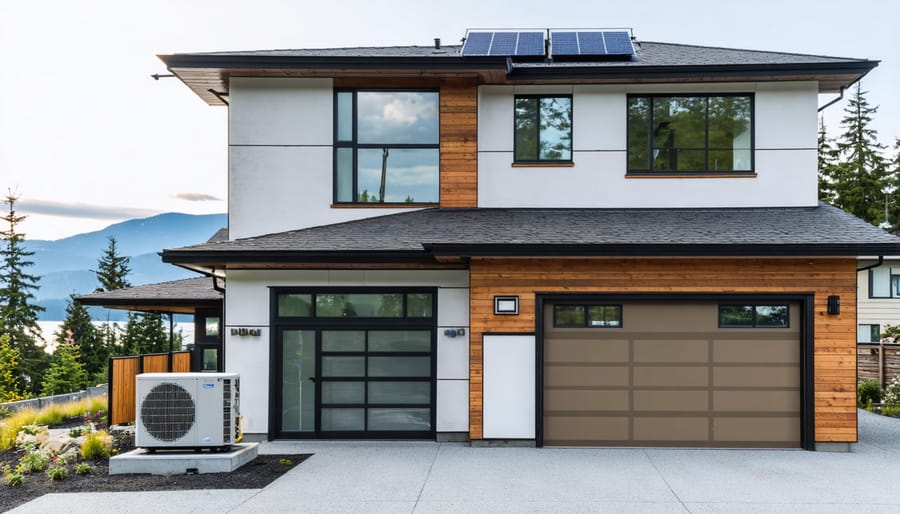
Apply for BC Hydro’s Home Energy Rebate Program today to access up to $6,000 in incentives for insulation upgrades, heat pump installations, and window replacements—over 45,000 BC homeowners secured funding last year alone. Start by booking a free EnerGuide home evaluation to identify your property’s biggest energy drains, then prioritize improvements based on potential savings rather than upfront costs.
Combine provincial and federal programs strategically. The Canada Greener Homes Grant offers an additional $5,000 for qualifying renovations, and you can stack these funds with municipal rebates available in Vancouver, Victoria, and Kelowna. A typical Vancouver homeowner who upgraded to a heat pump and added attic insulation reduced their annual energy bills by $1,400 while receiving $8,500 in combined rebates—recovering their out-of-pocket expenses within two years.
Focus on high-impact improvements first. Air sealing and insulation typically deliver 15-30% energy savings, making them the foundation of any efficiency upgrade. Heat pumps follow as the next priority, especially given BC’s mild climate and their dual heating-cooling capability. Window replacements, while visible, should come later unless your current windows are severely damaged.
Document everything meticulously. Keep all receipts, contractor licenses, and before-and-after photos, as program administrators require detailed proof for reimbursement. Submit applications within specified deadlines—most programs operate on a first-come, first-served basis with limited annual funding. After completing efficiency upgrades, your reduced energy consumption creates the perfect baseline for adding solar panels, maximizing your return on renewable energy investment while minimizing system size requirements and costs.
What Home Energy Efficiency Programs Actually Cover in BC
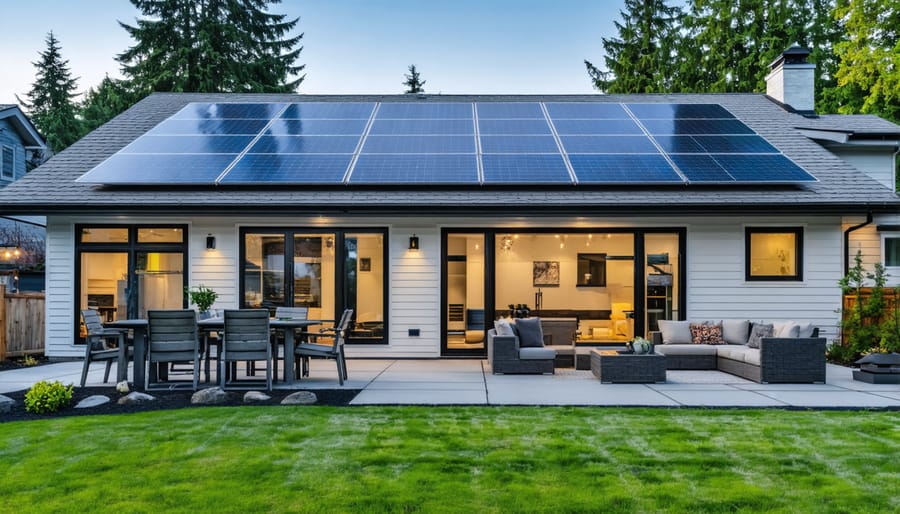
Federal Programs: Canada Greener Homes Grant
The Canada Greener Homes Grant offers BC homeowners between $5,000 and $5,600 to make their homes more energy-efficient. This federal program provides direct financial support for upgrades that reduce your energy consumption and lower monthly utility bills.
Qualifying upgrades include insulation improvements for attics, basements, and exterior walls, which can earn you up to $5,000. Air sealing work receives up to $1,000, while energy-efficient windows and doors qualify for additional rebates. Heat pumps are also eligible, helping you transition away from fossil fuel heating systems.
Here’s how it works: you’ll need two EnerGuide home evaluations—one before and one after your upgrades—to measure your energy improvements. Each evaluation costs around $600, but the grant covers these expenses within your total rebate amount.
The program pairs exceptionally well with solar installations. Many BC homeowners complete their efficiency upgrades first, reducing their overall energy needs, then add solar panels to cover their remaining consumption. This strategic approach maximizes your investment since a more efficient home requires fewer solar panels to achieve energy independence.
The application process is straightforward through Natural Resources Canada’s portal, and you can complete upgrades over time as your budget allows. Consider starting with insulation and air sealing for the biggest immediate impact on your energy bills.
Provincial Support: CleanBC Incentives
British Columbia residents can access generous CleanBC incentives that work alongside federal programs to reduce upfront costs even further. The province offers rebates up to $6,000 for heat pump installations, making it one of the most substantial provincial energy efficiency programs in Canada.
CleanBC’s Better Homes program provides free energy coaching to help you identify which upgrades will deliver the greatest savings for your home. These coaches review your energy bills, assess your property, and create a personalized action plan. They’ll also guide you through the application process for both provincial and federal rebates, ensuring you don’t miss any opportunities to stack incentives.
Recent program success stories highlight impressive results. The Thompson family in Kelowna combined CleanBC rebates with Canada Greener Homes grants to upgrade their insulation and install an air-source heat pump, reducing their annual energy costs by 42 percent. Their total project cost $15,000, but after receiving $9,200 in combined rebates, their out-of-pocket expense was only $5,800.
Additional CleanBC incentives cover window replacements, improved insulation, and energy-efficient water heaters. Income-qualified households can access enhanced rebates, sometimes covering up to 100 percent of eligible costs. By combining these provincial programs with federal grants, BC homeowners are positioned to make comprehensive energy upgrades more affordable than ever, creating a solid foundation for adding solar energy systems down the road.
The Smart Sequence: Efficiency First, Then Solar
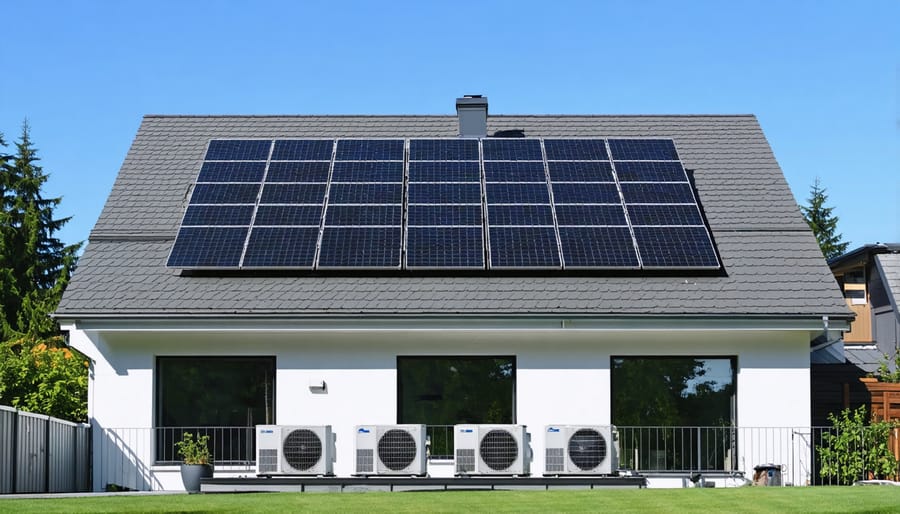
Why Reducing Demand Matters More Than You Think
Here’s a practical truth: cutting your energy use first means you need fewer solar panels later. A Vancouver Island homeowner reduced their electricity consumption by 30% through efficiency upgrades like improved insulation and LED lighting. When they added solar panels, they only needed a 4.5 kW system instead of 6.5 kW, saving approximately $5,000 on installation costs.
Think of it this way: every kilowatt-hour you don’t use is one you don’t need to generate. A family in Kelowna invested $3,000 in efficiency improvements through provincial programs, which reduced their monthly consumption from 900 kWh to 630 kWh. Their smaller solar system paid for itself two years faster than if they’d skipped the efficiency step, helping them maximize returns on both investments.
The CleanBC Better Homes program can cover up to 50% of efficiency upgrade costs, making this approach even more affordable. By combining grants for efficiency improvements with solar incentives, BC homeowners are creating truly cost-effective energy solutions that work harder for less money.
The Grant-Stacking Strategy
Smart BC homeowners are discovering they can significantly reduce their energy transition costs by strategically combining programs. Here’s how it works: start by applying for home energy efficiency rebates for upgrades like insulation, heat pumps, and energy-efficient windows. Once these improvements reduce your home’s baseline energy consumption, you’re in a stronger position to maximize returns from solar incentives.
The Andersons from Kelowna followed this approach and saved over $18,000. They first claimed $6,500 in efficiency rebates, then installed solar panels six months later, qualifying for both federal and provincial solar programs. Their reduced energy needs meant they could install a smaller, more affordable solar system that still met 90% of their electricity requirements.
Timing matters. Apply for efficiency grants first, as some programs require energy assessments that can inform your solar installation plans. Most homeowners complete efficiency upgrades within three to six months, then move forward with solar. This sequential approach ensures you’re not over-sizing your solar system for an inefficient home, maximizing both your upfront savings and long-term returns on investment.
Real BC Homeowners: Before and After
Case Study: Vancouver Island Family Cuts Bills by 70%
When the Morrison family of Nanaimo reviewed their monthly energy bills in early 2023, they knew something had to change. Their older 1980s home was costing them $340 per month in electricity and natural gas combined.
Their journey started with a free home energy assessment through the Canada Greener Homes Grant program. The evaluation revealed poor insulation, drafty windows, and an aging furnace. The family qualified for up to $5,000 in federal grants and an additional $2,000 through BC Hydro’s Energy Savings Program.
Over six months, the Morrisons completed their efficiency upgrades. They added R-50 attic insulation ($1,800, receiving $1,200 back in grants), replaced their furnace with a high-efficiency heat pump ($8,500, receiving $3,000 in rebates), and upgraded to triple-pane windows ($6,200, receiving $2,000 back). Their total investment after grants was $10,300.
The immediate impact was impressive. Their monthly bills dropped to $180, saving $160 monthly or $1,920 annually. But the family didn’t stop there.
With their home now energy-efficient, they installed a 6.5 kW solar system. The solar panels, combined with their reduced energy consumption, brought their average monthly bills down to just $95. That’s a 70 percent reduction from their starting point.
Today, the Morrison family saves $245 monthly compared to their original bills. Their combined investments will pay for themselves in approximately seven years, and they’re contributing to BC’s clean energy future every single day.
Case Study: Okanagan Retiree Goes Nearly Net-Zero
When Margaret and Robert downsized to a 1970s bungalow in Kelowna, they knew their retirement home needed serious energy work. Their first winter brought heating bills topping $300 monthly, prompting them to explore available programs.
Starting with a free EnerGuide home evaluation, they identified their priorities: outdated insulation, drafty windows, and an aging gas furnace. Through the Canada Greener Homes Grant, they received $5,000 to upgrade attic insulation and replace their furnace with a high-efficiency heat pump. BC Hydro rebates added another $3,000 to offset costs.
The improvements cut their heating expenses by 60 percent within the first year. Encouraged by these results, Margaret and Robert explored solar options to tackle their remaining electricity costs. They installed a 6.5 kW rooftop system, taking advantage of both federal and provincial solar incentives that reduced their upfront investment significantly.
Today, their home produces nearly as much energy as it consumes annually. Summer months see them sending excess power back to the grid, while efficient heating keeps winter bills manageable. Their total investment of $28,000 minus $11,000 in combined grants and rebates means they expect full payback within nine years.
The couple emphasizes starting with efficiency improvements before adding solar. “We’re thrilled we insulated first,” Margaret explains. “It meant we could install a smaller, less expensive solar system and still meet our energy goals. Every grant we accessed made the next step more affordable.”
Your Step-by-Step Action Plan

Step 1: Get Your EnerGuide Home Evaluation
Your journey to energy savings starts with an EnerGuide home evaluation, a comprehensive assessment that identifies where your home loses energy and money. A certified energy advisor visits your property to conduct tests like a blower door analysis, which measures air leakage, and inspects insulation, heating systems, windows, and appliances. The evaluation typically costs between $300-$600, though many BC homeowners receive full or partial rebates through the Canada Greener Homes Grant. You’ll receive a detailed report with your home’s current energy rating and a prioritized list of recommended upgrades, from simple weatherstripping fixes to major renovations. This roadmap shows your potential energy savings in dollars and greenhouse gas reductions, helping you make informed decisions about which improvements deliver the best return on investment while increasing your comfort year-round.
Step 2: Prioritize Your Upgrades
Start with improvements that qualify for the highest rebates and deliver measurable energy savings. Insulation and air sealing typically offer the best return on investment, reducing heating costs by 15-30% while qualifying for substantial grants. Next, consider upgrading to a heat pump, which can access rebates up to $6,000 while cutting energy bills significantly.
Think about your home’s solar potential early in the process. A Vancouver family saved $200 monthly by combining insulation upgrades with solar panels, maximizing both efficiency and renewable energy benefits. Use online calculators to estimate your potential savings from each upgrade.
Focus on creating a solid foundation: an energy-efficient home consumes less power, making solar panels more cost-effective and potentially allowing for a smaller system size. Prioritize improvements that address your home’s biggest energy losses first, then plan for solar installation to capitalize on your reduced energy needs and available incentives.
Step 3: Apply for Available Grants
Once you’ve identified suitable programs, gather your documentation early. Most applications require proof of home ownership, recent energy bills, and quotes from qualified contractors. For federal programs like the Canada Greener Homes Grant, start with a pre-retrofit EnergyGuide evaluation—book this appointment first, as wait times can extend 4-8 weeks. Provincial programs through CleanBC often have faster timelines of 2-4 weeks.
Complete applications online through each program’s portal. Double-check income requirements if applicable, and ensure your chosen contractor is registered with the program. A Surrey homeowner shared how organizing documents in a single folder streamlined her application across three programs simultaneously.
Approval timelines vary: federal grants typically take 6-10 weeks after your post-retrofit evaluation, while provincial rebates may arrive within 4-6 weeks. Submit applications before starting work unless the program specifies otherwise. Track your submissions and follow up if you haven’t received confirmation within the stated timeframe.
Step 4: Complete Upgrades with Certified Contractors
Working with qualified installers ensures your upgrades meet program standards and deliver promised energy savings. Certified contractors understand rebate requirements and complete installations correctly the first time, avoiding costly mistakes. Solar BC connects you directly with certified professionals who specialize in both energy efficiency improvements and solar installations. Our network includes vetted contractors experienced with CleanBC rebate programs, helping you navigate paperwork while ensuring quality workmanship. Whether you’re upgrading insulation, installing heat pumps, or adding solar panels, choosing certified installers protects your investment and maximizes your rebate eligibility. Start by requesting quotes from multiple certified contractors to compare pricing and timelines for your project.
Step 5: Plan Your Solar Installation
With your energy efficiency upgrades complete, you’ve established a lower energy baseline that makes solar more affordable and effective. Now’s the perfect time to size your solar system based on your actual reduced consumption rather than your old, higher usage. This approach means you’ll need fewer panels to meet your needs, lowering upfront costs while maximizing your return on investment. Many BC homeowners who’ve improved efficiency first report needing 20-30% smaller systems, translating to thousands in savings while still achieving energy independence goals and accessing available solar incentives.
Calculate Your Potential Savings
Understanding your potential savings helps you make informed decisions about investing in both efficiency upgrades and solar energy. Solar BC offers interactive tools designed specifically for British Columbia residents to estimate combined savings from these improvements.
Our calculator considers several key factors that influence your savings potential. Your current energy consumption establishes the baseline, while your home’s size, age, and existing insulation levels determine how much you can reduce usage through efficiency measures. Geographic location matters too, as heating requirements vary significantly between Vancouver’s mild climate and colder Interior regions. The calculator also factors in current BC Hydro rates and available grant amounts to provide accurate projections.
For solar installations, the tool analyzes your roof’s orientation, angle, and shading to estimate annual energy production. It then combines this with your post-efficiency energy needs to show your total cost reduction. Many homeowners discover they can achieve 40-60% energy savings through efficiency improvements alone, with solar adding another 30-50% reduction in remaining costs.
To get the most accurate projections, gather recent utility bills showing your annual consumption patterns. Note any planned renovations or changes to your home, as these affect calculations. The interactive tool walks you through each factor step-by-step, explaining how different choices impact your results.
A Vernon family used our calculator and discovered that combining heat pump installation with a modest solar array would eliminate 85% of their energy costs within seven years, making both investments worthwhile given available incentives.
Making the transition to sustainable living is more achievable than ever for BC residents, thanks to the comprehensive home energy efficiency programs available throughout the province. These grants and rebates remove significant financial barriers, transforming energy upgrades from aspirational goals into practical realities for households across British Columbia.
The financial support available through CleanBC and federal programs means you can improve your home’s comfort, reduce your monthly utility bills, and contribute to provincial climate goals without shouldering the full cost alone. Whether you’re installing a heat pump, upgrading insulation, or adding solar panels, these programs work together to maximize your savings while minimizing your environmental footprint.
Taking the first step is straightforward: schedule an energy evaluation to understand your home’s current performance and identify the upgrades that will deliver the greatest impact. This assessment becomes your roadmap for accessing available funding and planning improvements that make sense for your specific situation and budget.
Connect with Solar BC’s network of certified installers who understand both the technical requirements and the funding landscape. Our local experts have helped thousands of BC homeowners navigate the application process, combine multiple programs for maximum benefit, and achieve their sustainability goals.
Your decision to pursue energy efficiency improvements creates a ripple effect throughout our community. Individual actions collectively reduce strain on the provincial grid, lower emissions, and demonstrate the viability of sustainable living to neighbors and friends. Start your energy efficiency journey today and join the growing community of BC residents building a cleaner, more resilient future while enjoying meaningful savings on every energy bill.