

Claim up to 30% of your solar installation costs back through the federal Investment Tax Credit for 2025—a benefit that can put thousands of dollars directly into your pocket while reducing your carbon footprint. British Columbia homeowners and businesses installing solar panels this year qualify for this significant financial incentive, which applies to the total system cost including equipment, labor, and permant expenses.
Calculate your potential savings by multiplying your total installation cost by 0.30. For a typical BC residential system costing $20,000, you’ll receive $6,000 back when filing your 2025 taxes. This credit directly reduces the amount you owe to the Canada Revenue Agency, making solar more affordable than ever for our province’s growing community of sustainability-focused residents.
Verify your eligibility by ensuring your system generates electricity for your home or business, gets installed and operational during 2025, and meets Canadian Standards Association requirements. Both grid-tied and off-grid systems qualify, giving remote properties and urban homes equal opportunity to benefit.
Gather these essential documents before claiming: your contractor’s invoice showing the complete system cost breakdown, proof of installation completion, electrical inspection certificates, and your property’s energy bills showing pre-solar consumption. File these with your tax return using Form T2038(IND) for individuals or Schedule 31 for businesses, keeping copies for six years as required by CRA regulations.
The 2025 credit maintains the generous 30% rate established under recent federal climate initiatives, but rates may change in future years—making now the optimal time to invest in solar energy for your BC property.
What’s New with Solar Tax Credits in 2025
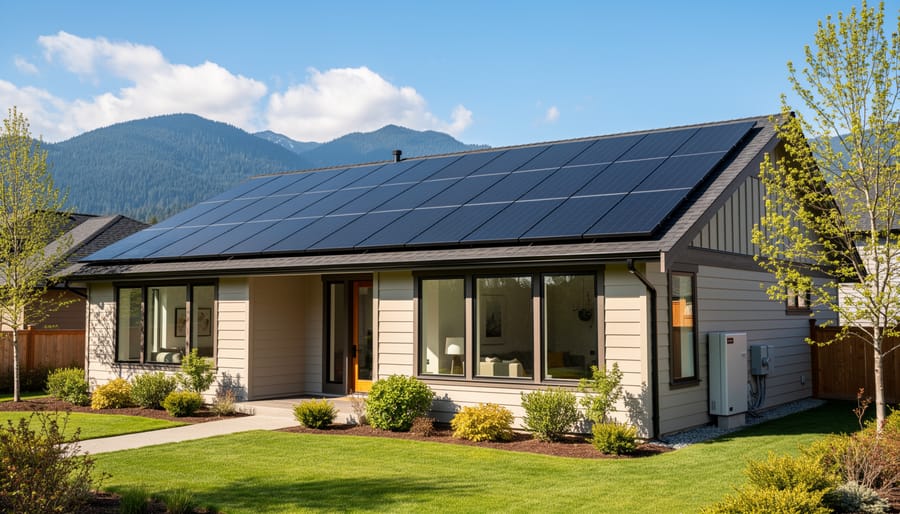
Federal Solar Incentives for Canadians
Canadian homeowners have access to valuable federal support for solar installations through the Canada Greener Homes Grant program. This initiative helps offset the upfront costs of going solar, making renewable energy more accessible for families across British Columbia and the country.
The program offers grants of up to $5,000 for eligible solar photovoltaic systems. To qualify, you’ll need to complete an EnerGuide home evaluation both before and after your installation. This assessment helps determine your home’s energy efficiency and the potential impact of your solar panels.
Here’s how to access these federal incentives: First, register for the program and schedule your initial home evaluation with a certified energy advisor. You’ll receive a personalized report outlining recommended upgrades. Next, hire a qualified contractor to install your solar system. Keep all receipts and documentation for your application. Finally, arrange your post-installation evaluation to verify the work and submit your grant application.
British Columbia residents should note that combining federal grants with provincial rebates can significantly reduce your investment. The Leung family from Surrey, for example, received $5,000 federally plus additional provincial support, covering nearly 40% of their solar installation costs.
Applications are processed on a first-come, first-served basis, so act quickly. The program has proven popular, and funding allocations can fill up. Check your eligibility today and take the first step toward energy independence while these incentives remain available.
British Columbia’s Provincial Programs
British Columbia residents can stack provincial incentives with federal programs to maximize their solar savings. The CleanBC program offers homeowners up to $5,000 toward solar installation costs when bundled with energy efficiency upgrades like insulation or heat pumps. This provincial support significantly reduces upfront expenses alongside the federal Canada Greener Homes Grant.
BC Hydro customers should explore the Power Smart program, which provides rebates for energy-efficient home improvements that complement solar installations. FortisBC also offers incentives for customers in their service areas who integrate renewable energy systems with existing natural gas connections.
Local success story: The Martinez family in Victoria combined BC solar rebates with federal credits, reducing their installation costs by $18,000. Their 8kW system now generates 85% of their annual electricity needs.
To calculate your potential savings with both federal and provincial programs combined, use our interactive solar savings calculator. Input your location, roof size, and current energy bills to see personalized estimates.
Action steps: First, apply for the federal Greener Homes Grant. Then contact your utility provider about available rebates. Finally, consult a certified solar installer familiar with provincial programs to ensure you capture all available incentives before installation begins.
How Much Money You Can Actually Save

Breaking Down the Costs: Before and After Incentives
Understanding the real cost of going solar becomes much clearer when you see the numbers side by side. Let’s look at a typical BC homeowner installing a 7 kW system to meet their home energy needs.
Before Incentives:
A 7 kW solar installation typically costs $17,500 to $21,000 in British Columbia. For this example, we’ll use $19,000 as the baseline cost, which includes panels, inverters, installation, and permits.
After Incentives:
When you apply the federal Canada Greener Homes Grant (up to $5,000) and claim the GST/HST rebate for new housing or major renovations where applicable, your out-of-pocket costs drop significantly. Here’s the breakdown:
Initial installation cost: $19,000
Less Canada Greener Homes Grant: -$5,000
Net cost after federal incentives: $14,000
This represents a 26% reduction in your upfront investment. Some BC homeowners may also qualify for additional municipal rebates or financing programs through their local utility provider, further reducing costs.
The real savings extend beyond installation. With BC’s net metering program, your system can offset electricity bills for 25-plus years. Many homeowners see their systems pay for themselves within 10-12 years, then enjoy free electricity for years afterward.
Use our online solar savings calculator to input your specific situation and see your personalized cost breakdown with all available incentives.
Local Success Story: The Johnsons of Victoria
Meet the Johnson family from Victoria, who made the switch to solar in early 2024. After watching their electricity bills climb year after year, they decided to invest in a 7.2 kW solar system for their 2,200 square foot home.
The total cost for their installation came to $21,600. Here’s how the incentives added up: They received $5,000 through the Canada Greener Homes Grant and qualified for an additional $1,400 provincial rebate through BC Hydro’s CleanBC program. While federal tax credits for solar aren’t available in the same way as in the US, these combined incentives brought their net investment down to $15,200.
Sarah Johnson, a teacher and mother of two, shares their experience: “We were nervous about the upfront cost, but the incentives made it manageable. Our installer walked us through every available program.”
Since installation, the Johnsons have seen their monthly electricity bills drop by an average of $115. During summer months, they generate more power than they use, earning credits through BC Hydro’s net metering program. At this rate, they expect to recoup their investment in approximately 11 years.
Beyond the financial savings, the family appreciates their reduced environmental footprint. “Knowing we’re powering our home with clean energy feels incredible,” Sarah adds. “Our kids are proud to tell their friends about our solar panels.”
The Johnsons’ story demonstrates how combining available incentives with long-term electricity savings makes solar accessible for BC families ready to take action.
Who Qualifies for Solar Tax Credits in BC
Homeowner Eligibility Requirements
To qualify for solar tax credits in British Columbia in 2025, you need to meet several straightforward criteria. First, you must own your home – renters aren’t eligible, though you can claim credits if you’re purchasing through a mortgage. The property must be your primary or secondary residence located in BC, including single-family homes, townhouses, and condominiums where you own your unit.
Unlike some jurisdictions, BC’s solar incentive programs don’t impose strict income limits for most residential credits, making solar accessible to middle-income families. For example, the Khalil family from Kelowna qualified for their solar installation credits with a household income of $85,000, demonstrating that these benefits aren’t restricted to higher earners.
Your property must be connected to BC’s electrical grid, and the solar system must be newly installed – credits don’t apply to previously installed systems or homes purchased with existing panels. Co-op housing residents should check with their housing association, as eligibility varies based on ownership structure.
The good news? If you’re a BC homeowner paying property taxes and have suitable roof space or yard area for panels, you likely qualify. Use our interactive eligibility calculator to confirm your specific situation and estimate your potential savings before moving forward with your solar project.
Business and Commercial Property Considerations
BC businesses have access to several valuable incentive programs that can significantly reduce the cost of commercial solar installations. The CleanBC Commercial and Light Industrial Custom Incentive Program offers rebates for energy efficiency upgrades, including solar panel systems, helping businesses offset installation costs while reducing operating expenses.
Agricultural operations benefit from specialized programs through the BC Agricultural Research and Development Corporation, which supports farm-based renewable energy projects. Take Green Valley Orchards in the Okanagan, which installed a 50kW system through these incentives and now saves $6,000 annually on electricity costs while powering their cold storage facilities.
Commercial property owners can also leverage accelerated depreciation benefits through the federal Capital Cost Allowance, allowing you to write off solar installations faster than traditional equipment. Many BC businesses combine multiple incentive programs to achieve payback periods of 5-7 years.
Property-assessed clean energy financing (PACE) programs in some municipalities let businesses finance solar installations through property tax payments, spreading costs over longer terms with favorable interest rates. This approach improves cash flow while you immediately benefit from reduced utility bills. Contact your local government to explore available commercial incentive combinations specific to your business type.
Step-by-Step: How to Claim Your Solar Tax Credits
Before Installation: Getting Your Pre-Approval
Before you install solar panels and claim your 2025 tax credits, taking a few preparatory steps will maximize your benefits and ensure a smooth process. Start by booking professional energy audits to identify your home’s energy efficiency baseline and potential improvements. These audits often qualify for separate rebates and help you right-size your solar system for optimal savings.
Next, research and select certified solar installers who are familiar with federal and provincial incentive programs. Look for companies with Clean Energy BC membership and positive reviews from BC homeowners. Request multiple quotes and verify that installers will provide the documentation needed for tax credit applications, including equipment specifications and installation certificates.
Consider pre-qualifying for financing if needed, as some lenders offer green energy loans with favorable terms. Many BC credit unions have specialized solar financing programs that complement available tax credits.
Finally, check with your municipality about permit requirements and any local solar incentives. Some BC communities offer additional rebates that stack with federal credits. Document your current electricity bills to establish a comparison point for future savings. Taking these steps before installation positions you to claim every dollar you’re entitled to while avoiding delays or missing documentation.
During Installation: Documentation You’ll Need
Throughout your solar panel installation, staying organized with documentation is essential for claiming your tax credits and incentives. Your installer should provide detailed invoices breaking down equipment costs, labour, and any additional materials. Make sure these invoices clearly identify the solar panels, inverters, and battery storage systems as separate line items, since some incentives apply to specific components.
Request certification documents proving your equipment meets Canadian Standards Association requirements and any applicable efficiency ratings. In British Columbia, your installer should also provide electrical permits and the final inspection report from your local municipality or Technical Safety BC. These documents verify your system meets provincial safety standards.
Keep copies of your installation contract, including the project timeline and warranty information. Many BC homeowners find it helpful to photograph their system before, during, and after installation as additional proof of work completed.
Don’t forget to obtain your installer’s business registration number and proof they’re a licensed electrical contractor in BC. This information may be required when filing your tax return or applying for provincial rebates.
Create a dedicated folder, either physical or digital, to store all these documents together. You’ll need them not only for your 2025 tax filing but also for potential audits, insurance claims, or if you sell your home. Well-organized paperwork makes the claiming process straightforward and stress-free.
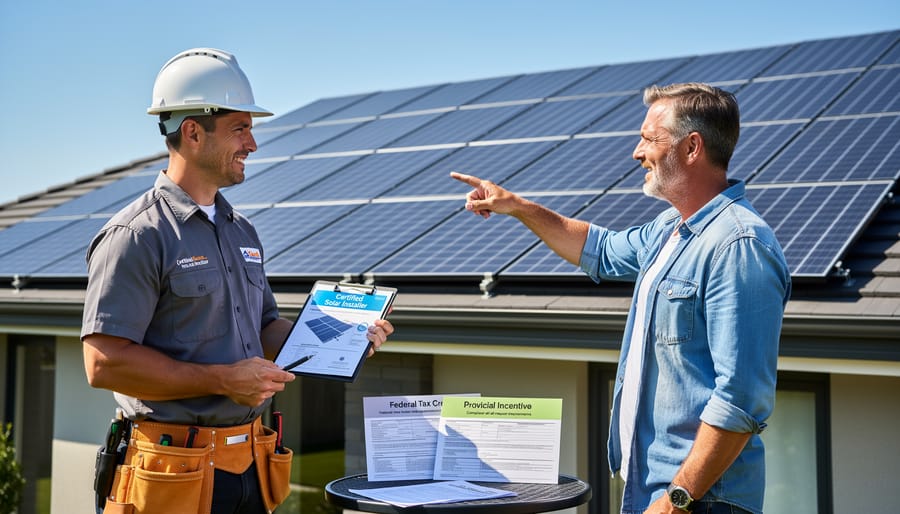

After Installation: Filing for Your Credits
Once your solar panels are up and running, it’s time to claim your credits. For federal incentives like the Greener Homes Grant, you’ll submit your application through the Canada Revenue Agency when filing your annual tax return. Keep all receipts, installation contracts, and energy audit reports organized—these documents are essential for verification.
In British Columbia, claim your provincial rebate through the CleanBC program portal within 90 days of installation completion. Upload your invoices, proof of payment, and system specifications directly to your online account. Most homeowners find the process straightforward, taking about 15-20 minutes to complete.
Processing times vary by program. Federal tax credits typically appear when you receive your tax refund, usually within 4-8 weeks of filing. Provincial rebates through CleanBC generally process within 6-12 weeks after submission. For example, the Martinez family in Victoria received their $5,000 provincial rebate just seven weeks after applying.
Pro tip: File early in the tax season to avoid delays. Set a reminder in your calendar to submit applications promptly after installation—waiting too long can complicate documentation. If you’re uncertain about any forms, consult with a tax professional familiar with renewable energy credits to ensure you maximize your savings.
Combining Incentives to Maximize Your Savings
The key to maximizing your solar investment is understanding how different incentive programs work together. In BC, you can typically combine federal tax credits with provincial and utility rebates, creating a powerful savings stack that significantly reduces your upfront costs.
Start with the federal Investment Tax Credit for clean technology, which covers up to 30% of eligible solar equipment costs. This credit doesn’t interfere with other programs, making it your foundation. Next, check if BC Hydro or FortisBC offers rebates in your service area. These utility incentives usually apply before calculating your federal credit, which works in your favor.
Local governments add another layer. Many BC municipalities provide property tax exemptions for solar installations, and some offer direct rebates through climate action programs. For example, Richmond homeowners who installed solar in 2024 combined federal credits with a municipal rebate program, reducing their total project cost by nearly 45%.
Timing matters significantly. Apply for municipal and utility rebates first, as they often have budget limitations and process applications on a first-come basis. These programs can fill up by mid-year, so starting your application process in January or February gives you the best chance. The federal tax credit claim happens when you file your annual return, giving you more flexibility.
For businesses, additional opportunities exist through accelerated capital cost allowances. A Kelowna winery recently combined federal credits, CleanBC incentives, and accelerated depreciation to recover 60% of their solar investment within the first year.
Use our interactive savings calculator to model different incentive combinations specific to your location and project size. This tool shows exactly which programs you qualify for and the optimal sequence for applications.
Common Mistakes That Cost BC Homeowners Money
Even well-intentioned BC homeowners can miss out on significant savings by making avoidable errors during the solar incentive application process. One of the most common mistakes is missing critical deadlines. The CleanBC Better Homes rebate program, for instance, requires pre-approval before installation begins. Installing panels first means you’ll forfeit these incentives entirely, potentially losing thousands of dollars.
Another costly error involves choosing non-certified installers to save upfront costs. While this might seem economical initially, uncertified installations typically don’t qualify for government incentives and may not meet safety standards, creating expensive problems down the road. Always verify your installer’s credentials with the BC Safety Authority and ensure they’re registered with relevant rebate programs.
Many homeowners also forget to file all required documentation. The federal Home Renovation Tax Credit requires specific forms and receipts that must be submitted with your tax return. Keep detailed records of all expenses, including equipment purchases, installation fees, and inspection costs. Missing even one form can delay or disqualify your claim.
Consider the experience of Port Moody resident Jennifer Chen, who discovered too late that her installer hadn’t registered her system with BC Hydro’s net metering program. This oversight meant she couldn’t receive credits for excess power generation for six months while sorting out the paperwork. To avoid similar setbacks, create a checklist of all required forms, deadlines, and approvals before starting your solar journey, and maintain regular communication with both your installer and relevant agencies.
Important Deadlines and Timeline Considerations
Timing is everything when it comes to securing your solar incentives in 2025. British Columbia’s CleanBC program operates on an annual budget, and historically, funding can be fully allocated by late summer or early fall. To maximize your chances of receiving incentives, start your application process as early in the year as possible.
The federal government’s tax credit can be claimed when you file your 2025 tax return in early 2026, but the installation must be completed within the 2025 calendar year. Plan for a three to six month timeline from initial consultation to system installation and inspection approval.
Here’s a practical timeline to follow: Begin researching installers and getting quotes in January or February. Submit your provincial rebate applications by March or April to avoid waitlists. Complete installations by September to allow time for inspections and final approvals before year-end.
Keep in mind that some municipal programs have their own deadlines and may differ from provincial timelines. The Surrey Solar Program, for example, typically opens applications in spring with limited spots available on a first-come, first-served basis.
Don’t wait until the last minute. Many BC homeowners have missed out on thousands in incentives simply because programs reached capacity before they applied.
Your Next Steps: Making Solar Affordable Today
You’re now equipped with the knowledge to maximize your solar investment in 2025. With the federal Home Renovation Tax Credit offering up to $6,000 back, provincial CleanBC incentives, and property tax exemptions, there’s never been a better time for British Columbians to go solar.
Your next step is simple: get a personalized estimate. Use Solar BC’s free calculator tool to discover your specific savings based on your home’s energy use, location, and roof characteristics. Within minutes, you’ll see projected costs, tax credit amounts, and long-term financial benefits tailored to your situation.
Once you have your estimate, connect with our network of certified local installers who understand BC’s unique incentive landscape. They’ll guide you through the entire process, from system design to claiming every dollar you’re entitled to.
Don’t let financial concerns hold you back. With available incentives covering a significant portion of installation costs and payback periods shorter than ever, solar energy is accessible to more British Columbians today than at any point in history. Start your solar journey with confidence, knowing you have both financial support and expert guidance every step of the way.