
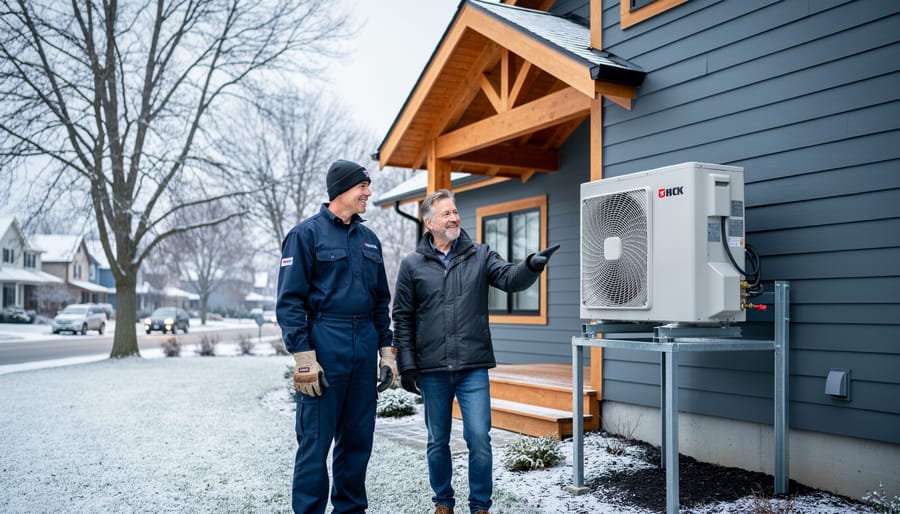
Wisconsin homeowners can access up to $8,000 in rebates through two IRA programs launching in 2024: the Home Efficiency Rebates (HOMES) program offering up to $4,000 for whole-home energy improvements, and the Home Electrification and Appliance Rebates (HEAR) program providing up to $14,000 for income-qualified households installing heat pumps, electric panels, and efficient appliances.
Check your eligibility by reviewing Wisconsin’s income requirements—HEAR rebates prioritize households earning up to 150% of area median income, with maximum rebates for those under 80% AMI. Compare this with BC’s CleanBC rebate programs, which offer similar incentives for heat pumps (up to $7,000) and home energy assessments.
Schedule a pre-renovation home energy audit through Focus on Energy, Wisconsin’s authorized administrator, to identify qualifying improvements that maximize your rebate potential. Document your current energy usage and prioritize upgrades like air sealing, insulation, and high-efficiency HVAC systems that deliver 20-35% energy savings.
Monitor the Wisconsin Office of Energy’s website for application launch dates—most programs will open through Focus on Energy’s online portal in mid-2024. While waiting, gather necessary documentation including proof of income, property ownership, and contractor quotes.
Understanding these federal rebate structures helps homeowners across North America, including BC residents exploring provincial energy efficiency incentives. The application strategies remain similar: comprehensive energy assessments, qualified contractor selection, and strategic upgrade sequencing to maximize both comfort and savings.
Understanding the IRA Home Energy Rebate Programs
The HOMES Rebate Program
The HOMES Rebate Program takes a comprehensive approach to home energy efficiency by rewarding meaningful, measured improvements. Unlike itemized rebates that focus on individual upgrades, HOMES provides performance-based incentives when your entire home achieves substantial energy savings.
Here’s how it works: Wisconsin homeowners who reduce their home’s energy consumption by 20-35% qualify for rebates between $2,000 and $4,000. The more energy you save, the higher your rebate. Low- and moderate-income households receive enhanced support, with rebates doubling to $4,000-$8,000 for the same energy reduction levels.
A qualified energy auditor will assess your home before and after improvements to verify the energy savings. This typically involves upgrades like adding insulation, sealing air leaks, upgrading HVAC systems, and installing energy-efficient windows—creating a coordinated approach rather than piecemeal fixes.
For example, a Madison family combined attic insulation, new windows, and a heat pump installation, achieving a 28% energy reduction. They received a $3,500 rebate that significantly offset their investment while cutting monthly utility bills by $140.
The key advantage? You have flexibility in choosing improvements that make sense for your home’s specific needs while working toward a measurable energy-saving goal.
The HEAR Rebate Program
The HEAR Rebate Program focuses on specific equipment upgrades that deliver measurable energy savings for Wisconsin homeowners. This point-of-sale rebate system provides immediate savings when you purchase qualifying upgrades through participating contractors.
Here’s what you can receive:
Heat pump systems qualify for up to $8,000 in rebates, making them one of the most substantial savings opportunities. These efficient systems both heat and cool your home while reducing energy consumption significantly.
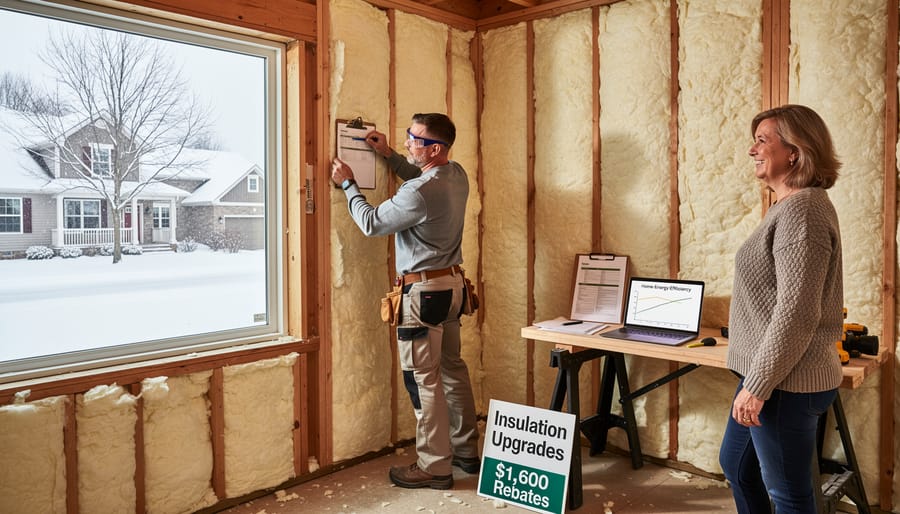
Insulation and air sealing improvements offer up to $1,600, helping maintain comfortable temperatures year-round while lowering heating and cooling costs.
Electrical panel upgrades receive up to $4,000 in support. This is particularly valuable if you’re modernizing your home to accommodate heat pumps or electric vehicle chargers.
Electric heat pump water heaters qualify for up to $1,750, providing an efficient alternative to traditional water heating.
Weatherization projects, including door and window replacements, can receive up to $2,000 in rebates.
Circuit rewiring for major appliances qualifies for up to $2,500, supporting the transition to electric appliances.
The program caps total household rebates at $14,000, allowing you to combine multiple upgrades in a comprehensive home efficiency project. Wisconsin contractors will handle the rebate application at purchase, making the process straightforward and immediate.
Who Qualifies for These Rebates in Wisconsin
Income Requirements and Enhanced Benefits
Wisconsin’s IRA home energy efficiency rebates prioritize support for households who need it most through tiered income-based benefits. The program establishes two income thresholds: households earning up to 80% of the area median income (AMI) qualify for rebates covering up to 100% of project costs (maximum $8,000), while those earning between 80-150% AMI receive up to 50% coverage (maximum $4,000).
To illustrate with Wisconsin examples, a family of four in Milwaukee County earning around $78,000 annually would fall within the 80% AMI threshold, qualifying for the full rebate percentage. Meanwhile, a couple in Dane County earning $95,000 would likely qualify under the 150% AMI tier for the 50% rebate level.
These enhanced benefits recognize that energy efficiency upgrades significantly impact household energy consumption and monthly utility bills, making the rebates particularly valuable for budget-conscious families. Lower-income households benefit most from reduced energy costs over time, often seeing 20-30% reductions in heating and cooling expenses after completing qualifying upgrades. Wisconsin applicants should check their county’s specific AMI figures, as these vary by region and household size, ensuring you understand your exact eligibility tier before planning your energy efficiency improvements.
What Home Improvements Are Covered
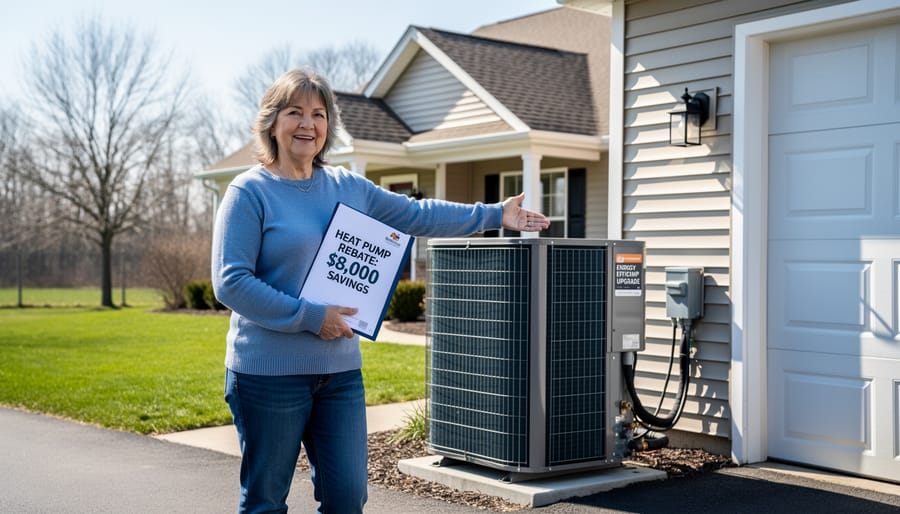
Heat Pumps and HVAC Systems
Wisconsin’s IRA rebates make upgrading to efficient heating and cooling systems more accessible than ever. Air-source heat pumps qualify for rebates up to $8,000, while ground-source (geothermal) heat pumps can receive the maximum rebate amount. Heat pump water heaters are eligible for up to $1,750 in rebates, offering significant savings on both installation and long-term energy costs.
These technologies are especially valuable in Wisconsin’s cold climate. Modern heat pumps now operate efficiently even when temperatures drop below zero, extracting heat from outdoor air or ground sources to warm your home. One Madison family reduced their heating costs by 40% after switching from a traditional furnace to a cold-climate heat pump, while simultaneously lowering their carbon footprint.
British Columbia homeowners can draw similar benefits from their provincial CleanBC rebate programs, which offer up to $11,000 for heat pump installations. Whether you’re in Wisconsin or BC, heat pumps represent a smart investment that pays dividends through reduced energy bills and improved comfort year-round. The combination of federal and state or provincial incentives makes now an ideal time to upgrade your home’s heating and cooling systems.
Insulation, Weatherization, and Electrical Upgrades
Wisconsin’s IRA rebates support essential upgrades that improve home comfort while enabling clean energy transitions. Insulation improvements in attics, walls, and basements reduce heating and cooling costs significantly. Air sealing addresses drafts around windows, doors, and other openings, creating a more energy-efficient envelope that keeps conditioned air inside where it belongs.
Window and door replacements qualify when older, inefficient units are upgraded to ENERGY STAR certified models. These improvements not only lower energy bills but also increase home value and comfort year-round.
Electrical panel upgrades are particularly important for homeowners planning to add heat pumps, electric vehicle chargers, or solar systems. Many older homes have 100-amp panels that can’t safely handle modern electrical loads. Upgrading to 200-amp service creates capacity for electrification while meeting current safety standards.
Wisconsin homeowners can receive rebates covering a substantial portion of these costs, with higher amounts available for households meeting income requirements. Similar comprehensive programs exist across North America, including British Columbia’s energy efficiency initiatives. One Wisconsin family reduced their heating costs by 40% after combining insulation upgrades with air sealing, demonstrating how these foundational improvements deliver lasting benefits. Start by scheduling a home energy assessment to identify which upgrades will provide the greatest impact for your specific situation.
How to Apply for IRA Rebates in Wisconsin
Wisconsin’s Current Program Status and Timeline
Wisconsin is currently in the preparation phase for implementing both the HOMES and HEAR rebate programs, with the state government working to establish the necessary infrastructure and guidelines. While exact launch dates haven’t been finalized, state officials anticipate the programs becoming available sometime in late 2024 or early 2025, pending federal approval of Wisconsin’s implementation plan.
The Wisconsin Office of Energy Innovation is leading the rollout and will coordinate with participating contractors and energy assessors. Homeowners eager to take advantage of these rebates should start preparing now by taking several practical steps. First, schedule a home energy audit to identify which improvements will deliver the greatest savings and qualify for rebates. Second, research qualified contractors in your area who will likely be certified to perform rebate-eligible work. Third, document your current energy usage and home condition with photos and utility bills.
It’s important not to rush into major renovations before the program launches. Projects completed before the official start date won’t qualify for these specific IRA rebates, though they may be eligible for existing state or utility incentives. Instead, use this waiting period to compare different upgrade options, gather multiple quotes, and create a prioritized list of improvements. Stay informed by signing up for updates from Wisconsin’s energy office and checking their website regularly for program announcements and application details.
Required Documentation and Contractors
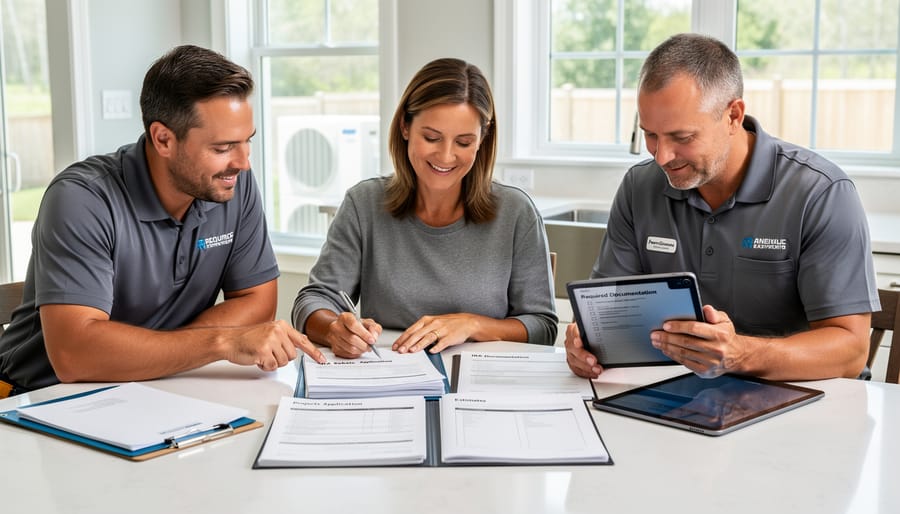
Wisconsin homeowners applying for IRA rebates need several key documents ready. Income verification is essential for means-tested rebates—gather recent tax returns or pay stubs showing household income relative to area median income thresholds. You’ll also need professional home energy audits conducted before and after improvements to document energy savings. Keep all contractor invoices, product specifications, and receipts for qualifying upgrades like heat pumps, insulation, or electrical panel improvements.
Finding qualified contractors is crucial for rebate approval. Look for professionals certified through programs like BPI (Building Performance Institute) or participating in utility rebate networks. Wisconsin’s Focus on Energy maintains a directory of approved contractors experienced with energy efficiency projects. Request multiple quotes, verify licenses and insurance, and ask about their familiarity with IRA rebate requirements. Contractors should understand documentation standards and timelines.
Pro tip: Start your documentation process early. Many homeowners experience delays when paperwork is incomplete. Consider working with contractors who offer turnkey services, handling both installation and rebate paperwork. This streamlined approach mirrors successful programs in other regions where professional guidance significantly improves application success rates.
Stacking Rebates with Other Incentives
One of the most powerful aspects of IRA rebates is their ability to stack with other financial incentives, creating significant savings opportunities for Wisconsin homeowners. Understanding how these programs work together can dramatically reduce your upfront costs for energy efficiency upgrades.
The IRA’s Home Efficiency Rebates and Home Electrification and Appliance Rebates can be combined with existing federal tax credits. The Energy Efficient Home Improvement Credit (25C) offers up to $3,200 annually for qualifying upgrades like heat pumps, insulation, and efficient windows. Meanwhile, the Residential Clean Energy Credit (25D) provides a 30% tax credit for solar panels and battery storage systems with no upper limit.
Wisconsin residents can also layer these federal incentives with state-specific programs. Wisconsin’s Focus on Energy offers rebates for HVAC systems, water heaters, and weatherization projects. Additionally, many Wisconsin utilities provide their own incentive programs for energy-efficient appliances and home improvements.
Here’s a realistic example showing combined savings potential:
A Wisconsin family installs a heat pump system costing $18,000. They qualify for a $8,000 HEEHRA rebate (covers up to $8,000 for heat pumps), a $2,000 federal 25C tax credit (heat pump incentive), and a $400 Focus on Energy rebate. Their total incentives reach $10,400, reducing their actual cost to $7,600—a savings of nearly 58%.
For comprehensive upgrades including insulation ($4,000), new windows ($6,000), and electrical panel upgrade ($3,000), the same family could access additional HEEHRA funds (up to $8,000 for whole-home improvements), more 25C credits, and utility rebates, potentially saving $15,000-$20,000 on a $31,000 project.
The key is planning your improvements strategically and applying for all available programs. Working with certified contractors familiar with these incentive programs ensures you maximize your savings while improving your home’s efficiency and comfort.
Lessons for BC Homeowners: Similar Opportunities North of the Border
While Wisconsin homeowners benefit from IRA rebates, BC residents have access to equally compelling energy efficiency incentives right here at home. Understanding these programs helps you maximize savings while reducing your environmental footprint.
The Canada Greener Homes Grant operates similarly to Wisconsin’s Home Efficiency Rebates, offering up to $5,000 for comprehensive home upgrades. Like the IRA programs, it requires a pre-retrofit energy assessment and covers improvements such as insulation, air sealing, windows, and heat pumps. BC homeowners also qualify for additional federal grants when switching from oil heating systems.
Beyond federal programs, BC offers layered incentives through provincial and utility initiatives. BC Hydro provides rebates for heat pump installations, energy-efficient appliances, and home energy assessments. CleanBC initiatives add another layer of support, particularly for heat pump conversions and home insulation projects. When combined strategically, these BC rebate programs can cover a significant portion of your renovation costs.
The key difference? BC residents often access multiple incentive streams simultaneously. A Vancouver homeowner recently combined federal, provincial, and utility rebates to offset 60 percent of their heat pump installation costs, demonstrating how stacking programs maximizes value.
Take action today by starting with a home energy assessment. This evaluation identifies your highest-impact upgrades and unlocks access to various rebate programs. Whether you’re in Victoria, Kelowna, or Prince George, local energy advisors can guide you through the application process and help you capture every available dollar. The opportunity to improve comfort, reduce energy bills, and support climate goals exists right here in British Columbia.
Wisconsin homeowners have a remarkable opportunity to reduce energy costs and environmental impact through IRA home energy efficiency rebates. With potential savings reaching tens of thousands of dollars for qualifying upgrades like heat pumps, insulation, and electrical panel improvements, these federal programs make sustainable living more accessible than ever. The key is taking action now: assess your home’s current efficiency, identify eligible improvements, and connect with certified contractors who understand the rebate requirements.
For British Columbia residents reading this, similar financial opportunities exist closer to home. BC offers its own robust suite of energy efficiency incentives, including CleanBC rebates for heat pumps, insulation upgrades, and renewable energy installations. Just as Wisconsin homeowners benefit from federal support, BC homeowners can access provincial programs designed to make green upgrades affordable.
Ready to explore what’s available in your community? Start by reviewing your local rebate programs and calculating potential savings. Connect with certified installers through Solar BC to ensure your projects qualify for maximum incentives. Whether you’re weatherizing your home, installing solar panels, or upgrading to efficient heating systems, expert guidance ensures you capture every available dollar while building a more sustainable future.