
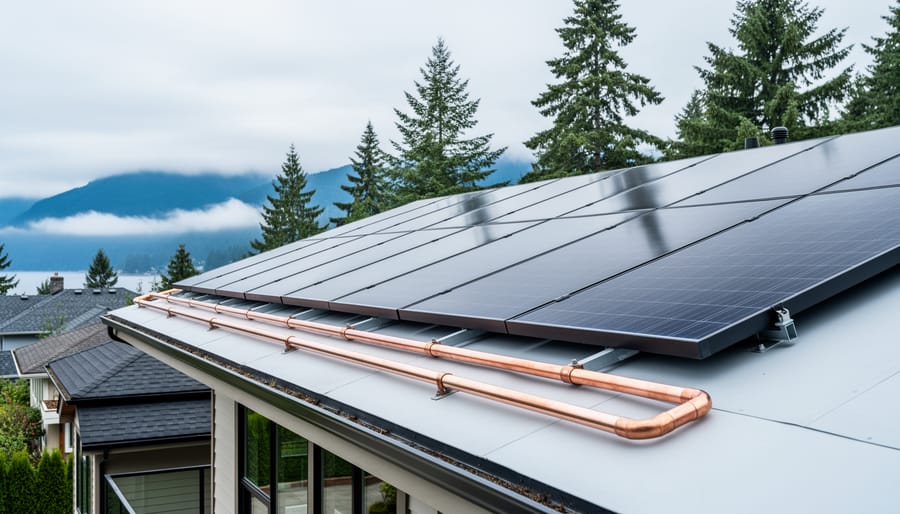
A solar boiler is a type of renewable energy system that harnesses sunlight to heat water or generate steam for residential, commercial, and industrial applications. Instead of burning fossil fuels or relying solely on electric resistance heating, these innovative systems use solar collectors to capture the sun’s energy and transfer it to water, significantly reducing energy costs and carbon emissions.
In British Columbia, where environmental stewardship meets practical innovation, solar boilers are transforming how homes and businesses approach their heating needs. The technology works by circulating water or heat-transfer fluid through solar panels mounted on rooftops or ground installations. As sunlight strikes the collectors, it heats the fluid, which then flows to a storage tank or directly into your building’s heating system. On cloudy days common to our coastal climate, most systems integrate seamlessly with conventional backup heaters to ensure consistent hot water availability.
The beauty of solar boiler technology lies in its versatility. A family in Kelowna might use one to heat their home and swimming pool, while a craft brewery in Victoria could rely on it for brewing processes that demand substantial hot water volumes. Manufacturing facilities across the Fraser Valley are discovering that solar boilers reduce operational costs while demonstrating their commitment to sustainability.
Understanding solar boiler fundamentals empowers you to make informed decisions about whether this technology fits your energy goals. The initial investment pays dividends through decades of reduced utility bills, increased property value, and measurable environmental impact. For British Columbians ready to embrace clean energy, solar boilers represent a proven, accessible pathway toward energy independence.
What Exactly Is a Solar Boiler?
The Two Types of Solar Boilers Available in BC
When considering a solar boiler for your BC home, you’ll encounter two main approaches, each suited to different situations and budgets.
Solar thermal collectors use the sun’s heat directly to warm water. These panels, typically mounted on your roof, contain fluid-filled tubes that absorb solar energy and transfer it to your hot water tank or heating system. This option works exceptionally well in BC’s coastal regions, where even cloudy days provide enough solar radiation for effective heating. For example, a family in Victoria installed solar thermal collectors and now covers 60-70% of their annual hot water needs, reducing their natural gas consumption significantly. This system makes the most sense if you have high hot water demands, adequate south-facing roof space, and want maximum energy efficiency from each solar panel.
Electric boilers powered by solar photovoltaic (PV) panels offer a different approach. Here, solar panels generate electricity that powers a standard electric boiler. This option provides more flexibility since excess electricity can power other household needs or feed back into the grid through BC Hydro’s net metering program. A Kelowna homeowner chose this route because they wanted to offset their entire home’s electrical consumption, not just heating. This system makes sense if you’re already planning a solar PV installation, prefer simpler equipment with fewer maintenance requirements, or want the versatility of using solar power throughout your home. The upfront cost tends to be higher, but provincial incentives can help offset the investment.
How Solar Boilers Work With Your Existing Solar Panel System
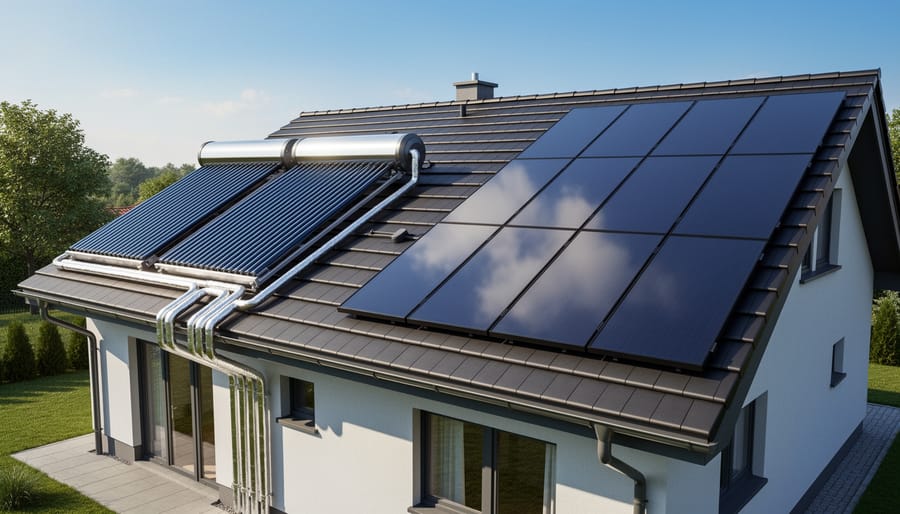
Integrating a solar boiler with your existing photovoltaic (PV) panels creates a powerful tandem that maximizes your renewable energy investment. Here’s how they work together: your solar panels generate electricity during daylight hours, and any excess power that isn’t immediately used by your home can be directed to your solar boiler instead of feeding back to the grid. This stored thermal energy remains available for heating water long after the sun sets.
The beauty of this system is its flexibility. Most solar boilers connect through your home’s electrical system using a device called a diverter or immersion controller. This smart device monitors your energy production and automatically channels surplus electricity to heat your water tank when available. On cloudy days or during winter months, the system seamlessly switches to grid power as needed.
For BC homeowners, this integration means you’re capturing energy that might otherwise go to waste, especially if you’ve already maximized your net metering credits. Local families in Vancouver and Victoria have reported up to 40% reductions in water heating costs by optimizing this partnership between their PV panels and solar boilers, making both systems work harder for your household while reducing your environmental footprint.
Why Solar Boilers Make Sense in British Columbia’s Climate
Overcoming the ‘Too Cloudy’ Myth
Many British Columbians hesitate to invest in solar boiler technology, assuming our frequent cloud cover makes it impractical. However, modern solar thermal systems are specifically designed to capture diffuse sunlight, not just direct rays. Just as solar panels work on cloudy days, solar boilers continue generating heat even when skies aren’t clear.
Recent data from installations across the Lower Mainland and Vancouver Island shows that solar boilers consistently meet 50-70% of annual hot water needs, despite our regional weather patterns. The technology works by absorbing ambient light and converting it to usable heat energy, meaning even overcast conditions contribute to your heating requirements.
A community center in Victoria provides a practical example. Their solar boiler system reduced conventional heating costs by 60% over two years, with performance remaining steady throughout winter months. The key lies in proper system sizing and integration with existing heating infrastructure, ensuring you have backup capacity when needed while maximizing solar contribution year-round.
The bottom line: BC’s climate is more solar-friendly than most residents realize, making solar boilers a viable investment for reducing both energy bills and carbon footprints.

Reducing Heating Costs During Long BC Winters
BC’s long, cold winters mean heating bills can consume a significant portion of household budgets, but solar boiler systems offer real relief. Homeowners across the province are seeing tangible savings by switching to solar thermal technology.
Take the Johnson family in Kelowna, who installed a solar boiler system in 2021. They report saving approximately 40-50% on their annual heating costs, translating to roughly $800-$1,200 in savings each year. Their system supplements their existing heating during sunny days and reduces reliance on natural gas throughout the shoulder seasons.
In Vernon, a local community center reduced their heating expenses by 35% after installing solar thermal collectors paired with a high-efficiency storage tank. Even during winter months with limited sunlight, their system preheats water, meaning their conventional boiler works less to reach desired temperatures.
The key to maximizing savings lies in proper system sizing and integration with your existing heating setup. Most BC homeowners see a payback period of 10-15 years, with systems lasting 25-30 years. Provincial rebates and incentives can shorten this timeline significantly.
Consider starting with a professional energy assessment to understand your home’s specific needs and potential savings. Many BC residents find that even modest reductions in heating costs add up substantially over our extended winter season.

Real BC Homes Using Solar Boilers Successfully
BC homeowners across diverse regions are already experiencing the benefits of solar boiler systems, with impressive results that demonstrate their viability in our province’s varied climate zones.
In Vancouver’s Kitsilano neighborhood, the Chen family installed a solar thermal system in 2021 to heat their 2,400 square foot home and provide domestic hot water. “We were skeptical about solar working through our rainy winters, but we’ve been pleasantly surprised,” shares homeowner Michael Chen. Their system reduced natural gas consumption by 65% in the first year, translating to savings of approximately $890 annually. Even during cloudier months, their evacuated tube collectors capture enough diffuse sunlight to maintain baseline heating, with their conventional boiler only kicking in during the coldest stretches.
Victoria resident Sarah Thompson took a different approach for her heritage home in Oak Bay. She integrated a solar boiler system specifically for radiant floor heating in her newly renovated addition. “The combination works beautifully with our moderate climate,” Thompson explains. Her investment of $8,500 paid for itself within seven years through reduced electricity bills, and she now saves roughly $1,200 each year. The system also increased her property value, an unexpected benefit when she had her home reassessed.
In Kelowna, the Martinez family’s experience showcases solar boiler efficiency in the BC Interior’s sunnier climate. Their system covers nearly 80% of their annual hot water and space heating needs. “With 2,000 hours of sunshine yearly here, our solar collectors work overtime,” notes homeowner David Martinez. Their annual savings reached $1,450, with summer months requiring almost no backup heating. The family also appreciated the $2,000 provincial rebate they received, which helped offset installation costs.
These real-world examples demonstrate that solar boiler technology adapts successfully to BC’s regional differences, delivering consistent savings and environmental benefits regardless of your location.
What to Consider Before Installing a Solar Boiler
Upfront Costs and Available BC Incentives
Installing a solar boiler system represents a significant investment, typically ranging from $8,000 to $15,000 depending on system size and your property’s requirements. However, BC residents have access to valuable financial support that can substantially reduce these upfront costs.
The CleanBC Better Homes program offers rebates for renewable heating systems, with eligible homeowners receiving up to $6,000 for solar thermal installations. Additionally, federal programs like the Canada Greener Homes Grant provide up to $5,000 for qualified energy upgrades. Combined with BC solar rebates, these incentives can cover 40-60% of your total installation costs.
Many BC homeowners find that the payback period for solar boilers ranges from 7-12 years, after which they enjoy decades of reduced energy bills. For example, a Victoria family reduced their natural gas consumption by 70% after installing a solar boiler system, recovering their investment in under 10 years.
Local financing options, including energy efficiency loans through credit unions and municipal programs, make installations more accessible. Some providers also offer zero-interest financing for qualifying projects, spreading costs over several years while savings begin immediately.
Finding Certified Solar Boiler Installers in BC
Finding the right solar boiler installer in BC is crucial for system performance and longevity. Start by looking for professionals certified by the Solar Energy Society of Canada or holding Natural Resources Canada’s Solar Thermal Installer designation. These credentials ensure installers understand local building codes and climate considerations specific to British Columbia.
During consultations, ask about their experience with solar boiler installations in your region, particularly in areas with similar weather patterns. Request references from recent BC projects and inquire about warranties on both equipment and installation work. A qualified installer should conduct a thorough site assessment, examining your property’s solar exposure, roof condition, and existing heating system compatibility.
Budget for multiple quotes to compare approaches and pricing. Ask how they handle maintenance and what ongoing support they provide. Victoria resident James Chen recommends choosing installers who explain the technology clearly without overwhelming you with jargon. His installer walked him through expected seasonal performance variations and provided realistic savings projections.
Remember, certified installers can also guide you through available provincial and federal incentive programs, maximizing your investment in clean energy while supporting BC’s climate action goals.
Calculate Your Potential Solar Boiler Savings
Understanding your potential savings helps you make an informed decision about solar boiler investment. Start by gathering your recent heating bills to determine your annual costs. Most BC households spend between $800-$2,000 yearly on water heating, depending on how much electricity BC homes use and their current system.
To estimate your savings, multiply your annual heating costs by 0.5 to 0.7, representing the 50-70% reduction most solar boiler systems achieve. For example, if you spend $1,200 annually, you could save $600-$840 per year. Factor in available BC Hydro rebates and federal greener homes grants, which can reduce upfront costs by $2,000-$5,000.
Calculate your payback period by dividing your net installation cost by annual savings. Most BC residents see payback within 8-12 years, with systems lasting 20-25 years. Consider also tracking your carbon footprint reduction—typically 1-2 tonnes of CO2 annually per household.
Visit your local solar installer for a personalized assessment that accounts for your roof orientation, household size, and specific energy needs.
Solar boilers represent a smart investment for BC homeowners ready to embrace clean energy while reducing long-term costs. By harnessing our province’s abundant solar resources, these systems deliver reliable hot water and space heating without the carbon footprint of traditional fuel sources. The environmental benefits are clear: lower greenhouse gas emissions, reduced reliance on fossil fuels, and a meaningful contribution to BC’s climate action goals.
From an economic perspective, solar boilers offer compelling advantages. While the initial investment requires consideration, provincial rebates and federal incentives can offset costs significantly. Over time, the savings on utility bills add up, with many BC families reporting 50-70% reductions in water heating expenses. Additionally, homes with solar technology often see increased property values, making this a financially sound decision.
Ready to explore solar boilers for your home? Start by connecting with certified installers in your area who understand BC’s unique climate and regulatory landscape. Request site assessments from multiple providers, compare quotes, and ask about available incentives. Many installers offer free consultations and can help you calculate potential savings specific to your household. Take the first step today toward cleaner, more affordable energy for your BC home.