

Compare Oregon’s solar tax credits (up to 40% of system costs through federal and state programs) against BC’s recent incentive changes to determine your best path forward. Oregon homeowners benefit from the federal 30% Investment Tax Credit plus state-level Energy Incentive Program rebates, while BC residents now access similar combined savings through the Canada Greener Homes Grant (up to $5,000) and provincial CleanBC programs.
Examine three key differences that matter for BC residents. Oregon’s property tax exemption means solar installations don’t increase assessed home values for taxation, while BC provides PST exemptions on solar equipment. Oregon utilities offer net metering at retail rates statewide, and BC’s net metering program delivers comparable benefits with regional variations.
Calculate your actual return on investment using BC-specific numbers rather than Oregon benchmarks. A typical Vancouver residential system costs $15,000-$25,000 after incentives, with 8-12 year payback periods given BC Hydro rates and available rebates. Oregon’s higher electricity costs create faster payback, but BC’s stable utility rates and generous provincial programs deliver strong long-term value.
Focus on BC opportunities available right now. CleanBC income-qualified programs provide enhanced rebates for eligible households, while federal interest-free loans through the Greener Homes program eliminate upfront cost barriers that Oregon residents often face without similar financing options.
Oregon’s Solar Incentive Landscape: The Programs Making a Difference
The Solar + Storage Rebate Revolution
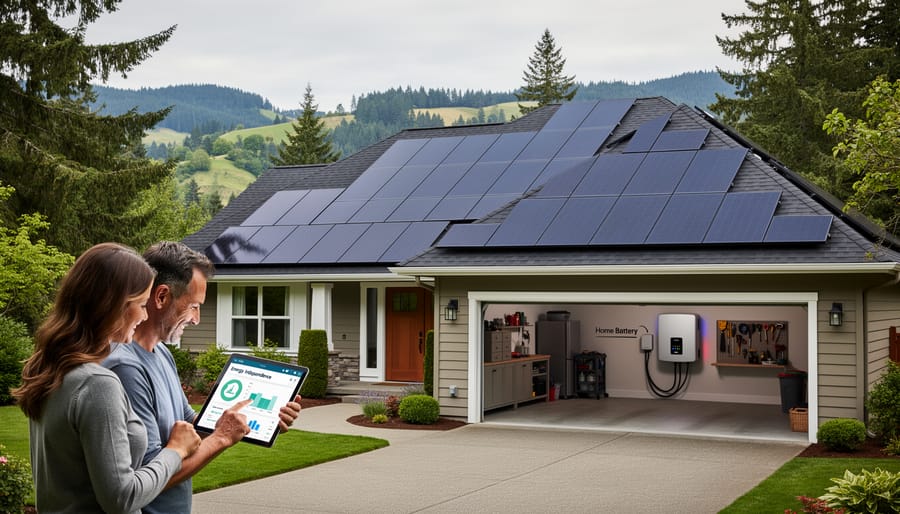
Oregon has emerged as a North American leader in energy storage adoption, largely thanks to its Solar + Storage Rebate Program launched in 2020. The state’s Energy Trust offers rebates up to $5,000 for residential battery storage systems paired with solar installations, dramatically reducing upfront costs for homeowners.
The results speak for themselves. Portland resident Maria Chen installed a 13.5 kWh battery system alongside her solar panels and received a $4,200 rebate, cutting her total storage costs by nearly 40%. During winter power outages, her home remained comfortable while neighbors went without electricity. Her annual energy costs dropped by $1,800, with the battery storing excess summer solar production for darker months.
Oregon utilities also offer time-of-use rates that reward storage users. Homeowners charge batteries during off-peak hours and discharge during expensive peak periods, maximizing savings. The program processed over 3,000 rebate applications in its first two years, creating a thriving market for installers and manufacturers.
While BC residents can’t access Oregon’s specific rebates, this model demonstrates how storage incentives accelerate clean energy adoption. Understanding these successful programs helps BC homeowners advocate for similar initiatives locally while exploring current provincial and federal storage opportunities.
Net Metering and Feed-in Programs
Oregon’s net metering program provides a practical example of how solar homeowners can maximize their investment while supporting grid stability. When your solar panels produce more electricity than your home uses, that excess power flows back to the grid, and you receive credits on your utility bill at the retail electricity rate. This creates ongoing financial benefits, essentially turning your electric meter backward during peak production hours.
In Oregon, net metering is available to systems up to 2 megawatts, making it accessible for both residential and commercial installations. A typical Portland homeowner might generate surplus energy during sunny summer months, building up credits that offset electricity costs during cloudier winter periods. This seasonal balancing act has helped many Oregon families reduce their annual electricity bills by 70-90%.
While BC residents researching this option will find differences in their local programs, the underlying principle remains valuable. BC Hydro offers its own net metering program with similar benefits, though rates and terms vary. The key takeaway for BC homeowners is understanding how net metering creates long-term value by transforming your solar system from a one-time investment into an ongoing income-generating asset. Contact your local utility provider to explore how net metering can work specifically for your property and energy usage patterns.
How BC’s Solar Incentives Compare: Where We Stand Today
BC’s Hidden Solar Advantages
While Oregon has developed notable solar programs, BC residents actually enjoy several distinct advantages that make solar adoption equally attractive here. Our province’s abundant hydroelectric infrastructure provides some of the lowest baseline electricity rates in North America, meaning solar installations complement rather than replace an already affordable, clean energy grid. This positions BC homeowners to maximize savings during peak usage periods without sacrificing reliability.
BC’s current rebate programs continue to evolve, with CleanBC offering targeted incentives for residential and commercial installations. Many municipalities have introduced property tax exemptions for solar equipment, and net metering policies allow you to bank credits when your system produces excess power. Unlike Oregon’s heavily sun-dependent model, BC’s solar installations perform remarkably well in our climate, with modern panels capturing energy even on cloudy days.
Local success stories demonstrate real results: Vancouver homeowners are reducing annual electricity costs by 40-60%, while commercial properties in the Okanagan achieve payback periods of just 8-12 years. The combination of provincial support, municipal programs, and falling equipment costs creates a compelling opportunity unique to our region.
The Gaps We Need to Address
While British Columbia has made solid progress with solar incentives, there’s room for growth in a couple of key areas. Looking at Oregon’s model reveals opportunities for BC to enhance its offerings.
Battery storage incentives remain limited in BC compared to Oregon’s robust programs. As more households adopt solar panels, the ability to store excess energy becomes increasingly valuable for maximizing self-sufficiency and grid resilience. Enhanced rebates or financing options for battery systems would help BC residents get more value from their solar investments, particularly during evening hours or power outages.
The application process for solar incentives could also benefit from streamlining. Some BC residents find navigating multiple rebate programs time-consuming. Oregon’s coordinated approach through centralized platforms offers a helpful reference point. Creating clearer pathways and consolidated information would make it easier for families and businesses to access available programs without confusion.
These aren’t shortcomings but rather opportunities for BC to build on its existing foundation. The province has shown commitment to renewable energy, and addressing these gaps would strengthen an already promising solar landscape for current and future adopters.
Real Results: Oregon Success Stories That Inspire
Oregon homeowners and businesses have demonstrated impressive returns on their solar investments thanks to the state’s incentive programs. Let’s look at real numbers that show what’s possible.
The Martinez family in Portland installed a 6.5 kW solar system in 2022 for $19,500. After claiming the 30% federal tax credit ($5,850) and Oregon’s Energy Trust incentive ($2,275), their net cost dropped to $11,375. Their monthly electricity bills decreased from $145 to just $22, saving them approximately $1,476 annually. With these savings, their payback periods calculated to roughly 7.7 years.
Green Valley Market, a small grocery store in Eugene, invested $42,000 in a commercial solar array. Between federal incentives, state tax credits, and utility rebates, they recovered $18,900 in the first year. Their energy costs dropped by 68%, translating to $4,200 in annual savings. The business expects full payback within 5.5 years while significantly reducing their carbon footprint.
A Salem-based tech startup accessed Oregon’s Solar Within Reach program, making their installation affordable despite limited upfront capital. Their $15,000 system cost only $7,200 after incentives, with monthly savings of $98 eliminating their system cost in just over six years.
These examples demonstrate how Oregon’s layered incentive approach makes solar accessible across different budgets and property types. While BC residents researching these programs may find Oregon’s structure appealing, similar opportunities exist closer to home with BC’s evolving solar landscape offering competitive pathways to renewable energy adoption.

What These Lessons Mean for Your BC Solar Project
Stacking Your Incentives for Maximum Savings
Maximizing your solar savings in BC means combining multiple incentive programs strategically. Start with federal grants like the Canada Greener Homes Grant, which provides up to $5,000 for solar installations. Next, explore provincial programs such as the BC Hydra Net Metering program, allowing you to earn credits for excess energy your system produces.
For a practical example, consider a typical 6kW residential system costing $18,000. Apply the federal grant ($5,000), add CleanBC rebates where available, and factor in net metering savings averaging $600-900 annually. Your upfront investment reduces to approximately $13,000, with ongoing energy credits further decreasing payback time to 10-12 years.
Municipal incentives vary by location. Vancouver residents might access additional property tax exemptions for solar equipment, while other communities offer expedited permitting. Contact your local government to identify region-specific programs.
The key is timing: apply for federal programs first, as they often require pre-approval. Document all expenses carefully, and consider consulting with local solar installers familiar with BC’s incentive landscape. They can help navigate application processes and ensure you capture every available saving opportunity for your specific situation.
The Future of Solar Incentives in BC: What’s Coming
While Oregon continues to refine its solar programs, BC is beginning its own journey toward enhanced renewable energy incentives. Learning from successful models like Oregon’s, several policy discussions are underway that could reshape BC’s solar landscape in the coming years.
The provincial government is currently exploring expanded rebate programs that would make solar more accessible to middle-income households. Advocacy groups, including the BC Sustainable Energy Association, are pushing for policies similar to Oregon’s community solar programs, which would allow renters and apartment dwellers to benefit from solar energy without rooftop installations.
Municipal governments are also taking initiative. Vancouver and Victoria are considering enhanced property tax incentives for solar adopters, while several regional districts are discussing streamlined permitting processes that could reduce installation costs by up to 15 percent. These local efforts mirror Oregon’s early municipal programs that eventually scaled to state-level policies.
Climate action plans released this year indicate that BC aims to triple its residential solar capacity by 2030. To achieve this ambitious goal, stakeholders expect new incentive programs to be announced within the next 18 months.
For residents interested in shaping these policies, now is the time to engage. Join local clean energy coalitions, participate in municipal consultations, and connect with community groups already installing solar projects. These grassroots efforts demonstrate demand and help build the political momentum needed for meaningful policy change. By acting now with existing programs while advocating for better ones, BC residents can accelerate the province’s solar transition.

While Oregon’s solar incentives offer valuable lessons, BC residents have excellent opportunities right here at home. The key to maximizing your solar investment is taking action while current provincial and federal programs remain available. Incentive programs evolve, and the combination of CleanBC funding, federal grants, and net metering creates a compelling financial case for going solar today.
Your next steps are straightforward. Start by visiting Solar BC’s website to check your eligibility for current incentives based on your location and property type. Their eligibility calculator provides personalized estimates of your potential savings, including both upfront rebates and long-term energy cost reductions. This takes just minutes and gives you concrete numbers to work with.
Next, connect with Solar BC certified installers who understand local regulations and can navigate the incentive application process on your behalf. These professionals ensure you’re accessing every available program while designing a system optimized for BC’s climate conditions.
Don’t wait for the perfect moment. Energy costs continue rising, and incentive budgets can be allocated quickly. BC residents who act now benefit from competitive programs that make solar more accessible than ever. Your sustainable energy future starts with one simple action: checking your eligibility today.