
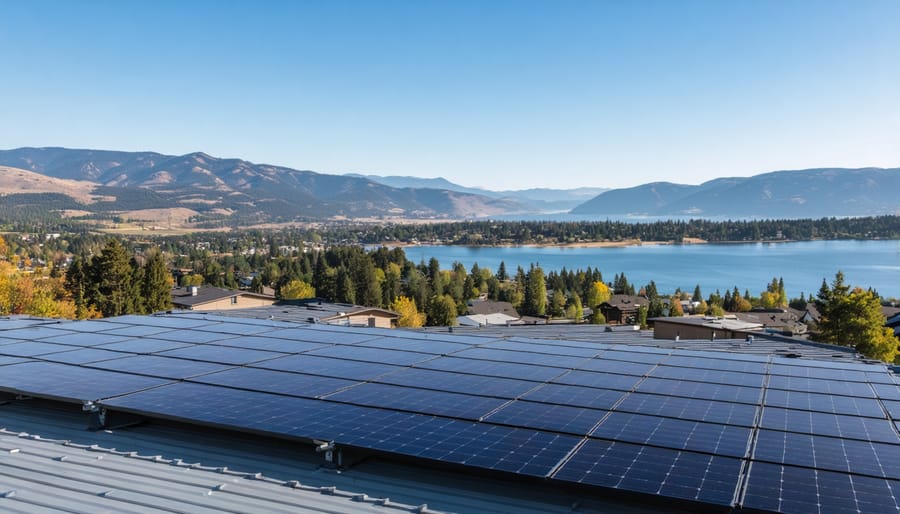
**Expect to invest between $18,000 and $25,000 for a 9 kW solar system in Kelowna before incentives**—a price point that positions this setup as ideal for larger homes consuming 900-1,100 kWh monthly or small businesses with moderate energy needs.
Your actual out-of-pocket cost drops significantly when you factor in available programs. BC Hydra’s Net Metering allows you to bank excess energy credits, while federal programs can reduce your initial investment by thousands. The Canada Greener Homes Grant offers up to $5,000 for qualifying installations, and businesses can leverage accelerated capital cost allowances to improve their bottom line.
A 9 kW system generates approximately 10,500-11,500 kWh annually in the Okanagan region—enough to offset 80-100% of typical household electricity consumption. At current BC Hydro rates, homeowners save $1,200-1,400 yearly, achieving payback in 13-16 years while adding substantial property value.
System costs vary based on three key factors: equipment quality (premium panels versus standard options), roof complexity and orientation, and your installer’s experience level. Local Kelowna installers typically charge $2.00-2.75 per watt installed, with variations reflecting these considerations.
Understanding whether 9 kW matches your consumption pattern requires examining your last 12 months of electricity bills. Homes consistently using over 900 kWh monthly benefit most from this system size, while smaller households may find a 6-7 kW installation more cost-effective. This guide breaks down real pricing from Kelowna installations, calculates your potential return on investment, and provides a straightforward comparison framework for evaluating quotes.
The Real Numbers: 9 kW Solar System Pricing in Kelowna
What’s Included in Your Investment
When you request a quote for a 9 kW solar system in Kelowna, you’re investing in much more than just panels on your roof. Understanding what’s included helps you compare quotes accurately and ensures you’re getting complete, professional service.
**Solar Panels and Core Equipment**
Your system includes approximately 22-27 high-efficiency solar panels (typically 330-410 watts each), along with either string inverters or microinverters to convert solar energy into usable electricity for your home. Quality mounting hardware secures everything to your roof structure, engineered to withstand Kelowna’s weather conditions including snow loads.
**Professional Installation Services**
Certified installers handle the complete electrical work, connecting your system safely to BC Hydro’s grid. This includes installing the necessary electrical panels, disconnects, and metering equipment. Your investment covers labour costs for the entire installation process, typically completed within 2-3 days for residential properties.
**Permits and Approvals**
Reputable installers manage all permit applications with the City of Kelowna and coordinate BC Hydro interconnection approvals. This administrative work, often valued at $500-800, ensures your system meets all provincial electrical codes and local requirements.
**Warranty Coverage**
Standard packages include 25-year panel performance warranties, 10-15 year inverter warranties, and workmanship guarantees (typically 5-10 years). These protections safeguard your investment long-term.
When reviewing quotes, verify that all these components are explicitly included—comprehensive packages prevent unexpected costs and ensure smooth project completion from start to finish.
Why Kelowna Pricing Differs from Other BC Cities
Kelowna’s 9 kW solar system costs reflect unique local factors that distinguish pricing from Vancouver, Victoria, or smaller BC communities. Installation complexity varies significantly across the region—while newer subdivisions in South Pandosy or McKinley Beach typically feature straightforward roof configurations, older homes in Glenmore or Mission may require additional structural assessments or reinforcements.
Local permit fees in Kelowna average $250-400, which sits mid-range compared to other BC cities. The competitive installer landscape here works in your favour, with several established solar companies serving the Okanagan creating healthy price competition without sacrificing quality.
Kelowna’s predominant roof types—primarily asphalt shingle on pitched roofs—generally keep installation costs reasonable. However, homes with metal roofing or flat commercial buildings may see slight cost increases due to specialized mounting requirements. The region’s experienced installers have adapted techniques specifically for Okanagan building styles, meaning you’re getting crews familiar with local conditions rather than companies learning on the job.
Weather considerations also play a role. Kelowna’s reliable sunshine makes 9 kW systems highly productive here, which justifies the investment. Local installers schedule projects understanding our seasonal patterns, often recommending spring or fall installations when conditions are ideal and wait times shorter.
Financial Incentives That Lower Your Actual Cost
Federal and Provincial Programs Available Now
Installing a 9 kW solar system becomes significantly more affordable through federal and provincial incentive programs designed to accelerate BC’s clean energy transition.
The Canada Greener Homes Grant offers up to $5,000 toward solar installations. To qualify, homeowners must complete an EnerGuide home evaluation both before and after installation. The grant amount depends on your system’s capacity, with a 9 kW system typically receiving the maximum rebate. Your installation must be performed by a certified contractor and meet specific efficiency standards.
BC residents can also access CleanBC’s Better Homes rebate program, which provides additional support for energy efficiency upgrades. While this program primarily focuses on heat pumps and home insulation, combining solar with these improvements maximizes your total rebate potential—sometimes reaching $11,000 when stacked strategically.
Local utilities including FortisBC offer net metering programs, allowing you to receive credits for excess electricity your system generates. This effectively reduces your electricity bills to near-zero during peak production months.
**Eligibility requirements** include homeownership, up-to-date property taxes, and using approved installers. Processing times typically range from 4-8 weeks after submitting your application with all required documentation.
When combined, these incentives can reduce your 9 kW system’s upfront cost by $5,000-$7,000, bringing the net investment down to approximately $20,000-$24,000 for Kelowna homeowners. Many local families find these programs make solar financially accessible within their budgets while accelerating their payback timeline.
FortisBC Net Metering Benefits
FortisBC’s net metering program allows you to earn credits for excess solar electricity your 9 kW system sends back to the grid. When your panels produce more power than you’re using—typically during sunny summer days—your meter essentially runs backward, banking credits at the current retail electricity rate.
Here’s how it works in practice: If you generate 1,000 kWh more than you consume in July, those credits offset your consumption during cloudier winter months when your system produces less. FortisBC credits you at approximately $0.12 per kWh, the same rate you pay for electricity. This one-to-one crediting structure significantly improves your return on investment.
For a typical Kelowna homeowner with a 9 kW system, net metering can save an additional $200-400 annually compared to systems without this benefit. The Thompsons, a family in West Kelowna, reduced their annual electricity costs by 85% thanks to net metering combined with their solar production.
To enroll, simply complete FortisBC’s net metering application during your solar installation process. Your installer typically handles the paperwork, making it a straightforward addition that maximizes your system’s financial performance without extra effort on your part.
Is a 9 kW System the Right Size for Your Home?
Average Energy Production in Kelowna’s Climate
In Kelowna’s sunny climate, a 9 kW solar system typically generates between 10,500 to 12,000 kWh annually—enough to cover typical household consumption for most families. Understanding these energy generation expectations helps you plan accurately.
Kelowna enjoys approximately 2,000 sunshine hours per year, with significant seasonal variation. Summer months (June-August) are your powerhouse period, with daily production reaching 50-60 kWh. Spring and fall deliver moderate output of 30-40 kWh daily, while winter months (December-February) produce roughly 15-25 kWh per day due to shorter days and occasional snow coverage.
Monthly production estimates for a 9 kW system in Kelowna:
– Peak summer months: 1,200-1,400 kWh
– Spring/fall months: 900-1,100 kWh
– Winter months: 450-600 kWh
Local homeowner Sarah Chen shares: “Our 9 kW system exceeded expectations, producing 11,800 kWh last year. Even cloudy days contribute meaningful energy.” This real-world performance demonstrates how Kelowna’s climate supports reliable solar generation year-round, making your investment particularly worthwhile in our region.
Typical Homes That Benefit from 9 kW Systems
A 9 kW solar system typically serves medium to large homes between 1,800-2,500 square feet with 3-5 occupants. This system size works well for families whose monthly electricity bills range from $180-250 in BC, consuming approximately 900-1,100 kWh monthly.
Homes that benefit most include those with:
– Central air conditioning or heat pumps running during summer months
– Electric vehicle charging needs (one or two vehicles)
– Home offices with multiple computers and equipment
– Electric water heaters and appliances
– Families spending considerable time at home during daylight hours
For example, a Kelowna family of four with an EV, working-from-home parents, and standard appliances found their 9 kW system offset 85% of their annual electricity costs. If your energy consumption falls within this range and you have suitable roof space (approximately 500-600 square feet), a 9 kW system likely matches your needs perfectly.
Your Return on Investment Timeline
Monthly Savings You Can Expect
A 9 kW solar system in Kelowna typically generates between 10,000-12,000 kWh annually, translating to substantial monthly savings on your FortisBC bill. Based on current residential rates of approximately $0.14 per kWh, homeowners can expect to save **$115-$140 per month** on average.
These savings fluctuate seasonally due to British Columbia’s weather patterns. During summer months (June-August), when your system produces peak energy, you might see reductions of $180-$200 monthly. Winter months (December-February) typically yield more modest savings of $60-80 monthly, as shorter daylight hours and cloud cover reduce production.
**Real-world example:** The Thompson family in Kelowna installed their 9 kW system in 2022. Their average summer bill dropped from $215 to just $30, while winter bills decreased from $180 to $110. Over their first full year, they saved approximately $1,450.
It’s important to note that actual savings depend on your household’s energy consumption patterns and whether you’re home during peak production hours. With FortisBC’s net metering program, excess energy generated during sunny periods credits your account, maximizing your annual savings even when production varies seasonally.
Kelowna Success Story: The Mitchells’ Solar Journey
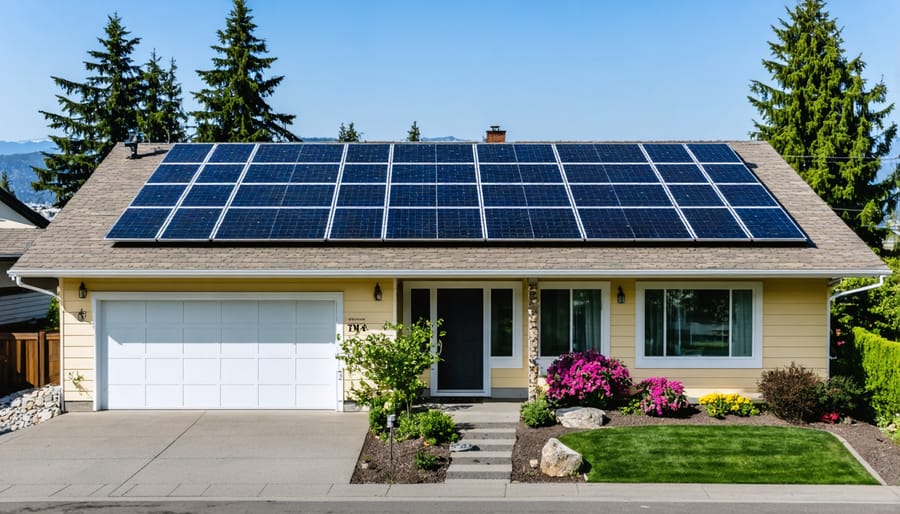
When the Mitchell family decided to go solar in early 2023, they wanted to power their 2,200 square foot home in Kelowna’s Wilden neighborhood while significantly reducing their $220 monthly electricity bills.
After comparing three local installers, the Mitchells invested $22,500 in their 9 kW system—slightly above the typical range due to their tile roof, which required specialized mounting equipment. They financed through a home equity line of credit at 5.2% interest, keeping their monthly payments manageable.
“We were nervous about the upfront cost,” Sarah Mitchell admits, “but the numbers made sense when we looked at the long-term picture.”
The family accessed BC Hydro’s net metering program, allowing them to bank excess energy produced during Kelowna’s sunny summers. Their first full year delivered impressive results: annual electricity costs dropped by 78%, saving approximately $2,050. With the system projected to last 25-30 years, they’re looking at cumulative savings exceeding $51,000.
The Mitchells learned valuable lessons along the way. “Get at least three detailed quotes,” advises Mark Mitchell. “One installer quoted $4,000 less but used lower-efficiency panels that would have produced 15% less energy over time.”
They also recommend budgeting an extra 10% for potential roof repairs discovered during installation—their experience included replacing some deteriorated decking.
Today, the Mitchells track their production through a smartphone app, watching their investment pay dividends while reducing their environmental footprint. Their payback period is projected at 10.7 years, after which all savings become pure profit.
Hidden Costs and Considerations
Roof Upgrades and Structural Assessments
Before installing your 9 kW system, your roof may need assessment or upgrades. Most Kelowna homes with asphalt shingle roofs in good condition require no additional work. However, if your roof is over 15 years old or shows wear, replacing it beforehand makes financial sense—you’ll avoid the $1,500-$2,500 cost of removing and reinstalling panels later.
Structural assessments typically cost $300-$500 and ensure your roof can support the approximately 600-pound system weight. Older homes or those with clay tiles may need reinforcement, adding $1,000-$3,000 to your project. Metal roofs are ideal for solar installations and rarely need modifications.
One Kelowna homeowner discovered their 20-year-old roof needed replacement during their solar consultation. By addressing both projects together, they negotiated a bundle discount saving $800 overall. Reputable installers include roof assessments in their site evaluation, helping you budget accurately from the start.
Electrical Panel Upgrades
Your existing electrical panel may need upgrading to safely handle a 9 kW solar system. Most modern BC homes have 200-amp panels that can accommodate this system size, but older properties with 100-amp panels often require upgrades. This is especially common in homes built before the 1990s. Local electrical codes in British Columbia mandate that your panel must support the combined load of your household electricity use plus your solar system’s output.
Panel upgrades typically cost between $2,000 and $4,000 in the Kelowna area, depending on panel capacity and any additional wiring work required. Your solar installer will conduct an electrical assessment during the site visit to determine if an upgrade is necessary. While this adds to your upfront investment, it’s a worthwhile improvement that increases your home’s overall electrical capacity and safety—benefiting you whether you’re powering your home or selling excess energy back to the grid. Many homeowners discover their upgraded panel also allows them to add electric vehicle charging or other future electrical upgrades.
Getting Accurate Quotes from Kelowna Installers
Red Flags to Watch For
Be cautious of quotes significantly below Kelowna’s average range of $18,000-$27,000—extremely low pricing often signals subpar equipment or inexperienced installers. Reputable companies provide detailed written quotes breaking down all costs, not vague estimates. Watch for high-pressure sales tactics urging immediate decisions or installers unwilling to provide verifiable references from local customers. Ensure your installer holds proper licensing and offers comprehensive warranties on both equipment and workmanship. A local Kelowna business owner shared how an initially attractive quote lacked permits and proper electrical certifications, nearly causing costly retrofitting. Ask whether quotes include permit fees, grid connection costs, and post-installation support. Trustworthy installers welcome questions, conduct thorough site assessments, and transparently explain how your system qualifies for available BC incentives, ensuring you maximize savings without surprises.
Certification and Warranty Essentials
Before committing to a 9 kW system, verify your installer holds proper licensing through BC’s Technical Safety Authority and certification from the Canadian Solar Industries Association. Reputable BC installers carry these credentials as standard.
Expect comprehensive warranty coverage: panels typically come with 25-year performance warranties guaranteeing 80-85% output, while inverters usually offer 10-15 year coverage. Quality installers provide workmanship warranties covering installation for 5-10 years.
Your investment stays protected through BC Hydro’s net metering agreement, which locks in your ability to receive credits for excess power generation. Request documentation of all warranties in writing and confirm your installer maintains liability insurance. In Kelowna, homeowner Sarah Chen’s installer provided a warranty package covering all components—giving her peace of mind that her $18,000 investment remains safeguarded for decades. Always ask about extended warranty options and what specific conditions might void coverage.
A 9 kW solar system represents a significant investment for Kelowna homeowners, with costs typically ranging from $18,000 to $27,000 before incentives. However, when you factor in federal and provincial rebates, your actual out-of-pocket expense drops considerably—often by $5,000 to $8,000. For most households using 9,000-12,000 kWh annually, this system size delivers substantial electricity bill savings that add up to $1,500-$2,000 per year, meaning you’ll recover your investment in 8-12 years while enjoying decades of clean, renewable energy.
The best next step is getting personalized numbers for your specific home. Solar BC offers interactive tools that calculate your customized savings based on your roof orientation, energy usage, and local electricity rates. These calculators remove the guesswork and show you exactly what solar can do for your household budget.
Ready to move forward? Solar BC connects you directly with certified local installers who understand Kelowna’s climate and building requirements. Request quotes from multiple providers to compare pricing and find the right fit for your needs. Your journey toward energy independence and lower bills starts with a simple conversation—and the financial benefits speak for themselves.