
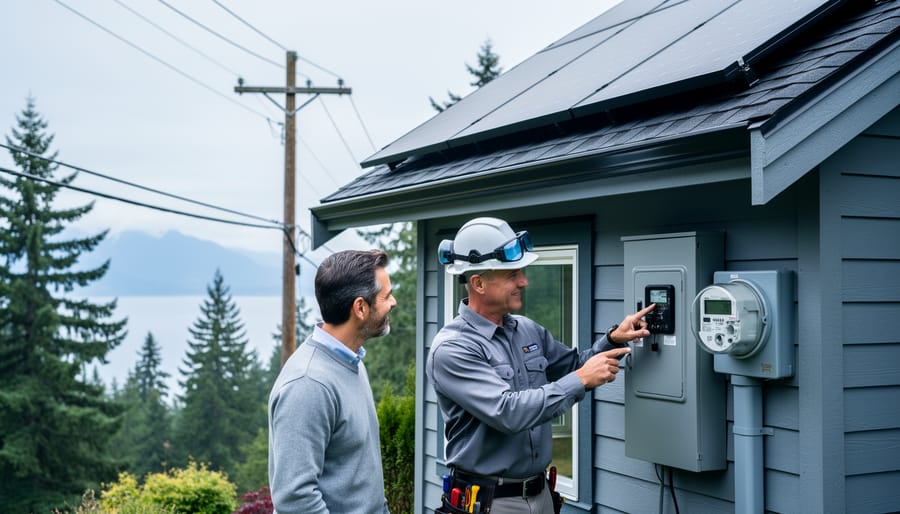
Understand that solar interconnection is the formal approval process BC Hydro requires before connecting your solar system to the electrical grid – and it typically adds 8 to 16 weeks to your project timeline. This regulatory step protects grid safety and ensures your system meets provincial standards, but delays catch many homeowners off guard during their solar journey.
Prepare for interconnection by gathering three essential documents before your installer even breaks ground: your property’s electrical service details, a recent BC Hydro bill showing your account number, and confirmation of your municipal building permit. Having these ready accelerates approval by preventing the common back-and-forth that extends timelines by months.
Expect the process to unfold in four distinct phases. First, your solar installer submits a connection request to BC Hydro with your system specifications. Second, BC Hydro reviews the application for grid compatibility, which takes 4-6 weeks for residential systems under 100kW. Third, your installer completes the physical installation and arranges for electrical inspection by Technical Safety BC. Finally, BC Hydro conducts a final witness test before issuing permission to operate, allowing you to start generating clean energy.
Budget an additional contingency period of 2-4 weeks beyond BC Hydro’s quoted timelines, particularly during peak solar installation seasons from April through September when applications surge. Lower Mainland and Vancouver Island residents experienced the longest wait times in 2023, while smaller communities often saw faster approvals. Understanding these realistic timelines helps you plan financing, manage expectations, and coordinate with your installation team effectively.
What Solar Interconnection Actually Means for BC Homeowners
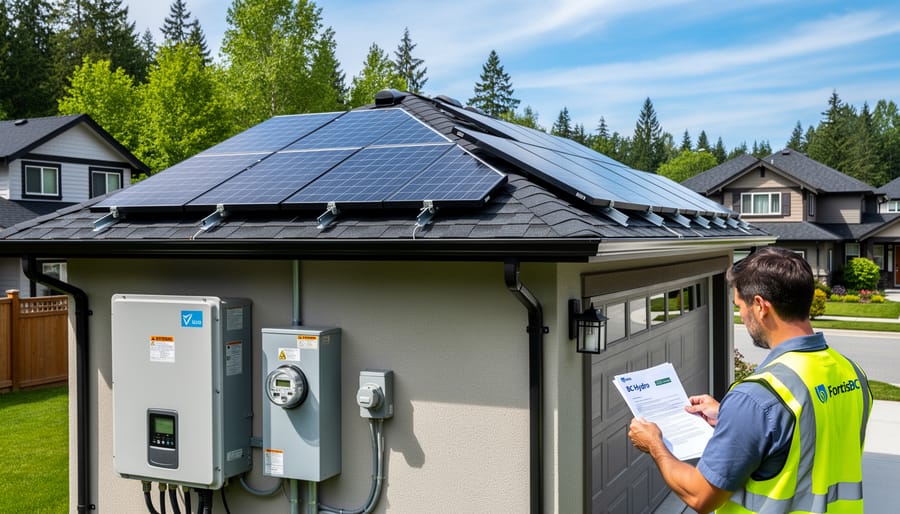
The Difference Between Permits and Interconnection
Many BC homeowners get confused about the paperwork involved in going solar, but understanding the difference between permits and interconnection can help you plan more effectively.
Building permits are issued by your municipality and ensure your solar installation meets local construction and electrical codes. Think of these as safety approvals for the physical installation on your property. Your solar installer typically handles this process, which involves submitting plans, paying fees, and scheduling inspections once the panels are installed.
Interconnection approval comes from your utility company, like BC Hydro or FortisBC, and gives you permission to connect your solar system to the electrical grid. This process ensures your system won’t interfere with grid operations and allows you to receive credits for excess power through net metering programs.
Here’s what matters most: you need both, and they happen in parallel. While your installer submits building permit applications to your city or regional district, they’ll simultaneously apply for interconnection approval from your utility. The good news? In most BC communities, these processes work together smoothly. Your installer coordinates both timelines, and municipal inspectors verify your system meets code before the utility gives final connection approval.
A Vancouver homeowner recently shared that understanding this dual-track process helped them anticipate a realistic three-month timeline from contract signing to system activation, avoiding unnecessary frustration from unclear expectations.
Grid-Tied vs Off-Grid: Does Interconnection Apply to You?
Understanding whether you need interconnection starts with knowing your system type. Grid-tied solar systems connect directly to BC Hydro’s electrical grid, allowing you to send excess power back and draw electricity when needed. These installations absolutely require interconnection approval before activation. This includes most residential rooftop systems and commercial solar arrays throughout British Columbia.
Off-grid systems operate independently with battery storage and no connection to the utility grid. If you’re completely disconnected from BC Hydro’s infrastructure, the interconnection process doesn’t apply to you. These setups are common in remote locations where grid access is limited or unavailable.
There’s also a middle ground: grid-tied systems with battery backup. Even though you have batteries, if your system can potentially export power to the grid, you still need interconnection approval.
For BC residents, the vast majority of solar installations are grid-tied, meaning interconnection is a necessary step in your solar journey. A Vancouver homeowner who installed a 6kW rooftop system in 2023 found the interconnection process straightforward once they understood it was required for their grid-tied setup. Knowing your system type early helps you plan appropriately and avoid installation delays.
The Step-by-Step Solar Interconnection Journey in British Columbia
Phase 1: Pre-Application Preparation
Before submitting your interconnection application to BC Hydro or FortisBC, gathering the right documentation saves time and prevents delays. Start by collecting your solar system specifications, including the total capacity in kilowatts, panel details, and inverter information. Your certified solar installer should provide these technical specs as part of their proposal.
You’ll need a single-line electrical diagram showing how your system connects to your home’s electrical panel and the grid. This diagram demonstrates the flow of electricity and safety components like disconnect switches. Most reputable installers prepare this document as standard practice.
Ensure your installer holds current certifications from the Canadian Standards Association or similar recognized bodies. BC requires installers to be licensed electricians or work under the supervision of one. Request copies of these credentials to include with your application.
Check if your home’s existing electrical panel can handle the solar system. Many older homes need panel upgrades to safely accommodate solar generation. Review the service upgrade requirements early in your planning, as this affects both timeline and budget.
Finally, compile your property information, including your utility account number and site address. Having everything organized upfront typically reduces application processing time by several weeks.
Phase 2: Submitting Your Interconnection Application
Once you’ve completed your system design and selected your installer, it’s time to submit your interconnection application. In BC, you’ll work with either BC Hydro or FortisBC, depending on your location.
The application process is straightforward but requires careful attention to detail. You’ll need to complete the Net Metering Application form, which your solar installer can typically help you prepare. This form includes technical specifications about your system, electrical diagrams, and proof that your equipment meets Canadian Standards Association (CSA) certification requirements. Your installer will also need to provide documentation showing their electrician is licensed in BC.
Most applications can be submitted online through your utility’s customer portal, making the process convenient and trackable. BC Hydro typically takes 4-6 weeks for initial review of residential applications, while FortisBC reviews usually take 3-5 weeks. These timeframes can vary during peak solar installation season (spring and summer).
A helpful tip from a Surrey homeowner who recently went solar: “Submit your application well before you plan to install. We applied in February for a June installation and had plenty of time for approvals.” This planning approach helped them avoid delays and stay on schedule.
Keep copies of all submitted documents and note your application reference number for follow-up inquiries.
Phase 3: Utility Review and Engineering Assessment
Once your utility receives your interconnection application, they’ll conduct a thorough technical review to ensure your solar system can safely connect to the grid. This assessment typically takes 4-8 weeks in BC, though timelines vary by utility and system size.
During this phase, engineers evaluate several factors: your system’s capacity, local grid infrastructure, and how your solar installation might affect nearby properties. They’re essentially asking, “Can our grid handle this new energy source without issues?” For most residential systems under 100 kW, the review is straightforward and no upgrades are needed.
However, some situations require additional work. If your neighbourhood’s transformer is near capacity or your home needs electrical service upgrades, the utility may flag these during review. Grid upgrades can add 2-6 months to your timeline and sometimes involve cost-sharing between you and the utility.
A Kelowna homeowner recently shared that their 8 kW system sailed through review in just three weeks because their neighbourhood had recently upgraded infrastructure. Their advice? Ask your installer about local grid capacity early in the planning process.
Stay proactive during this phase by responding quickly to any utility questions or requests for additional information. This keeps your project moving forward and demonstrates your commitment to a safe, compliant installation.
Phase 4: Installation and Inspection
Once your solar system is installed, you’ll need a final inspection from your municipal authority before it can be connected to BC Hydro’s grid. Your solar installer typically coordinates this inspection, but understanding the process helps avoid delays.
Municipal electrical inspectors verify that your installation meets the Canadian Electrical Code and local safety standards. They’ll examine the mounting system, electrical connections, proper grounding, and ensure your system matches the approved permit drawings. If you required potential service upgrades, inspectors will verify these were completed correctly.
Most inspections in BC communities take 1-2 weeks to schedule, though busy periods may extend this. Common delay causes include incomplete paperwork, installation discrepancies from approved plans, or improperly labeled equipment. A Vancouver homeowner recently shared how their inspection was postponed because one breaker wasn’t clearly marked—a simple fix that cost two weeks.
To streamline your inspection, ensure your installer provides complete documentation beforehand and corrects any issues immediately. Once you pass inspection, you’ll receive approval to proceed with interconnection, bringing you one step closer to generating clean energy and reducing your electricity costs.
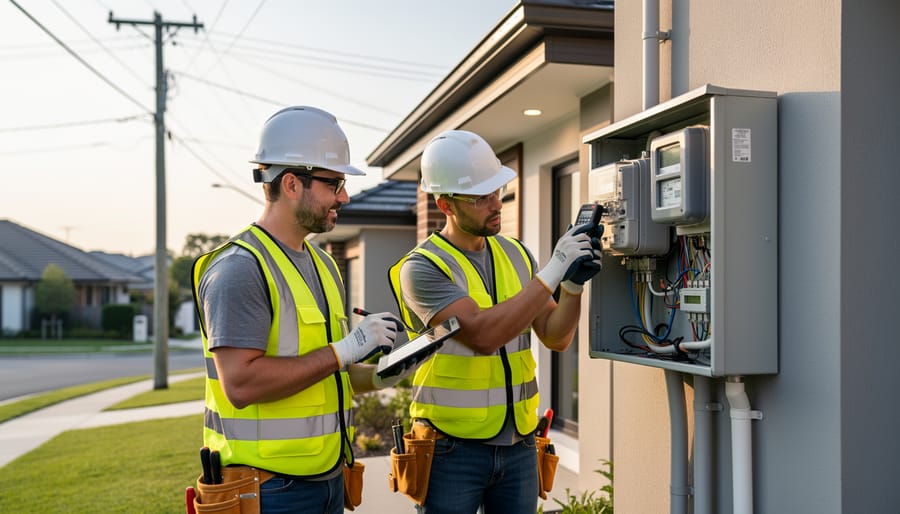
Phase 5: Final Interconnection Approval and Net Metering Setup
You’re in the home stretch! After your utility provider reviews and approves your interconnection application, they’ll issue a Permission to Operate (PTO). This official authorization confirms your solar system meets all safety and technical standards and can legally connect to the grid.
Before you flip the switch, your utility may need to install a bidirectional meter or upgrade your existing one. This special meter tracks both the electricity you draw from the grid and the excess solar energy you send back. Most BC utilities handle this installation within 2-4 weeks of issuing PTO, though scheduling depends on their workload and your location.
Once your new meter is active, your net metering agreement kicks in automatically. You’ll start earning credits for surplus electricity your system generates during sunny days, which offset your usage during evenings or cloudy periods. Check your first few utility bills to ensure credits are applying correctly.
Take a moment to celebrate this milestone! The Johnsons in Kelowna received their PTO within three weeks and saw their first net metering credits appear on their bill the following month, confirming their system was working perfectly. Keep your PTO documentation and interconnection agreement on file for future reference or if you ever sell your property.
Realistic Timeline Expectations for BC Solar Projects
BC Hydro vs FortisBC: Timeline Differences
Understanding the timeline differences between BC’s two major utilities can help you plan your solar project more effectively. Based on real project experiences across the province, BC Hydro typically processes residential solar interconnection applications in 4-8 weeks for straightforward installations under 100 kW. Their online portal streamlines much of the paperwork, and properties in urban areas like Vancouver and Victoria often see faster approvals due to established grid infrastructure.
FortisBC, serving the Interior and parts of Vancouver Island, generally requires 6-10 weeks for similar projects. The slightly longer timeline reflects their more distributed service territory and additional review steps for rural grid connections. However, FortisBC customers often report more personalized communication throughout the process, with dedicated representatives guiding them through each stage.
Both utilities can experience delays during peak application periods, typically in spring when many homeowners begin solar projects. A residential installation in Kelowna recently took 12 weeks with FortisBC due to seasonal backlog, while a comparable Vancouver project through BC Hydro completed in 5 weeks during the same period. The key takeaway: submit your application in late fall or winter when processing queues are shorter, and ensure your documentation is complete from the start to avoid unnecessary back-and-forth that extends timelines with either utility.
Urban vs Rural Interconnection Speeds
Where you live in BC significantly impacts your solar interconnection timeline. Metro Vancouver and Victoria residents typically experience the fastest processing times, with most applications approved within 30-45 days. BC Hydro’s established infrastructure and higher volume of solar requests in these urban centres have streamlined the process considerably.
In Kelowna and other mid-sized cities, expect timelines of 45-60 days. These communities have growing solar adoption rates, and local utilities are becoming increasingly efficient at handling interconnection requests.
Rural and remote communities face longer waits, often 60-90 days or more. The extended timeline reflects additional technical assessments needed for grid capacity, longer distances for site inspections, and fewer staff dedicated to interconnection requests. However, this doesn’t mean rural solar is impractical. Many BC farmers and rural property owners have successfully connected systems by planning ahead and maintaining proactive communication with their utility provider.
Pro tip: regardless of location, submit complete applications during off-peak periods (typically fall and winter) when utilities process requests faster. A Sunshine Coast homeowner recently shared how their October submission was approved in just three weeks, demonstrating that timing and preparation matter as much as location.
The Most Common Delays (And How to Avoid Them)
Incomplete Applications and Missing Documentation
Incomplete applications are one of the most common reasons for interconnection delays in BC. The good news? These setbacks are entirely preventable with proper preparation. Before submitting your application, verify you’ve included all required documentation: detailed single-line electrical diagrams, equipment specifications showing CSA or UL certification, proof of electrical permits, and your installer’s credentials. Your utility provider’s website typically offers a complete checklist specific to your region.
Create a simple tracking sheet to confirm each document is attached and meets the specified format requirements. Many BC homeowners have found success by having their solar installer review the complete package before submission. Consider photographing or scanning everything for your records.
A complete application submitted the first time can shave weeks off your timeline. One Kelowna family reduced their approval wait from eight weeks to just three by double-checking their documentation against BC Hydro’s requirements beforehand. Take the extra hour upfront to ensure accuracy, and you’ll avoid frustrating requests for resubmission that push your solar dreams further down the road.
Grid Capacity Issues in Your BC Neighbourhood
Before installing solar panels, it’s important to understand whether your local distribution grid can handle the additional power your system will generate. In some BC neighbourhoods, particularly older residential areas or locations at the end of distribution lines, the existing infrastructure may require upgrades to safely accommodate solar exports.
BC Hydro or FortisBC will assess your neighbourhood’s grid capacity during the interconnection application review. If upgrades are needed—such as transformer replacements or line reinforcements—the utility typically covers costs for system-level improvements. However, you’re responsible for any necessary service panel upgrades at your property.
To identify potential issues early, ask your solar installer about neighbourhood capacity before finalizing your system design. They can often flag areas with known constraints. Additionally, if several neighbours have already installed solar, this actually works in your favour—the grid may have already been upgraded to handle distributed generation.
A proactive approach helps avoid surprises. Request a preliminary grid assessment from your utility during early planning stages, and maintain open communication with your installer about any capacity concerns they’ve encountered in your area.
Seasonal Backlogs and Strategic Timing
BC utilities typically see application surges during spring and early summer when homeowners are most motivated to complete solar projects before peak sunshine months. This seasonal rush can add weeks or even months to your interconnection timeline. Understanding these patterns gives you a strategic advantage.
Consider submitting your interconnection application during fall or winter months when utilities process fewer applications. A Kelowna business owner reduced their wait time by six weeks simply by starting their application process in November instead of May. While this means your system might not be installed during peak summer production, you’ll avoid the bottleneck and start generating clean energy sooner overall.
Planning ahead is essential. If you’re aiming for summer installation, submit your application in winter to account for processing delays. Work closely with your solar installer to coordinate application timing with equipment availability and contractor schedules. This strategic approach ensures your project moves smoothly through each phase, getting your system connected and producing renewable energy for your home or business without unnecessary delays.

Working With Your BC Solar Installer Through the Process
Questions to Ask Your Installer About Interconnection
Before signing with an installer, ask these key questions to ensure smooth interconnection:
How many interconnection applications have you submitted to my local utility? Look for installers with proven track records specifically with BC Hydro or FortisBC, as requirements vary between utilities.
What’s your typical interconnection timeline? Experienced installers should provide realistic timeframes based on recent projects in your area, not just best-case scenarios.
Will you handle the entire interconnection application process? Clarify whether this includes preparing technical drawings, submitting documentation, coordinating inspections, and following up with the utility.
Have you encountered any denied applications, and why? This reveals their understanding of common pitfalls and how they’ve learned to avoid them.
Does my property require upgrades before interconnection? Ask specifically about electrical infrastructure requirements that could delay your project or add costs.
Can you share references from recent BC solar customers? Speaking with homeowners who’ve completed the interconnection process provides valuable insights into the installer’s communication style and problem-solving abilities throughout the journey.
Real BC Solar Success Stories: From Application to Activation
Meet Sarah from Victoria, who describes her interconnection journey as “surprisingly straightforward.” After installing a 6.5 kW system on her 1950s bungalow, she submitted her application to BC Hydro in early spring. Within three weeks, she received approval and her system was activated. Sarah’s success came down to preparation: her solar installer had completed similar projects in her neighborhood and knew exactly what BC Hydro required. “My biggest lesson? Choose an installer who’s done this before,” Sarah advises. “They handled all the paperwork, knew the local requirements, and even flagged a potential issue with my electrical panel before it became a problem.”
Contrast that with James, who runs a small brewery in Kelowna. His interconnection took nearly four months, though his 25 kW commercial system was more complex. The initial application was rejected because his electrical drawings didn’t meet FortisBC’s specifications. After resubmission with corrected documentation, he faced another delay when the utility requested an additional transformer upgrade. “It was frustrating, but I learned that commercial applications need extra scrutiny,” James explains. “If I could do it over, I’d budget an extra two months into my timeline and have an electrician review everything before the first submission.”
Both experiences offer valuable insights for BC residents. Sarah’s smooth process shows that residential projects under 10 kW typically face fewer hurdles, especially when working with experienced local installers. James discovered that commercial installations require more detailed engineering documentation and often trigger infrastructure assessments. His advice? “Stay in regular contact with your utility. I waited passively for responses, but when I started making weekly follow-up calls, things moved faster.”
These real stories demonstrate that while interconnection timelines vary, thorough preparation and choosing knowledgeable partners make all the difference in bringing your solar vision to life.
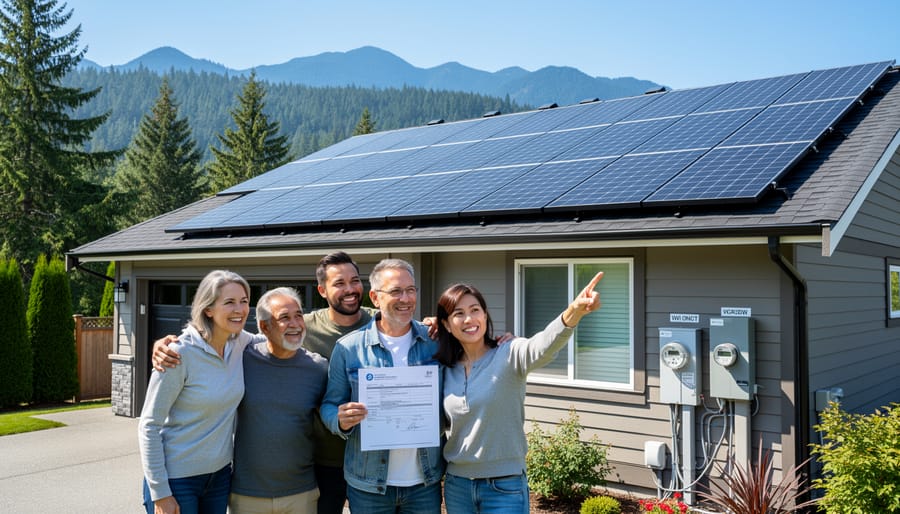
The solar interconnection process in British Columbia may seem complex at first, but with proper planning and the right support, it becomes a manageable pathway to long-term energy savings and environmental impact. The key to success lies in three essential actions.
First, choose an experienced BC solar installer who understands the local utility requirements and provincial regulations. These professionals navigate the interconnection process regularly and can anticipate potential obstacles before they become delays. They’ll handle the technical documentation, coordinate with your utility provider, and ensure your system meets all safety standards.
Second, start early. Given that the typical interconnection timeline spans three to six months, beginning your planning well before your desired installation date gives you flexibility. Submit your application during off-peak seasons when utility approval queues are shorter, and allow buffer time for unexpected delays or additional documentation requests.
Third, leverage resources available through Solar BC and local solar organizations. These platforms connect you with qualified professionals, provide educational materials, and offer tools to calculate your potential savings. Many BC homeowners and businesses have successfully navigated this journey, and their experiences demonstrate that the upfront time investment pays dividends through decades of clean energy generation and reduced electricity costs.
Remember, every solar installation in BC contributes to our province’s clean energy future. While the interconnection process requires patience and attention to detail, the result is a reliable, sustainable energy system that benefits both your household and our shared environment. Take that first step today by connecting with a qualified local installer who can guide you through the process.