

Assess your roof’s structural capacity before planning solar installation by examining three critical factors: age and condition of roofing materials, load-bearing capability of the underlying structure, and existing weatherproofing integrity. BC homes built before 1990 often require reinforcement, as modern solar arrays add 3-5 pounds per square foot to roof loads, particularly significant during heavy snowfall in Interior and Northern regions.
Examine roof sheathing and framing for water damage, rot, or pest infiltration by checking attic spaces for daylight penetration, moisture stains, or sagging. A comprehensive roof readiness assessment identifies these issues early, preventing costly mid-installation discoveries that delay projects and inflate budgets.
Verify your roof system meets BC Building Code requirements for snow loads and wind ratings specific to your region. Coastal installations face different challenges than Interior locations—Vancouver roofs must withstand sustained rain exposure, while Kelowna installations need enhanced snow load capacity. Missing this step risks structural failure, voided warranties, and insurance complications.
Document your roof’s specifications including pitch angle, surface area, and orientation before consulting solar installers. Roofs with south-facing sections, 15-40 degree slopes, and composite shingle or metal surfaces offer optimal conditions. Understanding these fundamentals positions you for informed discussions with contractors and realistic project timelines, turning your BC roof from a simple shelter into a renewable energy asset that reduces utility costs while supporting provincial climate action goals.
Understanding Roof System Components
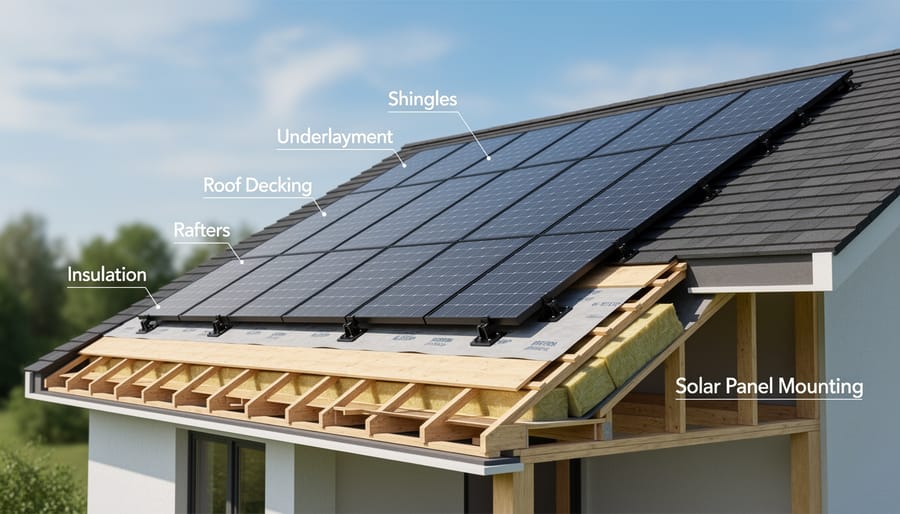
The Structural Framework Beneath
Your roof’s ability to support solar panels depends on three key structural components working together. Rafters are the sloped beams that run from your roof’s peak to its edges, typically spaced 16 to 24 inches apart. Trusses are pre-engineered frameworks that combine rafters and support beams into triangular units, offering excellent strength while using less material. Roof decking, usually plywood or oriented strand board, sits atop these supports and forms the surface where your shingles and solar panels attach.
British Columbia’s varying snow loads significantly impact these structural requirements. Coastal communities like Victoria might see light snow loads of 20 pounds per square foot, while interior regions such as Kamloops can experience loads exceeding 40 pounds per square foot. When you add solar panels, which typically weigh 2-4 pounds per square foot, your roof needs adequate capacity to handle the combined weight.
Many homes built before the 1990s were designed to older building codes with lower snow load requirements. A Kelowna family we worked with discovered their 1970s home needed rafter reinforcement before installation, a common scenario for older properties. The good news is that reinforcement is often straightforward and cost-effective when identified early.
During your solar assessment, a qualified structural engineer will evaluate your roof’s current capacity against BC Building Code requirements, ensuring your system performs safely through decades of West Coast weather. This upfront investment in structural verification protects both your home and your solar investment.
Roofing Materials and Solar Compatibility
Your roof material plays a significant role in determining both the ease of solar installation and the long-term performance of your system. In BC, the most common roofing materials each offer different advantages when paired with solar panels.
Asphalt shingles, found on approximately 80% of BC homes, are the most solar-friendly option. They’re straightforward to work with, allow for secure mounting, and typically last 20-25 years. If your shingles are nearing the end of their lifespan, consider replacing them before installing solar to avoid removing panels later for roof work.
Metal roofing is increasingly popular in BC and pairs exceptionally well with solar panels. The durability of metal roofs (often lasting 50+ years) matches well with solar panel lifespans. Installation uses specialized clamps that don’t penetrate the roof surface, reducing leak risks. Metal’s smooth surface can also help panels shed snow more efficiently during winter months.
Cedar shake roofs, traditional in many BC communities, present more challenges. The material’s uneven surface and shorter lifespan (15-20 years) make solar installation more complex. However, experienced installers can work with cedar using custom mounting solutions. One Sunshine Coast homeowner successfully integrated solar panels with their heritage cedar roof, preserving the home’s character while embracing renewable energy.
Flat or low-slope roofs with membrane systems (common on commercial buildings) accommodate solar installations using ballasted mounting systems that don’t require roof penetrations, making them ideal for businesses considering solar.
Climate considerations matter too. Coastal BC’s higher humidity and salt air exposure require corrosion-resistant mounting hardware, while interior regions must account for heavier snow loads and greater temperature fluctuations. Your solar installer should specify materials rated for your specific climate zone to ensure decades of reliable performance.
What Makes a Roof Solar-Ready in BC
Age and Remaining Lifespan
Installing solar panels on your roof is a long-term commitment, typically spanning 25 to 30 years. This extended timeframe makes your roof’s current age a critical factor in your solar decision. If your roof is already 15 or 20 years old, you could face a costly problem: removing the entire solar array to replace worn-out roofing materials mid-way through your system’s lifespan.
Consider the economics. Removing and reinstalling solar panels costs thousands of dollars in labor alone, effectively doubling your roofing expenses. Many BC homeowners have learned this lesson the hard way, discovering too late that their aging asphalt shingles needed replacement just years after solar installation.
Here’s practical guidance for timing your solar project. If your roof is less than 10 years old and in good condition, you’re typically safe to proceed with solar. Between 10 and 15 years, have a professional roofer conduct a thorough inspection to assess remaining lifespan. Beyond 15 years, seriously consider replacing your roof first, even if it still looks acceptable.
The silver lining? Combining roof replacement with solar installation often saves money overall. You’ll pay for scaffolding and site preparation only once, and you can determine if your roof is solar-ready while planning both projects together. Some BC contractors even offer package deals that reduce combined costs.
Remember, patience now prevents expensive headaches later. A new roof supporting 25 years of solar generation is far better than emergency roof work disrupting your clean energy production.
Load-Bearing Capacity
Before solar panels go up, installers must verify your roof can handle the additional weight. In BC, this calculation varies significantly by region due to different snow load requirements. Coastal areas like Vancouver typically face lighter snow loads (around 1.5-2.0 kPa), while Interior communities such as Kelowna or Prince George must account for heavier accumulations (3.0-5.0 kPa or higher).
Professional installers follow BC Building Code requirements, calculating the combined weight of panels (typically 2-4 pounds per square foot), racking systems, and regional snow loads. Most residential roofs built to current standards can accommodate solar installations without reinforcement. However, older homes or those in heavy snow zones may need structural upgrades.
A Surrey homeowner discovered their 1970s-era roof required minor truss reinforcement before installation, adding modest upfront costs but ensuring decades of safe solar generation. Your installer will review building permits, conduct load calculations, and consult structural engineers when needed. This thorough assessment protects your investment and ensures compliance with local building codes.
The good news? Most BC homes pass structural requirements with flying colors. If reinforcement is necessary, installers can recommend cost-effective solutions that make solar viable for virtually any property.
Orientation, Pitch, and Sun Exposure
Your roof’s orientation and pitch play a crucial role in both structural integrity and solar energy production. In BC, south-facing roofs typically deliver the best solar performance, capturing maximum sunlight throughout the day. However, east and west-facing installations can still generate 80-85% of south-facing efficiency, making them viable options for many homes.
Roof pitch, or slope, affects both water drainage and panel mounting. BC’s common roof styles include gabled roofs (typically 4:12 to 6:12 pitch), which offer excellent solar potential and straightforward installation. Hip roofs, while architecturally attractive, may require creative panel placement due to multiple roof planes. Low-slope roofs under 2:12 pitch need specialized mounting systems to achieve optimal tilt angles for solar capture.
Steeper pitches above 7:12 can increase installation costs and safety considerations but may actually benefit from snow shedding during winter months. A local Kelowna homeowner with a 6:12 south-facing gabled roof achieved 98% of theoretical solar output, demonstrating how ideal orientation and pitch combine for maximum results.
Understanding your roof’s characteristics helps installers design systems that balance structural requirements with energy production goals, ensuring your investment delivers long-term performance suited to BC’s climate.
Common Roof Issues That Block Solar Installation
Hidden Water Damage and Rot
British Columbia’s rain-soaked climate makes roofs particularly vulnerable to hidden moisture damage that may not be visible from ground level. Before mounting solar panels—which will remain in place for 25+ years—it’s essential to uncover any existing rot or water infiltration that could compromise your investment.
Watch for telltale signs like discoloured patches on ceiling drywall, musty odours in your attic space, or soft spots when walking on the roof surface. Moss accumulation, common throughout BC’s coastal and interior regions, can trap moisture against shingles and accelerate deterioration underneath. Missing or curled shingles also create entry points for our region’s persistent rainfall.
A thorough roof evaluation for solar includes moisture meter testing and visual inspection of decking from below. Discovering water damage before installation allows you to address repairs on your timeline and budget—typically $2,000-$5,000 for localized fixes. Waiting until after panels are mounted means costly removal, repairs, and reinstallation, potentially tripling expenses.
One Vancouver homeowner avoided $8,000 in extra costs by identifying valley rot during their pre-solar assessment, replacing damaged decking before their system went live.
Inadequate Structural Support
Not all roofs can handle the additional weight of solar panels without reinforcement. In British Columbia, older homes built before modern building codes may have roofs designed only for snow loads and their own weight, leaving little capacity for solar equipment. A typical residential solar system adds approximately 3-5 pounds per square foot, which can strain aging or minimally-supported structures.
Common scenarios requiring reinforcement include homes with wide roof spans, deteriorating rafters or trusses, or structures built with undersized lumber. During a professional structural assessment, an engineer will calculate your roof’s load-bearing capacity and compare it against the combined weight of panels, mounting hardware, and expected snow accumulation.
When reinforcement is needed, several options exist. Adding sister joists alongside existing rafters strengthens support without major reconstruction. Truss reinforcement involves strategically placed bracing or additional support members. In some cases, reducing the solar array size to concentrate panels over stronger sections provides a cost-effective alternative.
The Robinsons in Kamloops discovered their 1970s rancher needed modest reinforcement. By adding sister joists in the installation area for approximately 2,500 dollars, they proceeded confidently with their solar project. While reinforcement adds upfront costs, it ensures long-term safety and protects your investment in clean energy.
Ventilation and Moisture Concerns
In BC’s wet climate, proper ventilation becomes even more critical when adding solar panels to your roof. Solar arrays can reduce airflow in roof cavities, potentially trapping moisture and leading to condensation issues if not properly addressed during installation.
Most modern solar installations maintain adequate ventilation by leaving appropriate gaps between panels and the roof surface, typically 4-6 inches. This spacing allows air to circulate underneath, preventing heat buildup and moisture accumulation. Your installer should assess your existing ventilation system, including soffit vents, ridge vents, and attic ventilation, to ensure they remain functional after panel installation.
For homes in particularly damp areas like the Lower Mainland or coastal regions, consider asking your installer about integrated ventilation solutions. Some mounting systems are specifically designed to promote airflow while securely holding panels in place. A Richmond homeowner successfully addressed moisture concerns by upgrading attic insulation and ensuring continuous soffit-to-ridge airflow before their 2022 installation.
During your roof assessment, discuss moisture management strategies with your installer. They should inspect for existing water damage, check flashing conditions, and recommend any necessary improvements to your ventilation system before proceeding with solar installation.
The Professional Roof Assessment Process
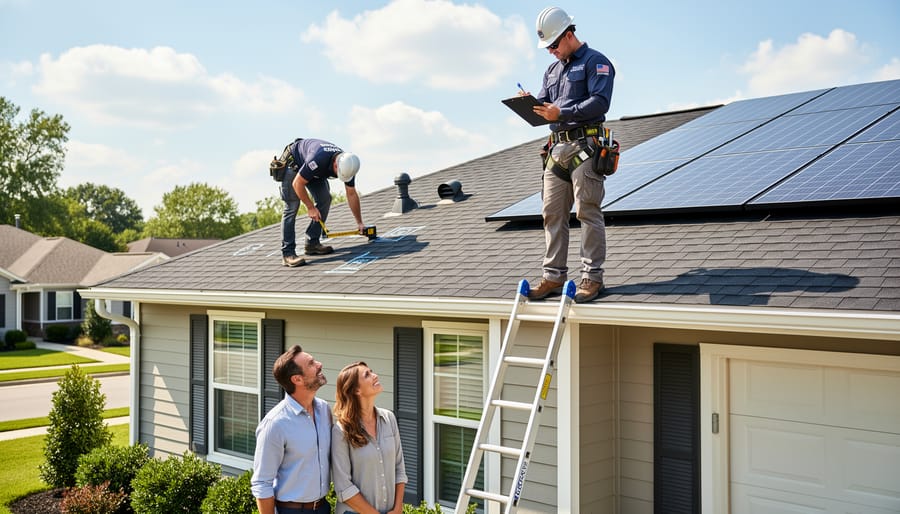
What Certified Installers Look For
When certified solar installers conduct professional roof assessments in BC, they follow a comprehensive checklist to ensure your home can safely support a solar array.
The first priority is structural capacity. Installers examine roof framing, rafters, and trusses to confirm they can handle the additional weight of solar panels, mounting hardware, and potential snow loads common in BC winters. Most residential roofs are designed with sufficient capacity, but older homes or those with previous modifications may need reinforcement.
Next, they assess roof condition and remaining lifespan. Since solar installations typically last 25 to 30 years, your roof should have at least 15 to 20 years of serviceable life remaining. Installers look for signs of wear, damaged shingles, sagging areas, or water stains that could indicate underlying issues.
Moisture assessment is critical in BC’s wet climate. Professionals inspect for proper ventilation, check flashing around chimneys and vents, and look for any existing leaks or water damage. They also evaluate drainage patterns to ensure water flows away from mounting points.
The inspection includes roof orientation and shading analysis. South-facing slopes with minimal shade offer optimal solar production, but installers also consider east and west-facing sections based on your energy goals.
Finally, they document roof material compatibility with mounting systems and verify accessibility for installation crews and future maintenance. This thorough evaluation ensures your solar investment performs reliably for decades while protecting your home’s structural integrity.
When Additional Expertise Is Needed
While many BC roofs are suitable for solar panels, certain situations require bringing in specialized professionals beyond your solar installer’s expertise. Structural engineers become essential when your roof shows signs of sagging, has unclear load capacity documentation, or when you’re planning a large commercial installation. Older heritage homes, particularly those built before modern building codes, often benefit from engineering assessments to confirm they can safely support additional panel weight plus BC’s snow loads.
Roofing specialists should evaluate your home if shingles are nearing the end of their lifespan, if you’ve noticed leaks or water damage, or if your roof membrane appears deteriorated. Since solar panels typically last 25-30 years, addressing roofing issues before installation saves significant costs down the road. For example, a Kelowna homeowner discovered during their solar assessment that their 20-year-old roof needed replacement within five years. By coordinating the reroof with solar installation, they avoided the expense of removing and reinstalling panels later.
Reputable installers maintain relationships with trusted structural engineers and roofing contractors throughout BC. They’ll coordinate these assessments as part of your project timeline, ensuring all reports are completed before finalizing your system design. This collaborative approach protects your investment and ensures your solar installation meets all safety requirements while maximizing your clean energy potential.
Real BC Stories: Roof Assessments in Action
Meet the Johnsons from Victoria and the Patel family in Kelowna—two BC homeowners whose solar journeys began with comprehensive roof assessments that revealed very different outcomes.
The Johnsons were eager to install solar panels on their 1980s cedar shake roof. Their assessment uncovered significant moisture damage in the roof decking and deteriorating shingles with an estimated remaining lifespan of only three years. While initially disappointing, their installer explained that proceeding would mean removing panels prematurely for roof replacement—an expensive proposition. The Johnsons chose to replace their roof with architectural asphalt shingles first, then installed their 8kW solar system. “We’re glad we discovered the issues early,” says Tom Johnson. “Now we have a new roof and solar panels that will work together for the next 25 years without interruption.” The lesson here is clear: patience and proper sequencing save money long-term.
In contrast, the Patels’ assessment of their 2015-built home in Kelowna went smoothly. Their composite shingle roof showed excellent condition with 20+ years of remaining life. The structural evaluation confirmed their roof could easily support the planned solar array, and the southern exposure was ideal. Within six weeks of their initial assessment, they had solar panels generating clean energy. “The assessment gave us confidence we were making a sound investment,” shares Priya Patel. “Everything was transparent, and we knew exactly what to expect.”
Both families emphasize one key takeaway: professional roof assessments aren’t obstacles—they’re essential planning tools. The Johnsons avoided future complications and additional costs, while the Patels gained peace of mind for their investment. Whether your assessment reveals needed repairs or confirms you’re ready to proceed, you’ll have the information needed to make the best decision for your home and budget. A thorough roof evaluation protects both your solar investment and your home’s structural integrity for decades to come.
Making the Right Decision for Your Home
Choosing the right solar installer starts with finding professionals who prioritize comprehensive roof assessments before recommending any system. In British Columbia, qualified installers should conduct detailed structural evaluations, not just quick visual inspections. Look for companies with proven experience in your region who understand local building codes and weather patterns specific to coastal, interior, or northern BC climates.
When interviewing potential installers, ask specific questions about their assessment process. How do they evaluate roof load capacity? What tools do they use to detect existing damage or weak points? Request examples of similar projects they’ve completed in your area, particularly homes with roof types matching yours. A reputable installer will gladly share local success stories and provide references from nearby homeowners.
Red flags to watch for include installers who skip the structural assessment phase entirely or dismiss concerns about your roof’s condition. Be wary of anyone promising installations without proper engineering review for older homes or those suggesting you can “worry about repairs later.” Avoid companies that pressure quick decisions or offer deals that expire immediately. Quality installers understand this is a significant investment requiring thoughtful consideration.
Request detailed written assessments that outline any necessary repairs, estimated timelines, and transparent cost breakdowns. Ask about warranty coverage for both the solar system and any roofing work performed. Verify that installers carry proper licensing and insurance, including coverage for potential roof damage during installation.
Connect with your local community through BC solar forums or municipal sustainability programs to gather recommendations. Many municipalities offer lists of certified installers familiar with regional requirements. Taking time to choose the right professional ensures your solar investment protects both your home’s structural integrity and your long-term energy goals.
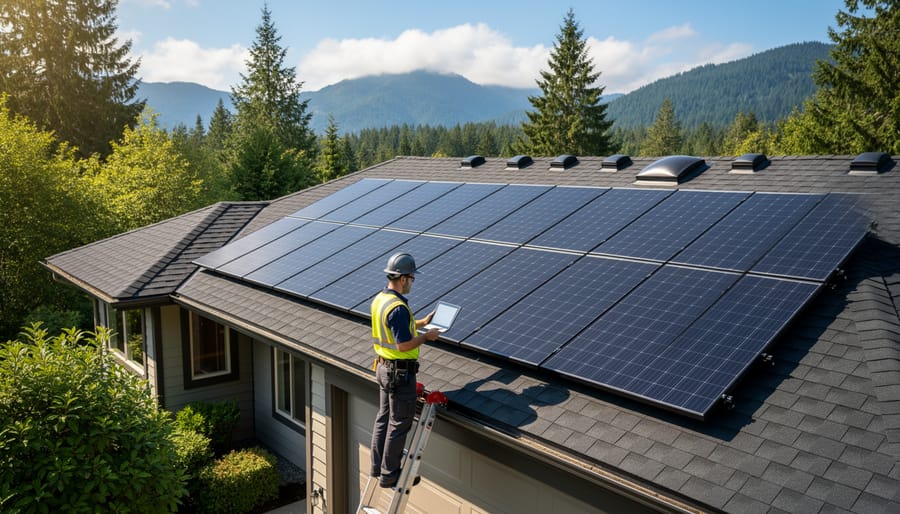
Investing in a comprehensive roof assessment before installing solar panels is one of the smartest decisions you can make as a BC homeowner. This upfront evaluation protects your investment and ensures your solar system delivers reliable, clean energy for 25 years or more. A properly assessed roof prevents costly repairs, avoids premature system removal, and maximizes your long-term energy savings.
Ready to take the next step? Connect with certified solar installers through Solar BC who can provide professional roof evaluations tailored to BC’s unique climate and building requirements. These experts understand local conditions, from coastal rainfall patterns to interior snowloads, ensuring your installation is built to last.
Remember, getting it right from the start means decades of worry-free solar performance and energy independence. Your roof is the foundation of your solar journey, and investing time in proper assessment now pays dividends throughout your system’s lifetime. Join the growing community of BC residents who’ve made the switch to solar with confidence, knowing their homes are ready to harness the sun’s power for generations to come.