
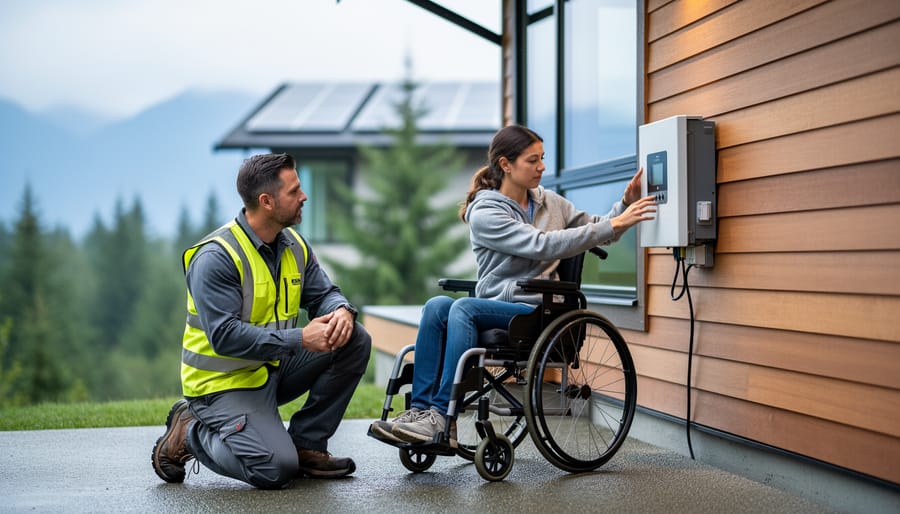
Energy poverty affects British Columbians with disabilities at twice the rate of the general population, creating a cascade of challenges that extend far beyond monthly utility bills. When solar installations feature control panels mounted too high for wheelchair users, or when community energy programs fail to provide information in accessible formats, we exclude nearly one million BC residents from the clean energy transition.
The intersection of disability and energy access reveals uncomfortable truths about who benefits from renewable energy solutions. A single mother in Prince George using a motorized wheelchair requires consistent power for mobility and medical equipment, yet faces barriers accessing solar programs that could reduce her energy costs by 40%. An individual with visual impairment in Victoria cannot independently monitor their home energy system because most interfaces lack screen reader compatibility. These aren’t edge cases—they’re systematic gaps in how we design and deliver sustainable energy solutions.
True inclusion means transforming solar technology and energy programs from the ground up. It requires rethinking physical installation accessibility, redesigning digital interfaces for multiple abilities, and restructuring financial assistance programs to recognize the higher energy needs many people with disabilities face. When we build accessibility into clean energy solutions rather than retrofitting it later, we create better systems for everyone while ensuring British Columbia’s renewable energy future includes all community members.
This isn’t just ethical imperative—it’s practical necessity. Communities that prioritize inclusive energy access see stronger program adoption, greater cost savings, and more resilient energy networks that serve diverse needs.
The Real Barriers People with Disabilities Face in Accessing Solar Energy
Physical Accessibility Gaps in Solar Consultations
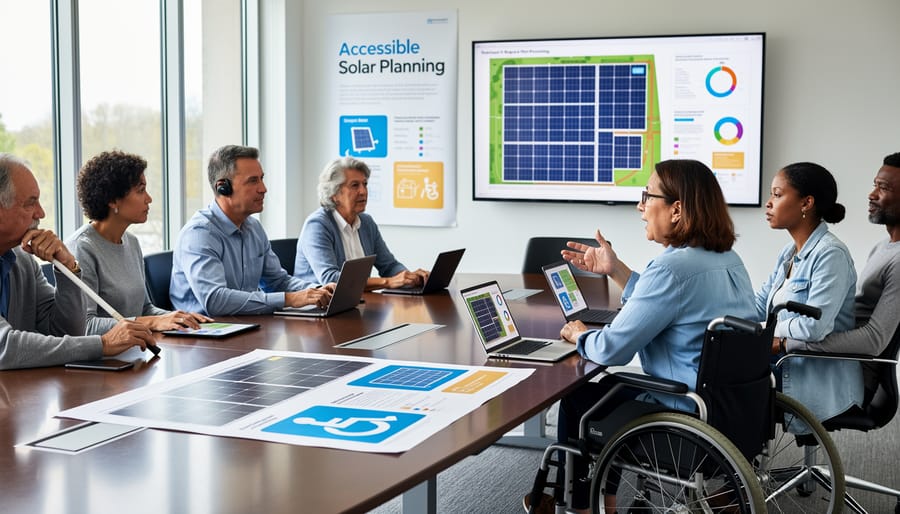
When BC residents explore solar energy, the consultation process itself can present unexpected obstacles for people with disabilities. Many solar companies conduct initial home assessments that require climbing onto roofs, navigating narrow attic spaces, or walking around uneven yard terrain. While these site visits are essential for accurate system design, consultants often don’t consider that homeowners with mobility challenges may be unable to accompany them or fully participate in decision-making about their own property.
Office consultations present their own challenges. Some solar companies operate from spaces without automatic doors, accessible parking, or wheelchair-accessible washrooms. Documents and contracts frequently appear only in standard print without large-print or digital alternatives for people with visual impairments. In Vancouver and Victoria, several residents have reported missing out on provincial rebate programs simply because consultation spaces lacked the physical accommodations they needed to complete applications comfortably.
Installation sites compound these issues. Construction zones with equipment, scaffolding, and materials can block accessible pathways for days or weeks. Homeowners who use mobility aids may find themselves unable to safely navigate their own properties during installation. The solution requires proactive planning: advance notice of installation timelines, designated accessible pathways, and consultation formats that offer video calls or detailed photo documentation as alternatives to physical site walks. BC’s solar industry has an opportunity to lead by embedding accessibility into every stage of the customer journey.
Financial and Information Access Challenges
Transitioning to solar energy should be straightforward, but financial and information barriers often exclude people with disabilities from participating in British Columbia’s clean energy movement. Many solar financing programs use complex application processes that assume digital literacy and vision capability, creating unnecessary hurdles for individuals who need alternative formats or support.
Website accessibility remains a significant challenge. When solar companies design their sites without screen reader compatibility, proper contrast ratios, or keyboard navigation, they inadvertently shut out potential customers. Someone using assistive technology might struggle to access basic information about system costs, available rebates, or installation timelines—details that homeowners need to make informed decisions.
The lack of materials in alternative formats compounds these problems. Financing agreements, technical specifications, and contract documents typically arrive as standard PDFs without accessible text. For someone with vision loss or cognitive disabilities, reviewing a 20-page installation contract becomes nearly impossible without assistance, creating dependency rather than empowerment.
British Columbia solar providers have an opportunity to lead by example. Simple solutions make a real difference: offering phone consultations for those who can’t navigate websites easily, providing documents in large print or audio formats upon request, and training staff to communicate financing options in plain language. One Victoria-based installer recently redesigned their website with accessibility features and saw inquiries from seniors and people with disabilities increase by 40 percent. This demonstrates that inclusive practices aren’t just ethical—they expand your customer base while helping more British Columbians access clean energy.
What Disability-Inclusive Energy Resilience Actually Looks Like
Energy Security for Medical Needs
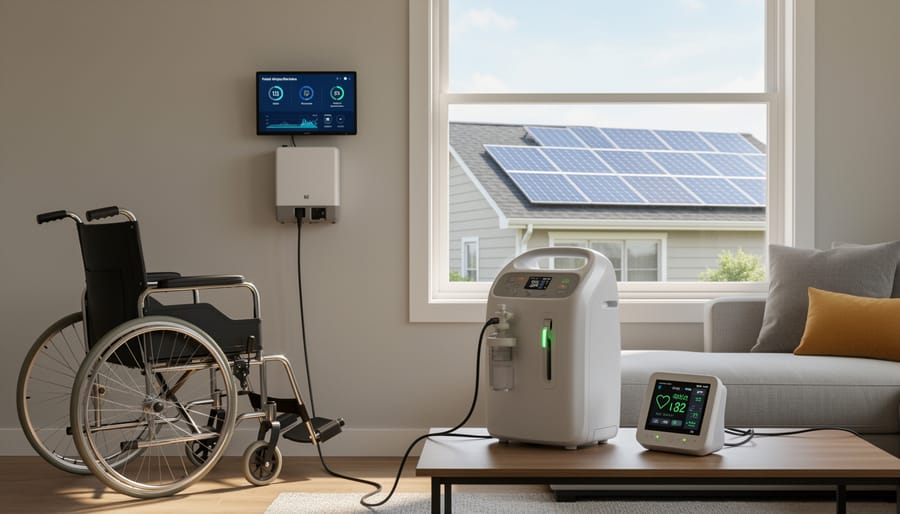
For many British Columbians with disabilities, reliable electricity isn’t just about convenience—it’s genuinely life-sustaining. Ventilators, oxygen concentrators, suction machines, and powered wheelchairs depend on continuous electrical supply. When the power goes out, these individuals face immediate health risks.
Consider Sarah from Victoria, who relies on a home ventilator at night. A typical winter storm that leaves her neighbourhood without power for even three hours creates a medical emergency. Battery backup systems paired with solar energy provide the independence and security that grid power alone cannot guarantee.
Oxygen concentrators, which many people with respiratory conditions use daily, consume substantial electricity—often running 24/7. These devices can add $50-80 monthly to electricity bills, making solar solutions financially practical while simultaneously providing backup power through battery storage.
Powered mobility devices present another challenge. Wheelchair users need reliable charging capabilities, and during extended outages, losing mobility means losing independence entirely. Battery storage systems ensure these essential devices remain charged regardless of grid reliability.
The BC government recognizes this reality through various assistance programs, but the conversation needs to expand beyond viewing backup power as optional equipment. For thousands of British Columbians, battery storage integrated with solar systems represents the difference between managing their disability independently and facing potentially dangerous situations during common power disruptions.
Accessible Emergency Planning
British Columbia has experienced a significant increase in power outages over recent years, with storms and wildfires causing extended blackouts that particularly impact people with disabilities. For individuals relying on powered medical equipment, mobility devices, or environmental controls, losing electricity isn’t just an inconvenience—it’s a safety crisis. Solar-plus-storage systems offer a practical solution by providing backup power independence when the grid goes down.
Battery storage paired with solar panels keeps essential devices running during outages. A Richmond family supporting their adult son who uses a ventilator installed a system that automatically switches to battery power within milliseconds of an outage, ensuring his medical equipment never loses power. Similarly, a Victoria resident using an electric wheelchair and stairlift found peace of mind knowing her mobility wouldn’t be compromised during storm season.
When planning an accessible emergency system, prioritize which devices need continuous power. Work with your solar installer to size your battery appropriately for medical equipment, communication devices, refrigeration for medications, and heating or cooling systems. Many BC residents find that even a modest battery system covering critical loads provides tremendous security. Start by creating a list of your essential power needs and discussing realistic backup options with local solar professionals who understand the specific weather challenges facing our province.
How Solar Installers Can Build Inclusive Practices Today
Making Your Website and Communications Work for Everyone
Making your solar company’s website and communications accessible isn’t just about compliance—it’s about ensuring everyone in BC can explore clean energy options. Start with screen-reader compatibility by using descriptive alt text for images (like “solar panels installed on Vancouver heritage home” rather than “image1.jpg”) and proper heading structures that help navigation software move through content logically.
Write in plain language, avoiding unnecessary jargon. Instead of “photovoltaic array optimization,” say “improving how your solar panels work.” When technical terms are needed, provide quick explanations: “inverters (devices that convert solar energy into usable electricity).”
Add captions to all videos and webinars about solar installations or energy savings. A resident with hearing loss should access the same information as everyone else when learning about BC’s solar incentives.
Rethink contact methods beyond phone-only options. Include email addresses, contact forms with clear labels, and consider text messaging for appointment reminders. One Victoria solar installer saw a 30% increase in inquiries after adding a simple webchat feature, reaching customers who found phone calls challenging.
Test your website using free tools like WAVE or ask community members with disabilities to provide feedback. Small changes—like increasing text size options or ensuring sufficient color contrast—make clean energy information available to all British Columbians ready to join the solar movement.
Adapting Consultation and Installation Processes
Creating an inclusive solar consultation and installation experience starts with reimagining traditional processes. Solar providers across British Columbia are discovering that small adjustments can dramatically improve accessibility for clients with diverse abilities.
Flexible scheduling proves essential for clients managing medical appointments, caregiver schedules, or fatigue-related conditions. Offering extended consultation hours, virtual meeting options, and the ability to break assessments into shorter sessions ensures everyone can participate fully. One Vancouver Island installer now provides home consultations during evening hours, accommodating clients who find daytime meetings challenging.
Meeting locations matter significantly. Ground-floor offices with accessible parking, wide doorways, and proximity to transit routes remove common barriers. For in-home consultations, installers should communicate ahead about any access challenges at the property and arrive prepared with portable ramps or alternative assessment methods if roof access proves difficult for the client to observe.
Communication materials require thoughtful adaptation. Providing consultation documents in large print, digital formats compatible with screen readers, and simplified visual diagrams helps diverse learners understand solar technology. Consider tactile models showing panel placement or textured site maps for clients with visual impairments. A Kelowna company created a three-dimensional model of their standard installation, allowing clients to feel component relationships and understand the system physically.
Training installers on disability etiquette transforms customer experience. Teams should learn person-first language, how to offer assistance respectfully without assuming needs, and strategies for clear communication with clients who are deaf, hard of hearing, or have communication differences. This training benefits all customer interactions, creating more thoughtful service across the board.
Simple practices like asking clients directly about their accessibility needs, confirming preferred communication methods, and building extra time into appointments demonstrate genuine commitment to inclusive service.
Funding Programs and Financial Support for Accessible Solar Solutions
Making solar energy accessible isn’t just about physical installation considerations. Financial barriers often prevent people with disabilities from accessing renewable energy solutions, even when they would benefit most from reduced utility costs. Fortunately, multiple funding programs exist in British Columbia and across Canada to help offset these costs.
The federal Disability Tax Credit (DTC) provides significant financial relief that can be redirected toward home improvements, including solar installations. Eligible individuals can claim up to $8,870 annually, and retroactive claims may provide a substantial lump sum for upfront solar costs. This credit doesn’t directly fund solar projects, but it increases available household income for such investments.
The Home Accessibility Tax Credit (HATC) allows Canadians to claim up to $20,000 in eligible expenses for renovations that improve accessibility. While solar panels themselves may not qualify, associated improvements like accessible electrical panel upgrades or modified installation approaches to accommodate mobility devices could be eligible expenses worth exploring with a tax professional.
BC Hydro’s Power Smart programs offer rebates for energy-efficient upgrades. When combined with solar installations, these programs can reduce overall energy costs and improve home comfort. The CleanBC Better Homes program provides grants and interest-free financing for energy efficiency improvements, which can complement solar investments.
For low-income households, including many people with disabilities living on fixed incomes, the Canada Greener Homes Grant offers up to $5,000 for energy-efficient retrofits. This federal program requires an energy assessment but can significantly reduce solar installation costs when combined with provincial incentives.
Successfully accessing these programs requires strategic planning. Start by consulting with a disability financial advisor who understands how various credits and grants interact. Many British Columbia residents have successfully layered multiple funding sources, reducing their solar investment by 30-50 percent. Contact local solar installers familiar with accessibility requirements, as they often have experience navigating funding applications and can provide documentation needed for grant submissions. Community organizations serving people with disabilities frequently offer free assistance with application processes, ensuring you don’t miss eligible benefits.
A BC Success Story: How Inclusive Solar Changed One Community
When the Coastal Community Support Network in Victoria worked with James Chen, a graphic designer who uses a wheelchair, they discovered that solar energy wasn’t just about environmental benefits—it was about independence and financial stability.
James had been interested in solar for years but felt overwhelmed by the installation process. His mobility challenges meant traditional roof assessments seemed impossible, and he worried about navigating multi-story consultations and site visits. After his electricity bills climbed during his transition to working from home, he reached out to a local solar provider who had completed accessibility training through BC’s Clean Energy Initiative.
The turning point came when the installer offered virtual roof assessments using drone technology and conducted all consultations at James’s ground-floor studio. They also connected him with the Canada Greener Homes Grant, which provided financial assistance specifically accounting for accessibility modifications. The installation team worked with James to ensure all monitoring equipment and inverter controls were positioned at accessible heights, with clear sightlines from his wheelchair.
Within the first year, James reduced his electricity costs by 65 percent—savings that directly funded home modifications improving his quality of life. The battery backup system proved invaluable during power outages, keeping his medical equipment and communication devices running without interruption.
Today, James shares his experience with other disability community members through workshops, demonstrating that with the right support systems, solar energy is genuinely accessible. His success inspired the Coastal Community Support Network to develop a peer mentorship program, connecting prospective solar adopters with disability considerations to others who’ve successfully navigated the process. The program has since helped twelve additional households make the transition, proving that inclusive design benefits entire communities while advancing BC’s clean energy goals.
Your Next Steps Toward Inclusive Solar Energy Access
Making solar energy accessible for everyone in British Columbia starts with taking concrete steps today. Whether you’re an individual with a disability exploring solar options or a business committed to inclusive practices, the path forward is clear.
If you’re seeking accessible solar solutions, start by asking potential installers specific questions: What experience do they have working with clients who have mobility challenges? Can they provide consultations through multiple formats like video calls or home visits? Do they offer documentation in accessible formats? Have they worked with adaptive technologies? A genuine commitment to accessibility will be evident in their responses and willingness to accommodate your needs.
For solar businesses and installers, improving accessibility doesn’t require a complete overhaul. Begin with simple changes: ensure your website meets WCAG accessibility standards, train staff on disability awareness, create consultation processes that offer flexibility, and partner with occupational therapists when designing systems with physical adaptations. Consider getting certified in accessibility practices through organizations like the Rick Hansen Foundation.
Solar BC connects British Columbians with vetted solar providers across the province. When searching for installers, specifically ask about accessibility experience and accommodations. We’re building a network that prioritizes inclusive practices because sustainable energy should be available to all community members.
Community organizations serving people with disabilities can also be valuable resources. Groups like the BC Coalition of People with Disabilities and Disability Alliance BC often have information about accessible home modifications and can connect you with others who’ve navigated similar solar installations.
The transition to clean energy becomes truly meaningful when everyone can participate. By asking the right questions, advocating for accessibility, and choosing providers committed to inclusive practices, we create a solar industry that reflects British Columbia’s diverse community.