
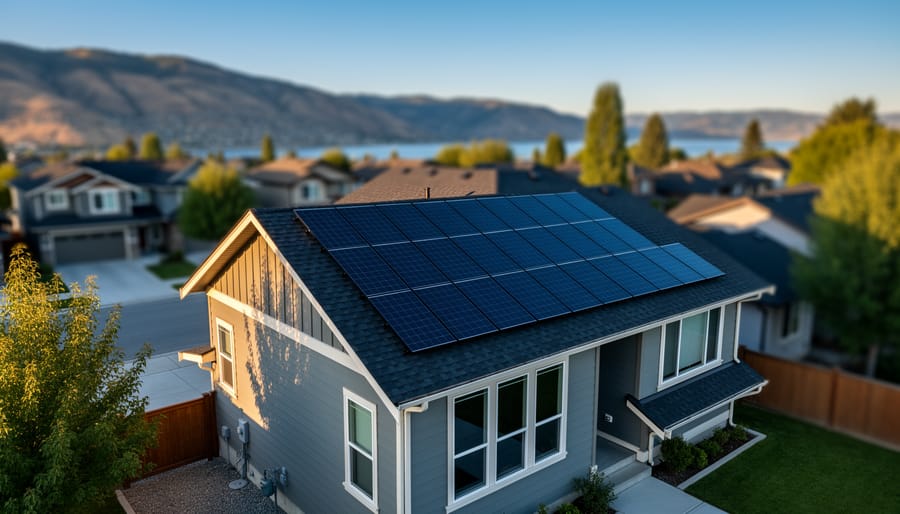
A 4 kilowatt solar system typically powers a modest Kelowna home consuming 400-500 kWh monthly, running essentials like your refrigerator, lighting, electronics, and laundry equipment while offsetting approximately 80-90% of your electricity bills. In Kelowna’s climate, this system generates roughly 4,800-5,200 kWh annually, translating to $600-700 in energy savings each year based on current BC Hydro rates.
Expect installation costs between $10,000-13,000 after available rebates, creating a payback period of 14-18 years with immediate monthly savings starting from day one. This system size suits couples, small families, or energy-conscious households in the 1,200-1,800 square foot range who want to dramatically reduce their carbon footprint without oversizing their investment.
The decision hinges on three factors: your current electricity consumption patterns, your roof’s south-facing exposure and condition, and your long-term homeownership plans. Kelowna homeowners benefit from 2,000+ annual sunshine hours, making our region exceptionally well-suited for solar generation compared to coastal BC communities.
Understanding whether a 4kW system aligns with your specific energy needs and financial goals requires examining your actual usage data, available roof space, and calculating your personalized return on investment based on your household’s unique consumption profile.
Understanding Your 4kW Solar System: The Basics for Kelowna Homeowners
A 4kW (4 kilowatt) solar system is one of the most popular entry-level solar installations for Kelowna homeowners, offering a balanced approach to clean energy without overwhelming your roof or budget. But what does “4kW” actually mean for your home?
The “4kW” refers to your system’s maximum power output under ideal conditions. Think of kilowatts as the system’s capacity, similar to how your car’s engine has a certain horsepower. When your panels operate throughout the day, they produce kilowatt-hours (kWh), which is the actual energy you use, like gallons of gas consumed on a road trip. A 4kW system in Kelowna typically generates between 4,500 and 5,500 kWh annually, depending on your roof’s orientation and shading.
Most 4kW systems include 10 to 13 solar panels, depending on each panel’s wattage (usually 300-400 watts per panel). You’ll need approximately 250-300 square feet of unobstructed roof space, roughly equivalent to a standard two-car garage footprint. South-facing roofs deliver the best results, though east and west orientations can work well too.
Why is this size so popular among Kelowna residents? It hits a sweet spot for typical household needs. The Chen family in South Pandosy installed a 4kW system last year and now covers about 40% of their annual electricity consumption, significantly reducing their BC Hydro bills while making a meaningful environmental impact.
For Kelowna’s climate, with approximately 2,000 hours of sunshine annually, a 4kW system provides reliable year-round production. Summer months deliver peak performance, while winter production decreases but still contributes to your energy needs. You can calculate solar panel output specific to your property using online tools that factor in your exact location and roof characteristics.
This system size works particularly well for homes using 10,000-15,000 kWh annually, offering substantial savings without requiring extensive roof coverage.
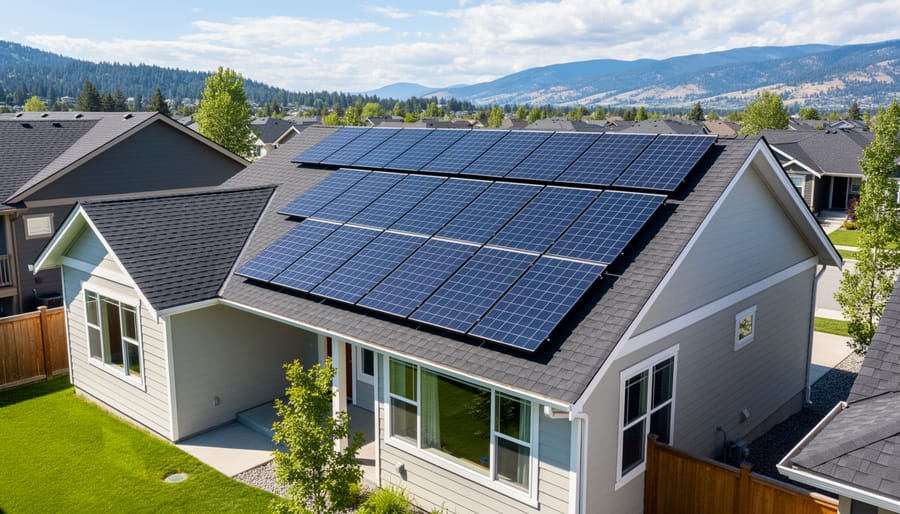
How Much Power Does a 4kW System Generate in Kelowna?
Summer Production in the Okanagan
The Okanagan Valley shines brightest during summer, and your 4 kilowatt solar system will take full advantage of those long, sunny days. Between June and August, Kelowna receives approximately 8 to 10 hours of peak sun daily, allowing your system to generate between 20 to 25 kilowatt-hours per day. That translates to roughly 600 to 750 kilowatt-hours monthly during peak production season.
To put this in perspective, a typical Okanagan household uses around 800 kilowatt-hours per month. During summer, your 4kW system could cover 75% to 95% of your electricity needs, sometimes producing surplus energy that feeds back into the grid through BC Hydro’s net metering program. This excess generation credits your account, offsetting consumption during cloudier months.
Local homeowner Sarah Chen from West Kelowna reports her 4kW installation generated 712 kilowatt-hours last July, cutting her summer electricity bill to just $12. The combination of long daylight hours and the valley’s famously clear skies creates ideal conditions for solar production. Even on partly cloudy days, your panels continue generating power, though at reduced capacity. These strong summer months build the foundation for year-round savings and environmental impact.
Winter Reality: What to Expect
Let’s be upfront: your 4 kilowatt solar system will produce significantly less energy during Kelowna’s winter months, typically dropping to about 30-40% of summer production. December and January are the challenging months, with shorter days (around 8 hours of daylight) and a lower sun angle reducing your system’s output to approximately 8-12 kWh per day compared to summer’s 20-25 kWh.
Snow accumulation presents another consideration. Light snowfall often slides off tilted panels naturally, but heavy snow can blanket your array for days. The good news? Kelowna’s relatively dry winter climate means panels clear faster than in wetter regions. One local homeowner in Glenmore found their system resumed 80% production within two days of a snowfall, as the dark panels naturally warm and encourage melting.
To maximize winter output, ensure your panels are installed at an optimal tilt angle (around 50 degrees works well for year-round production in our region). Keep south-facing panels clear of shade from nearby trees or structures, as winter’s low sun angle makes shading more problematic. Consider whether safe snow removal is feasible for your installation, though many homeowners find it unnecessary.
The reality is that winter production won’t cover all your energy needs when heating demands are highest. However, your system still offsets grid consumption and continues earning credits through BC Hydro’s net metering program. Those summer surplus credits carry forward, helping balance your annual energy costs. Think of it as a year-round partnership with your solar investment rather than expecting consistent monthly output.
What Will This System Actually Power in Your Home?
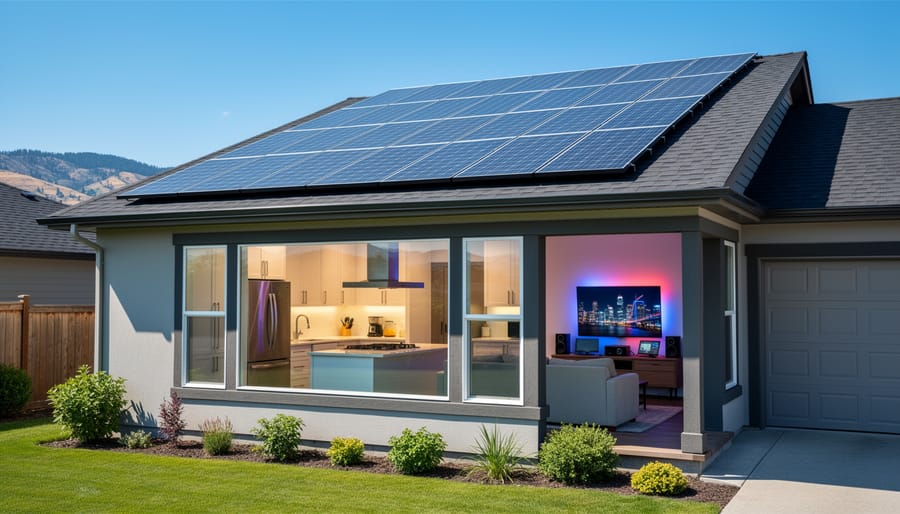
Typical Kelowna Home Energy Use
Understanding your home’s energy consumption is the first step in determining whether a 4 kilowatt solar system fits your needs. The average Kelowna home uses approximately 11,000 to 12,000 kilowatt-hours (kWh) annually, though this varies based on home size, heating type, and lifestyle factors.
BC Hydro data shows that typical household energy consumption breaks down into several key areas: heating and cooling account for about 60% of usage, water heating takes another 20%, and appliances and lighting make up the remaining 20%. In Kelowna’s climate, winter months typically see higher consumption due to heating demands, while summer usage peaks with air conditioning.
A 4 kilowatt system produces roughly 4,800 to 5,200 kWh annually in Kelowna, covering approximately 40-45% of an average home’s electricity needs. This makes it an ideal entry point for homeowners wanting to reduce their environmental footprint and utility costs without requiring extensive roof space or a larger upfront investment.
Your Energy Offset: What to Realistically Expect
Understanding what a 4 kilowatt solar system can realistically offset helps set the right expectations for your Kelowna home. Based on local data, this system size typically covers between 30% to 70% of an average household’s energy needs, though your actual offset depends on several factors.
For a smaller household with one or two people using about 6,000 kWh annually, a 4 kW system can offset approximately 60-70% of your electricity consumption. Think of a couple working full-time who primarily use energy in the evenings and weekends. Your solar panels will handle most daytime loads like refrigeration, while you’ll still draw from the grid during peak evening usage.
Medium-sized families consuming 9,000-10,000 kWh yearly might see offsets around 40-50%. This reflects a household of three to four people with typical appliances, electronics, and moderate heating or cooling needs. Your system will significantly reduce bills during spring and summer months when production peaks, while winter may require more grid supplementation.
Larger homes using 12,000 kWh or more annually can expect roughly 30-40% offset. These households often include five or more occupants, multiple electronics, electric vehicle charging, or extensive heating systems. While the percentage seems lower, you’re still generating substantial savings on what would otherwise be high energy costs.
Remember that energy efficiency improvements before installing solar can dramatically improve your offset percentage. Simple changes like LED lighting, programmable thermostats, and energy-efficient appliances mean your 4 kW system covers more of your actual needs. Many Kelowna homeowners find combining conservation with solar generation creates the most satisfying results, both financially and environmentally. Your actual offset will also vary seasonally, with summer months often producing surplus energy while winter months require more grid support.
Investment Breakdown: What You’ll Pay in Kelowna
Available Rebates and Incentives Right Now
Installing a 4 kilowatt solar system in British Columbia comes with significant financial support through various rebate programs. Understanding these incentives can dramatically reduce your upfront investment and improve your return on solar.
The federal Canada Greener Homes Grant offers up to $5,000 for eligible solar installations, helping homeowners offset initial costs. To qualify, you’ll need a pre-retrofit EnerguideⓇ evaluation and must work with approved contractors. The application process typically takes 4-6 weeks, so plan accordingly.
British Columbia residents can also benefit from provincial programs. FortisBC customers may access the CleanBC Income Qualified Program, which provides enhanced rebates for qualifying households. Check with your local utility provider, as programs vary across the province.
Kelowna homeowners have an additional advantage through property tax exemptions on renewable energy improvements. The City of Kelowna doesn’t assess increased property value from solar installations, meaning you enjoy the benefits without higher taxes. This local policy makes solar particularly attractive in our community.
For comprehensive details on available solar panel rebates, including current amounts and eligibility requirements, researching all applicable programs is essential before purchasing your system.
Here’s your action plan: First, contact a certified solar installer for a system assessment. They’ll guide you through available rebates specific to your situation. Second, gather necessary documentation like utility bills and property information. Third, submit applications before installation begins, as most programs require pre-approval. Many local installers handle paperwork on your behalf, simplifying the process considerably.
These combined incentives can reduce your 4 kilowatt system cost by $5,000-$7,000, making solar investment more accessible than ever.
Your Payback Timeline with BC Hydro Rates
Understanding your return on investment helps you make confident decisions about solar. In Kelowna, BC Hydro’s current residential rate sits at approximately $0.12 per kWh, which factors into your payback calculations.
A 4 kW system producing around 4,800 kWh annually saves you roughly $575 per year at today’s rates. With typical installation costs between $10,000 and $12,000, you’re looking at a payback period of 17-21 years before incentives. However, BC Hydro rates have historically increased 3-4% annually, which accelerates your payback timeline significantly.
Through BC Hydro’s net metering program, any excess electricity your system generates during sunny summer days gets credited to your account at the retail rate. This means you’re essentially using the grid as a battery, drawing on those credits during winter months when production is lower.
When you factor in potential federal incentives and rising electricity costs, many Kelowna homeowners see their effective payback period drop to 12-15 years. After that point, you’re enjoying free electricity for the remaining 10-15+ years of your system’s lifespan. That’s real money staying in your pocket while reducing your environmental impact.
Real Kelowna Installation: The Johnson Family’s 4kW System
When the Johnson family installed their 4kW solar system in their south-facing Kelowna home in spring 2023, they represented a typical scenario for local homeowners exploring solar energy. Their three-bedroom house with standard electrical usage made them ideal candidates for this system size.
The family worked with a local installer who completed the project in just two days. Their final investment totaled $12,800 after federal incentives, which included 12 panels, inverter equipment, mounting hardware, permits, and professional installation. The city’s permitting process took approximately three weeks, which Sarah Johnson noted was smoother than anticipated.
During their first full year of operation, the system generated 5,200 kilowatt-hours of electricity. Kelowna’s sunny climate meant their panels performed exceptionally well from April through September, with production dropping during winter months as expected. This output covered roughly 75 percent of their annual electricity needs, reducing their monthly BC Hydro bills from an average of $140 to just $35.
The Johnsons connected their system through BC Hydro’s net metering program, allowing excess summer production to credit their account for winter use. Tom Johnson shared that watching their production monitor became a family activity, helping their teenagers understand energy consumption in practical terms.
Their system included a monitoring app that tracks real-time production and historical data. Sarah mentioned this feature helped them identify opportunities to shift energy-intensive activities like laundry to sunny afternoon hours, maximizing their solar usage.
One unexpected benefit was the positive reaction from neighbors. Three families on their street have since requested information about their installer and costs, creating a ripple effect in their community. The Johnsons estimate their system will pay for itself within nine years based on current electricity rates, with potential savings exceeding $30,000 over the system’s 25-year lifespan.
Their advice for other Kelowna residents considering solar? Start with an energy audit, get multiple quotes, and don’t wait for perfect conditions. The technology works remarkably well in our local climate.
Is 4kW the Right Size for Your Kelowna Property?
When to Consider Going Bigger
While a 4kW system works well for many Kelowna homes, certain situations call for more capacity. If you’re planning to add an electric vehicle, you’ll need roughly 2-3kW additional capacity for regular charging. A 5kW solar system or 6kW setup better accommodates this increased demand without maxing out your production.
Heat pumps are another consideration. Upgrading from gas heating to an electric heat pump typically adds 1-2kW to your baseline consumption. Similarly, if you’re transitioning from a gas hot water tank to electric, factor in this additional load.
Growing families also benefit from larger systems. If you expect household size or home office usage to increase significantly over the next few years, sizing up now prevents the need for costly expansions later. Local installer SolarBC notes that many Kelowna homeowners adding pools or workshop spaces wish they’d installed an extra kilowatt from the start.
When 4kW Is Your Sweet Spot
A 4kW solar system works beautifully for smaller households in Kelowna that are mindful of their energy consumption. If you live in a home under 1,500 square feet with 2-3 occupants, this size typically covers a significant portion of your electricity needs. It’s particularly well-suited for energy-conscious families who’ve already implemented basic efficiency measures like LED lighting and modern appliances.
Consider the Peterson family in Rutland, who installed a 4kW system on their 1,200 square foot bungalow. Their daily consumption averages 15-18 kWh, and their system generates about 13-16 kWh on sunny days, reducing their grid dependence by approximately 70-80%. They’re thrilled with the balance between investment and savings.
Budget-wise, a 4kW system represents an accessible entry point into solar energy, typically requiring less roof space and lower upfront costs than larger installations. If your monthly electricity bills hover around $80-$120, this size offers meaningful savings without over-investing. It’s also ideal for homeowners who want to start their solar journey now and potentially expand later as needs grow or budgets allow. The key is matching system size to your actual consumption patterns rather than maximum theoretical capacity.
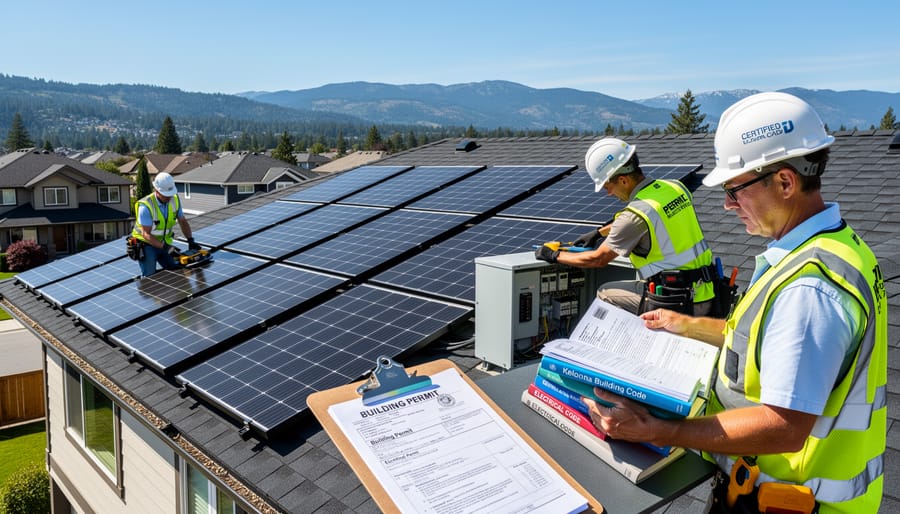
Next Steps: Getting Your Kelowna 4kW System Installed
Ready to move forward with your 4kW solar installation? Here’s your practical roadmap to getting started in Kelowna.
Begin by researching certified local installers who understand Kelowna’s specific climate conditions and municipal requirements. Look for companies with Clean Energy BC membership and substantial experience in the Okanagan region. Request quotes from at least three installers to compare pricing, equipment quality, and service offerings.
During your consultation, ask these key questions: What brand of panels and inverters do you recommend for Kelowna’s climate? Can you provide references from recent local installations? What warranties cover equipment and workmanship? How do you handle snow load considerations? What monitoring systems are included? Request a detailed breakdown of costs, including equipment, installation, permits, and any post-installation support.
Your installation timeline typically spans 6-10 weeks from signing a contract. The process includes a site assessment (1-2 days), permit application with the City of Kelowna (2-4 weeks), actual installation (1-3 days), and inspection and connection approval (1-2 weeks). Your installer should coordinate all permit applications with the city and arrange the required electrical inspection.
The City of Kelowna requires a building permit for solar installations, which your contractor will typically handle. After installation, BC Hydro must inspect and approve your system before you can connect to the grid and begin the net metering process. Your installer will guide you through the interconnection application.
Consider timing your installation for spring or early summer to maximize your first year’s production. Most Kelowna installers experience high demand during these months, so booking early ensures better scheduling options.
Take advantage of available financing programs and rebates. Many installers offer financing solutions that can make your 4kW system affordable with monthly payments lower than your current electricity bills, allowing you to start saving from day one.
A 4 kilowatt solar system represents an accessible and practical entry point for many Kelowna homeowners ready to embrace clean energy. Whether you’re looking to significantly reduce your electricity bills, increase your home’s value, or take meaningful action on climate change, this system size offers a balanced approach that delivers real results without overwhelming upfront costs.
Throughout this guide, we’ve seen how a 4kW system can generate approximately 4,800-5,200 kWh annually in Kelowna’s sunny climate, potentially covering 60-80% of a typical household’s energy needs. With provincial and federal incentives available, combined with BC Hydro’s net metering program, your investment can pay for itself within 10-15 years while providing decades of clean energy.
The next step is personal: calculate your specific savings potential based on your actual energy consumption and roof characteristics. Review your recent BC Hydro bills, consider your household’s energy goals, and connect with local solar installers who understand Kelowna’s unique conditions. Many offer free consultations and customized assessments to help you make an informed decision. Your solar journey starts with understanding your options, and a 4kW system might be exactly what your home needs to start saving today.