
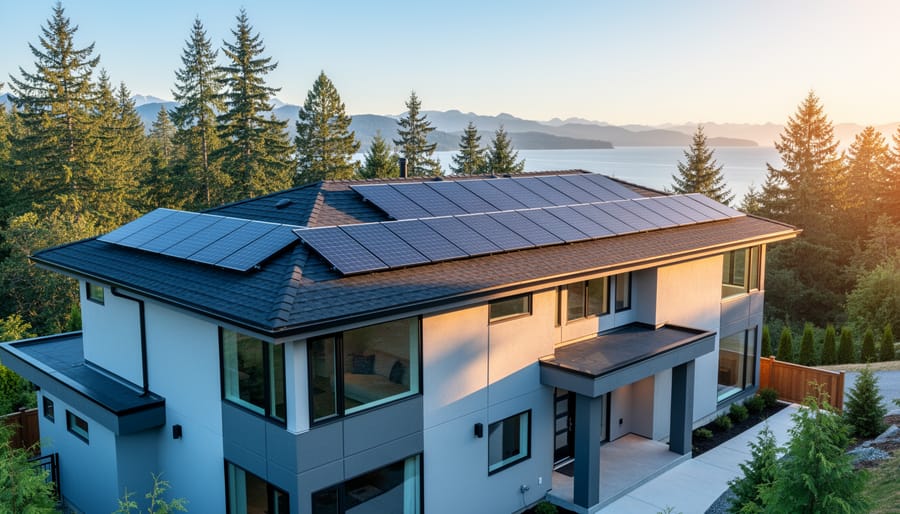
Understand that “6 kWh solar system” likely refers to a 6 kW (kilowatt) system, not kilowatt-hours. This common terminology mix-up matters because kW measures your system’s power output capacity, while kWh measures actual energy production over time. A 6 kW solar system in British Columbia typically generates 6,500-7,500 kWh annually, enough to power most average homes and reduce electricity bills by $650-$900 per year.
Calculate whether this system size matches your household needs by reviewing your annual electricity consumption on recent BC Hydro bills. If your home uses 7,000-9,000 kWh yearly, a 6 kW system covers 70-100% of your energy needs. Smaller homes using 5,000 kWh might only need a 4-5 kW system, while larger properties consuming 12,000+ kWh should explore 8-10 kW options.
Expect installation costs between $15,000-$18,000 before incentives for a quality 6 kW system in BC. This includes panels, inverters, mounting equipment, permits, and professional installation. Federal and provincial rebates can reduce upfront costs significantly, with typical payback periods of 10-15 years and systems lasting 25-30 years.
Assess your roof’s suitability by checking for south-facing exposure, minimal shading from trees or buildings, and sufficient space for approximately 15-18 solar panels. Most BC homes built after 1990 have adequate structural capacity, though older homes may require engineering assessment before installation.
What a 6 kW Solar System Actually Delivers in British Columbia
Let’s clear up a common point of confusion right away: when we talk about a 6 kW solar system, that “kW” refers to the system’s capacity, not the energy it produces. The system’s size is measured in kilowatts (kW), while the actual electricity it generates is measured in kilowatt-hours (kWh). Think of it like a car: kW is the engine size, while kWh is the distance you travel.
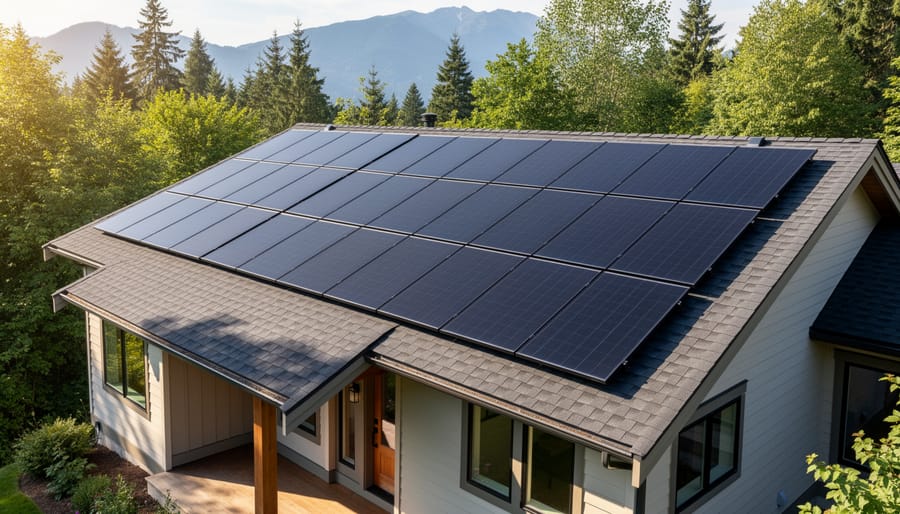
A 6 kW system in British Columbia typically consists of 15 to 20 solar panels, depending on the wattage of each panel. Most modern panels range from 300 to 400 watts, so the exact number varies based on which panels you choose.
Now, how much electricity will this system actually produce? The answer depends significantly on where you live in BC. Our province’s diverse climate zones mean different solar potential across regions.
In the sunny Interior regions like Kelowna or Kamloops, a 6 kW system can generate approximately 20 to 24 kWh per day during peak summer months, dropping to around 6 to 8 kWh on short winter days. Over a full year, you’re looking at roughly 7,000 to 8,000 kWh of total production.
The Lower Mainland, including Vancouver and Surrey, sees slightly lower production due to cloudier conditions. Expect around 18 to 22 kWh daily in summer and 5 to 7 kWh in winter, with annual totals between 6,500 and 7,500 kWh. Understanding daily kWh production helps you match system size to your household needs.
Coastal communities experience similar patterns to the Lower Mainland, though microclimates can create significant variation even within small geographic areas.
To put these numbers in perspective, the average BC household consumes between 10,000 and 12,000 kWh annually. A 6 kW system can therefore offset approximately 60 to 80 percent of a typical home’s electricity needs, making it an excellent mid-sized option for many families.
Does This System Size Match Your Home’s Energy Needs?
Average Energy Use in BC Homes
Understanding how much energy your home uses is the first step in determining if a 6 kW solar system is the right fit. British Columbia homes vary widely in their energy consumption based on size, heating systems, and lifestyle factors.
A typical 1,500 square foot home in BC uses approximately 800-1,000 kWh per month, translating to roughly 9,600-12,000 kWh annually. This average BC household consumption can be effectively covered by a 6 kW solar system, which typically generates between 6,500-8,500 kWh per year depending on your location and roof orientation.
Larger homes present different scenarios. A 2,500 square foot home with electric heating might consume 1,200-1,800 kWh monthly (14,400-21,600 kWh annually). In these cases, a 6 kW system would offset 30-60% of your energy needs, significantly reducing your electricity bills while still requiring some grid power during peak usage times or cloudy winter months.
Consider the Thompson family in Kelowna, who installed a 6 kW system on their 1,800 square foot home. Their annual consumption of 11,200 kWh matched perfectly with their system’s 11,000 kWh production, achieving near energy independence during most months.
Your actual coverage depends on several factors including your home’s insulation, heating system type, number of occupants, and energy habits. Homes with gas heating typically have lower electrical consumption, making a 6 kW system more likely to meet or exceed their needs.
When You Might Need More (or Less)
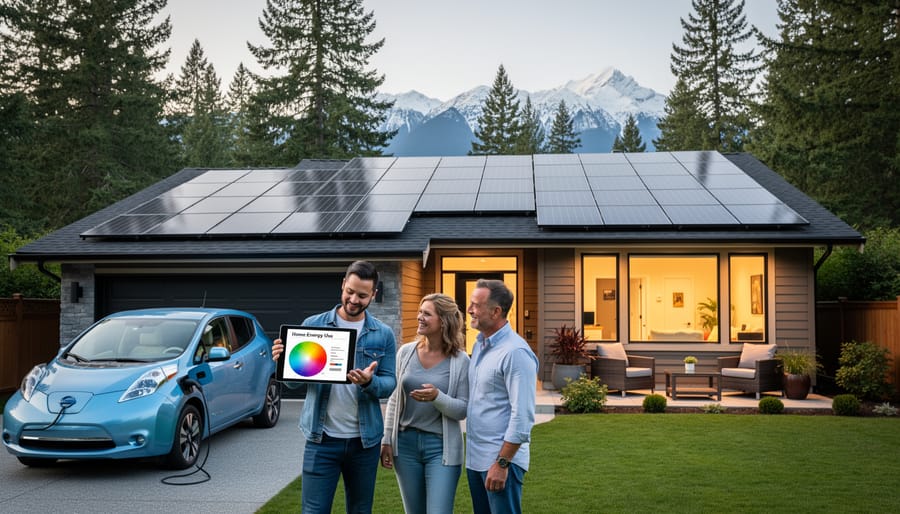
A 6 kW system works well for many BC homes, but your specific situation might call for a different size. If you’re planning to add an electric vehicle, you’ll need significantly more capacity. EV charging typically adds 3-4 kW of demand, meaning you might want to consider an 8-10 kW system instead. Similarly, homes using electric heating during BC’s cooler months often benefit from larger systems to offset higher winter consumption.
On the other hand, you might need less capacity if your home is particularly energy-efficient. Newer builds with heat pumps, LED lighting, and Energy Star appliances often consume 20-30% less electricity than older homes. A Burnaby couple we worked with found that after completing energy-efficiency upgrades, a 5 kW system covered their needs perfectly, saving them several thousand dollars on installation costs.
Consider your five-year energy plans too. Are you planning renovations that might increase consumption? Will your household size change? These factors help determine whether scaling up or down makes sense for your long-term goals and budget.
What You’ll Pay and Save: Real Numbers from BC Homeowners
Upfront Investment Breakdown
In British Columbia, a 6 kW solar system typically costs between $12,000 and $18,000 before incentives. This investment breaks down into several components that help you understand where your money goes.
Equipment costs form the largest portion, usually 50-60% of the total. This includes solar panels, inverters, mounting hardware, and electrical components. Quality panels with 25-year warranties represent the bulk of this expense, while inverters convert DC power from panels into usable AC electricity for your home.
Installation labor accounts for roughly 25-35% of costs. Licensed electricians and certified solar installers ensure your system meets BC Building Code requirements and connects safely to BC Hydro’s grid. Their expertise prevents costly mistakes and ensures optimal performance.
Permits and inspections typically add $500-$1,500 to your project. Your installer handles municipal building permits, electrical permits, and arranges required inspections. These steps protect your investment and ensure everything meets safety standards.
The good news? Several programs reduce your upfront costs. The federal Canada Greener Homes Grant provides up to $5,000 for eligible solar installations. Some BC municipalities offer additional rebates or property tax exemptions for renewable energy systems. Many homeowners also explore financing options that spread payments over time, making solar accessible without large upfront capital.
Local installers often provide free assessments, giving you detailed quotes specific to your property. This helps you understand exact costs and potential savings before committing, ensuring solar makes financial sense for your household.
Monthly Savings and Payback Timeline
A 6 kWh (6 kW) solar system in British Columbia can significantly reduce your electricity bills through BC Hydro’s net metering program. Based on current BC Hydro residential rates averaging $0.12 per kWh, this system size typically generates savings of $90 to $150 per month, depending on your energy consumption patterns and seasonal variations.
With BC Hydro’s net metering, excess electricity your system produces during sunny summer months earns credits that offset your winter usage when production decreases. This means your annual savings can reach $1,200 to $1,800, making solar a smart long-term investment for BC homeowners.
Most homeowners can expect payback periods between 10 to 15 years for a 6 kW system. This timeline depends on several factors including your initial installation costs, available incentives, and your household’s electricity consumption. After your system pays for itself, you’ll enjoy decades of nearly free electricity, as most solar panels come with 25-year performance warranties.
To see exactly how much you could save based on your specific situation, try our interactive solar savings calculator. Simply enter your current electricity bill and roof characteristics to receive a personalized estimate of your monthly savings and payback timeline. This tool accounts for BC-specific factors like our seasonal sunlight patterns and local electricity rates, giving you an accurate picture of your solar investment potential.
Space Requirements and Installation Considerations
Roof Space and Placement
A 6 kW solar system typically requires between 300 and 400 square feet of roof space, depending on the efficiency of your panels. Higher-efficiency panels need less space, which can be particularly helpful if you’re working with a smaller or partially shaded roof.
For optimal performance in British Columbia, south-facing roofs are ideal, though southeast and southwest orientations can still deliver excellent results. The angle of your roof matters too. Given BC’s latitude, roofs pitched between 30 and 40 degrees tend to capture the most sunlight year-round, but systems can be effectively installed on roofs ranging from 15 to 45 degrees with only minor efficiency differences.
Before installation, consider potential obstructions like chimneys, vents, or nearby trees that might cast shadows. Even partial shading can impact your system’s output. A real-world example: A homeowner in Kelowna with a west-facing roof at 35 degrees still generates 95% of the production compared to an ideal south-facing setup, proving that less-than-perfect conditions can still work well.
If your roof isn’t suitable, ground-mounted systems offer an alternative. Your solar installer will assess your specific situation during a site evaluation to determine the best placement for maximum energy production.
What About Shading and Snow?
British Columbia’s climate presents unique considerations for solar performance, but modern systems handle these challenges remarkably well. Tree coverage and shading are the most significant concerns—even partial shade on a few panels can impact your entire system’s output. Before installation, reputable installers conduct thorough shade analyses to identify problematic trees and optimal panel placement. Sometimes strategic tree trimming creates the solution you need.
Snow accumulation rarely poses long-term issues in most BC regions. Panels are installed at angles that encourage snow to slide off naturally, and the dark surface helps speed melting. During heavy snowfall periods, you might see temporary production dips, but BC’s relatively mild winters mean panels typically clear within days. One Kelowna homeowner found their 6 kW system produced only 15% less annually than predicted, despite regular snowfall.
For coastal areas with frequent rain and cloud cover, modern panels still capture diffuse light effectively. Your installer should provide realistic production estimates based on your specific location’s weather patterns, ensuring your 6 kW system meets expectations year-round. Site assessments are essential for identifying and addressing these BC-specific factors before you invest.
Adding Battery Storage to Your 6 kW System
Adding battery storage to your 6 kW solar system is an optional enhancement that makes sense for specific situations rather than a universal requirement. Let’s explore when it’s worth considering and what it means for your BC home.
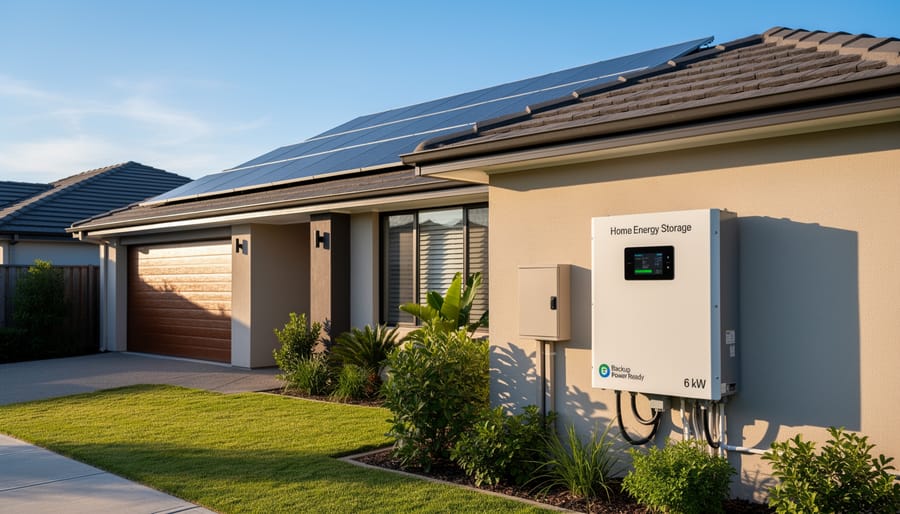
Battery storage primarily benefits homeowners who experience frequent power outages or want maximum energy independence. During grid outages, a battery system keeps essential appliances running, from refrigerators to sump pumps. This peace of mind is particularly valuable in rural BC areas where weather-related outages occur more frequently. Without batteries, your solar panels automatically shut down during outages for safety reasons, even on sunny days.
For a 6 kW system, typical battery capacities range from 10-13.5 kWh, with the Tesla Powerwall and Enphase IQ Battery being popular choices among BC homeowners. These capacities provide enough backup power to run essential loads for several hours or stretch overnight usage when paired with your daytime solar production.
The Thompsons in Kelowna added a 13.5 kWh battery to their 6 kW system after experiencing three multi-day outages in one winter. They now maintain refrigeration, heating controls, and lighting during grid failures while maximizing their solar self-consumption year-round.
However, batteries add significant upfront costs, typically $12,000-$18,000 installed. With BC’s reliable grid and net metering program that credits excess solar production, most homeowners achieve excellent returns without batteries. Storage makes financial sense primarily when outage protection is essential or if you’re in a time-of-use rate structure.
Explore available battery storage options to determine if this enhancement aligns with your specific energy goals and budget. Your solar installer can assess your backup power needs and recommend appropriate solutions.
Your Next Steps: Planning Your Solar Installation
Ready to harness BC’s solar potential? Here’s how to move forward with confidence.
Start by connecting with certified installers through Solar BC’s installer network. These professionals understand local conditions, from coastal weather patterns to interior snowfall, ensuring your system is properly designed for your location. Request at least three quotes to compare pricing, equipment options, and warranties. A reputable installer will visit your property, assess your roof condition and orientation, and provide a detailed proposal based on your actual energy needs.
Use Solar BC’s online calculator to estimate your specific savings potential. Input your current BC Hydro bills and location to see how a 6 kW system could reduce your energy costs over time. This tool helps you understand realistic payback periods for your situation.
Next, discuss the permitting process with your chosen installer. They’ll typically handle municipal building permits and BC Hydro interconnection applications on your behalf. Most residential installations in BC take 4-8 weeks from permit submission to final inspection, though timelines vary by municipality.
Consider financing options early in your planning. Many BC credit unions offer green energy loans with favorable rates, and some installers provide payment plans. Factor in available rebates when calculating your investment.
Connect with neighbours who’ve already gone solar. Their real-world experiences with local installers and system performance provide invaluable insights you won’t find in brochures. Many BC homeowners are eager to share their solar journey and help others take this important step toward energy independence.
A 6 kW solar system represents an excellent match for average BC homes, offering the right balance of power generation, affordability, and environmental impact. By producing approximately 6,000 to 7,500 kWh annually in most BC locations, these systems can cover a significant portion of your household electricity needs while reducing your carbon footprint and energy costs for decades to come.
The environmental benefits extend beyond your own home. Every kilowatt-hour your system generates means less demand on the grid during peak hours, contributing to BC’s broader clean energy goals. Combined with financial advantages like net metering credits, federal incentives, and long-term savings that can reach $30,000 or more over the system’s lifetime, going solar makes both ecological and economic sense.
Ready to explore if a 6 kW system suits your home? Use available solar calculators to get a personalized assessment based on your roof characteristics, energy usage, and location. These tools provide instant estimates to guide your planning. Together, we’re building a cleaner, more resilient energy future for British Columbia, one rooftop at a time.