
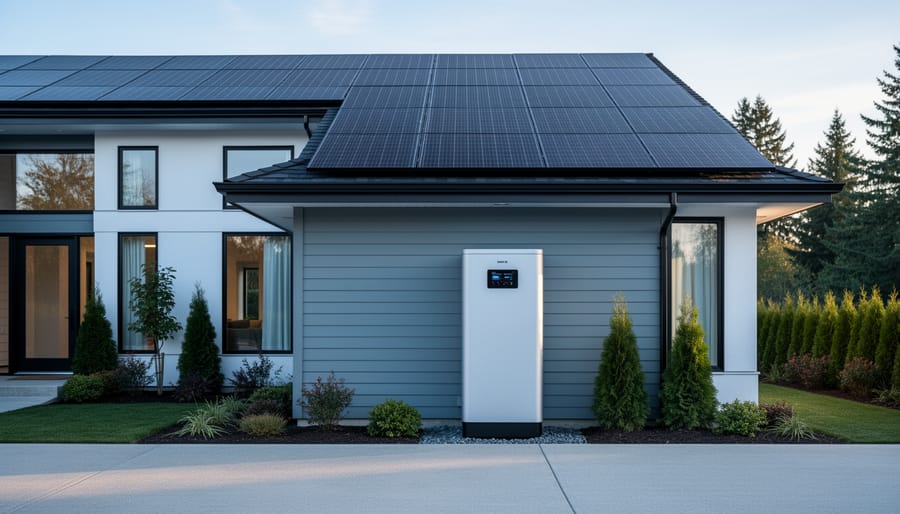
Choosing the right solar battery means matching your household’s energy consumption to storage capacity, typically ranging from 10 kWh for smaller homes to 20+ kWh for larger properties with electric vehicles. BC homeowners can cut upfront costs significantly through CleanBC rebates that cover up to $5,000 per battery installation in 2026, making premium systems far more accessible than even two years ago.
Lithium iron phosphate (LiFePO4) batteries now dominate the residential market because they last 15+ years, handle BC’s temperature swings better than older lithium-ion models, and don’t degrade as quickly through daily charge cycles. You’ll see this chemistry in top-rated models from Tesla, LG, and Enphase, though each manufacturer builds different features around the core technology.
The real question isn’t just which battery ranks highest on spec sheets. It’s whether you need backup power during grid outages, want to maximize self-consumption of your solar production, or plan to participate in BC Hydro’s net metering program. A family in Kelowna running their home office might prioritize uninterrupted power, while a Victoria couple focused on reducing grid dependence could choose a larger capacity system that stores excess summer production.
This guide breaks down the seven best batteries available to BC residents in 2026, explains what those confusing technical specifications actually mean for your daily life, and shows you exactly how to calculate the right size for your home. We’ve included real installation costs from local contractors, current rebate amounts, and stories from your neighbors who’ve already made the switch.
Why BC Homes Need Solar Batteries in 2026
British Columbia homeowners are installing solar batteries at record rates in 2026, driven by a perfect storm of rising electricity costs, grid instability, and the desire to maximize solar panel investments. If you already have or are planning to install solar panels, adding battery storage transforms your system from a nice-to-have into genuine energy independence.
BC Hydro’s residential time-of-use rates, which climbed again this year, mean peak electricity now costs significantly more than off-peak power. Without a battery, your solar panels send excess daytime electricity back to the grid for minimal credit, while you’re forced to buy expensive power during evening hours when your family actually needs it. A home battery flips this equation, storing your cheap midday solar production for use during costly peak periods.
Grid reliability has become a real concern across BC. Winter storms knocked out power to thousands of coastal residents last year, and Interior communities faced multi-day outages during extreme weather events. These disruptions aren’t improving, aging infrastructure and increasingly severe weather mean BC’s utility reliability metrics show longer and more frequent outages than a decade ago.
Solar batteries deliver tangible benefits for BC households:
- Energy independence: Store your own solar power instead of depending entirely on the grid
- Cost savings: Use stored solar energy during expensive peak-rate hours rather than buying grid power
- Backup power: Keep essential appliances running during blackouts without noisy, fuel-dependent generators
- Environmental impact: Maximize clean energy usage and reduce reliance on fossil fuel backup sources
For rural BC homeowners, batteries provide a buffer against the reliability challenges that come with living at the end of long distribution lines. Urban residents value the quiet, automatic backup that kicks in instantly when the grid drops, keeping refrigerators, medical equipment, and home offices operational.
The financial case has never been stronger. Provincial incentives combined with federal programs now cover a substantial portion of battery costs, while your system pays for itself faster through peak-rate avoidance and avoided outage losses.
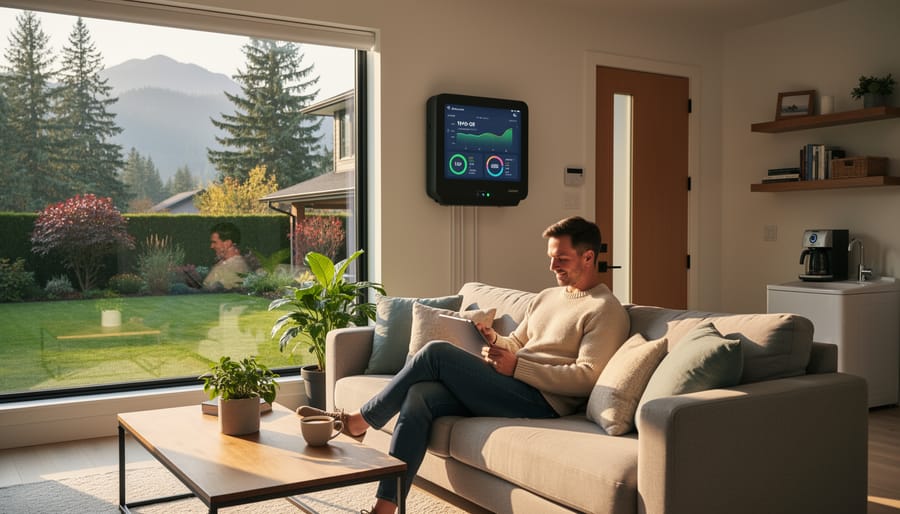
Understanding Solar Battery Basics Before You Buy
Before you compare models and prices, you need to understand what the specifications actually mean for your daily life. Here’s what matters most when evaluating solar batteries.
Battery capacity measures how much energy a battery can store, expressed in kilowatt-hours (kWh). Think of this as the size of your fuel tank. A 10 kWh battery can power ten 100-watt light bulbs for ten hours, or run your refrigerator for about two days. Most BC homes use 20-30 kWh daily, so a single battery typically covers essential loads during outages or shifts a portion of your usage to nighttime hours when you’d otherwise buy grid power.
Power output (kW) determines how many devices the battery can run simultaneously. This is your flow rate, not tank size. A battery with 5 kW continuous output can handle your fridge, lights, wifi, and a few other appliances at once, but it won’t start your electric dryer and run your heat pump simultaneously. Peak power ratings matter for motor-heavy appliances that draw extra current when starting up.
Depth of discharge indicates how much of the battery’s total capacity you can actually use without damaging it. A battery rated at 13.5 kWh with 100% depth of discharge gives you the full 13.5 kWh, while one with 90% depth of discharge delivers only about 12 kWh of usable energy. Most modern lithium batteries allow 90-100% depth of discharge.
Round-trip efficiency measures energy lost during charging and discharging. A battery with 90% efficiency returns 9 kWh for every 10 kWh stored. Higher efficiency means more of your solar energy actually powers your home instead of dissipating as heat. Look for batteries above 85% efficiency.
Battery chemistry determines lifespan, safety, and performance. Lithium iron phosphate (LFP) batteries last longer and handle temperature swings better than nickel manganese cobalt (NMC) batteries, making them ideal for BC’s climate. LFP batteries typically deliver 6,000-10,000 cycles versus 3,000-5,000 for NMC. If you’re curious about specific technical specs like Tesla Powerwall amp hours manufacturers provide detailed datasheets, but these five concepts cover what you need for comparing options.
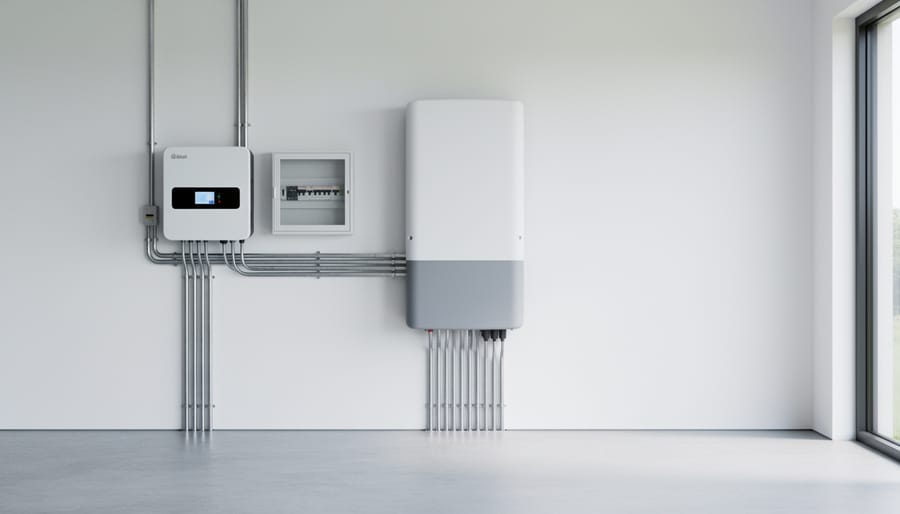
Top Home Solar Batteries for BC Homeowners in 2026
Best Overall Value
The Tesla Powerwall 3 stands out as the best battery for BC homeowners who want proven reliability without overpaying. With 13.5 kWh of usable capacity and 11.5 kW continuous power output, it handles typical household loads during outages while storing enough energy to cover evening consumption for most families. The integrated inverter simplifies installation and reduces overall system costs compared to batteries requiring separate equipment.
What makes the Powerwall 3 exceptional value is its 10-year warranty covering unlimited cycles at 70% capacity retention, meaning you can cycle it daily without voiding coverage. Most BC installers report straightforward permitting and reliable performance in our climate, with the battery operating efficiently in temperatures from -20°C to 50°C. Current installed pricing ranges from $16,000 to $19,000 depending on your location and electrical panel upgrades needed, which positions it competitively when you factor in longevity and the brand’s established service network across British Columbia.
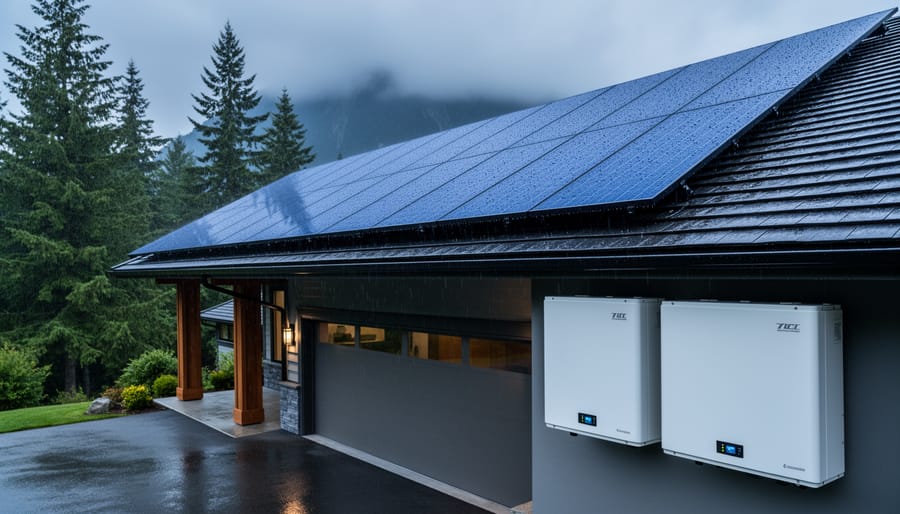
Best for Off-Grid Living
For rural BC properties without reliable grid access, the Tesla Powerwall 3 stands out with its 13.5 kWh capacity and proven durability in remote conditions. Unlike grid-tied systems that only need to cover overnight usage, off-grid setups must handle multiple days of cloudy weather while powering your entire home.
The Powerwall 3’s integrated inverter simplifies installation in locations where every component counts, and its -20°C to 50°C operating range handles BC’s seasonal extremes from coastal rain to interior winters. With 11.5 kW continuous power output, it runs well pumps, septic systems, and heating equipment simultaneously, critical when you’re miles from the nearest utility pole.
For larger properties or higher energy demands, consider installing two or three units in parallel. A three-battery system provides 40.5 kWh of storage, typically enough for 3-4 days of autonomy with a properly sized solar array. The 10-year warranty covers performance degradation, maintaining at least 70% capacity even after a decade of daily cycling.
BC homeowners in the Cariboo and Kootenay regions report the Powerwall 3 handles frequent deep discharges better than budget alternatives, which matters when winter storms limit solar production for extended periods.
Best Compact Solution
# Best Compact Solution
When garage space or utility room real estate is tight, the Enphase IQ Battery 3T delivers 3.36 kWh of usable storage in a package roughly the size of a carry-on suitcase. Multiple units can be wall-mounted and stacked to increase capacity without consuming valuable floor space, making it the top choice among the best home solar batteries for Vancouver condos and townhomes where every square foot counts.
This modular design means you start with one battery and add more as your needs or budget allows. Each unit weighs just 42 kg and measures 68 cm tall by 43 cm wide, fitting easily in narrow mechanical rooms or on exterior walls. The IQ Battery 3T integrates seamlessly with Enphase microinverters already popular in BC solar installations, eliminating compatibility headaches.
Expect to pay $5,200 to $6,500 per 3.36 kWh unit installed in Metro Vancouver, with costs dropping slightly per kWh as you add units. The 15-year warranty and proven track record in tight urban spaces make this battery ideal for homeowners who need reliable backup power without sacrificing storage closets or workshop areas.
Best Budget Option
For homeowners with smaller solar installations or tighter budgets, the Enphase IQ Battery 3T delivers solid performance without the premium price tag. At roughly $5,500 to $7,000 installed in BC (before rebates), this 3.36 kWh unit costs significantly less than larger alternatives while maintaining Enphase’s reputation for reliability.
The 3T’s compact design and modular nature make it ideal for starter systems. You can install one now and add more later as your budget allows, with up to four units connected together. The 1.28 kW continuous power output handles essential loads like refrigerators, lights, and internet routers during outages, though you won’t run heavy appliances simultaneously.
Where this battery truly shines is its 15-year warranty and seamless integration with Enphase microinverters, which many BC solar systems already use. The all-in-one design includes the inverter, eliminating separate equipment costs. Round-trip efficiency sits at 89%, respectable for the price point.
This option works best for households using 15-20 kWh daily with a 3-5 kW solar array. It won’t power your entire home indefinitely, but it keeps critical systems running and stores excess solar production effectively. For budget-conscious homeowners taking their first step into energy storage, the IQ Battery 3T offers proven technology at an accessible price.
Sizing Your Battery System: How Much Storage Do You Actually Need?
Most BC homeowners oversize or undersize their battery systems because they skip the actual math. Here’s how to calculate what you need without wasting money.
Start by understanding your house electricity use. Your BC Hydro bill shows monthly consumption in kilowatt-hours (kWh), but you need daily averages. Divide your monthly total by 30 to get your baseline daily usage. A typical BC home uses 20 to 30 kWh per day, though this varies significantly by season and household size.
The calculation gets more specific when you follow this process:
- Review your last 12 months of electricity bills to identify your highest and lowest consumption months. BC homes often see winter peaks due to heating and reduced solar production.
- Identify your critical loads, the appliances and systems you must keep running during an outage. This typically includes your refrigerator (1 to 2 kWh daily), essential lights (0.5 kWh), internet router (0.1 kWh), and heating system controls (varies widely).
- Consider seasonal variations in both your consumption and solar production. Summer months in BC provide abundant solar generation, while winter demands more stored energy as daylight hours shrink.
- Account for your backup duration goals. Do you want one day of autonomy, three days for extended outages common in rural areas, or just enough to cover overnight usage?
Your solar panel output matters too. If your 6 kW system generates 25 kWh on a summer day but your home uses 22 kWh, you have only 3 kWh of excess to store. Winter production might drop to 8 kWh daily, meaning you’ll draw heavily from your battery and possibly the grid.
A practical sizing formula: multiply your daily consumption by your desired days of backup, then multiply by 1.2 to account for depth of discharge limits. If you use 25 kWh daily and want two days of backup, you need 60 kWh of capacity (25 x 2 x 1.2). Most BC homeowners find 10 to 20 kWh sufficient for daily cycling with grid backup.
Oversizing costs you upfront without proportional returns. Undersizing leaves you drawing from the grid during peak rate periods, defeating the purpose of battery storage.
What Solar Batteries Actually Cost in BC (2026 Pricing)
A complete home solar battery system in BC typically costs between $12,000 and $25,000 installed in 2026, depending on capacity and brand. For a mid-range 10 kWh battery like the Tesla Powerwall or Enphase IQ Battery, expect to pay around $15,000 to $18,000 all-in. Larger 15-20 kWh systems suitable for bigger homes or extended backup power run $20,000 to $25,000.
Here’s how those costs break down. The battery unit itself accounts for roughly 60-70% of total expenses ($8,000 to $15,000). Professional installation adds another $2,500 to $4,500, covering electrical work, mounting hardware, and system integration. BC building permits and inspections typically cost $300 to $800 depending on your municipality. Some installers include these fees in their quotes, while others bill them separately, so always ask for itemized pricing.
Ongoing costs are minimal. Most quality batteries require no routine maintenance, though you should budget $100 to $200 annually for monitoring system performance and occasional firmware updates through your installer. Warranty coverage typically handles any component failures during the 10-15 year warranty period.
The good news is that solar rebates in BC can significantly reduce your upfront investment. The federal Canada Greener Homes Grant provides up to $5,000 for battery storage systems when combined with solar panels. Some BC utilities offer additional incentives for grid-connected batteries that support demand management. These rebates can cut your net cost by 20-30%, bringing a $18,000 system down to around $12,600 after incentives.
Factor in avoided energy costs too. With BC Hydro’s residential conservation rate increasing to 15.62 cents per kWh in 2026, a properly sized battery paying for itself over 12-15 years through energy savings and backup power value becomes realistic for many homeowners.
Installation and Compatibility Considerations
Installing a home solar battery isn’t as simple as plugging it into an outlet. Your home’s electrical infrastructure, existing solar setup, and local regulations all play crucial roles in determining which batteries work for your property and what modifications you’ll need.
Before you purchase any battery system, assess your home’s electrical panel readiness. Many older BC homes have 100-amp panels that lack the capacity for battery storage systems, which typically require 200-amp service. Upgrading your panel adds $2,000 to $4,000 to your project cost, but it’s a necessary foundation for safe battery operation.
Key installation factors to verify before committing to a battery purchase:
- Electrical panel capacity and available breaker spaces for battery connection
- Compatibility between your existing solar inverter and the battery system
- Municipal permit requirements, which vary significantly across BC communities
- Indoor versus outdoor installation options based on available space and climate considerations
Inverter compatibility deserves special attention. If you already have solar panels, confirm whether your inverter can integrate with your chosen battery. Some batteries require specific inverter brands or models, while others offer broader compatibility. Replacing an incompatible inverter adds $1,500 to $3,000 to your total cost.
BC municipalities have different permit processes and timelines. Vancouver typically processes residential solar battery permits within three weeks, while smaller communities may take six to eight weeks. Your installer should handle permit applications, but factor these timelines into your project schedule.
Choose installers certified by the Canadian Solar Industries Association or holding BC electrical contractor licenses. Request references from recent battery installations, verify their liability insurance, and confirm they offer workmanship warranties separate from manufacturer coverage. The right installer prevents costly mistakes and ensures your system meets BC electrical code requirements.
Real BC Homeowner Success Stories
# Real BC Homeowner Success Stories
The Fraser family in Abbotsford installed a 13.5 kWh battery system in March 2024 alongside their existing 8 kW solar array. Their total investment was $14,200 after BC rebates, and they’ve reduced their grid electricity purchases by 78% since installation. During last winter’s three-day power outage, their battery kept their fridge, furnace, and essential circuits running while neighbours scrambled for generators. Sarah Fraser notes their biggest surprise was how quickly the system paid for itself: “We’re saving about $185 monthly on electricity bills, and we avoided $600 in spoiled food costs during that outage alone.”
Mark Chen’s Vancouver Island property faces frequent windstorm outages. He chose a modular battery system with 20 kWh capacity paired with 10 kW of solar panels. The $18,500 installation in June 2025 transformed his property from experiencing 8-12 outages yearly to maintaining continuous power. His lesson learned: “I wish I’d installed batteries from the start instead of adding them three years after my solar panels. The integration costs would have been lower, and I’d have captured three more years of savings.”
In Kelowna, the Johnsons downsized to a retirement condo and installed a compact 10 kWh battery with 5 kW of rooftop solar. Their space-constrained setup cost $11,800 and covers 65% of their annual electricity needs. Rita Johnson emphasizes one key takeaway: “Don’t assume your small space can’t support batteries. Our installer found creative mounting solutions we never considered.”
These real BC installations demonstrate that battery systems work across different property types, budgets, and energy goals. The common thread: homeowners who carefully matched their battery capacity to actual usage patterns saw faster payback periods and greater satisfaction than those who simply chose the largest available system.
Common Mistakes to Avoid When Buying Solar Batteries
Buying the wrong battery can turn your solar investment into an expensive headache. Here are the costliest mistakes BC homeowners make and how to avoid them.
**Oversizing Your System**
Many buyers assume bigger is always better and purchase more storage than they’ll ever use. A family that consumes 20 kWh daily doesn’t need a 30 kWh battery. You’re paying thousands extra for capacity that sits unused. Calculate your actual nighttime and backup power needs before selecting capacity.
**Undersizing to Save Money**
The opposite mistake is just as common. Installing a 5 kWh battery when you need 10 kWh means running out of stored power before morning or losing backup capacity when you need it most. This defeats the entire purpose of battery storage and leaves you frustrated with your system’s performance.
**Ignoring Warranty Fine Print**
Not all 10-year warranties are equal. Some only cover defects, not performance degradation. Others require specific usage patterns or void coverage if you cycle the battery daily. Read what percentage of capacity the manufacturer guarantees after five and ten years. A battery that drops to 60% capacity in year six with no recourse is a poor investment.
**Choosing Incompatible Equipment**
Your battery must work with your existing inverter and solar panels. Some batteries only pair with specific inverter brands. Others can’t be added to older solar systems without expensive retrofits. Confirm compatibility before purchasing, or budget for additional equipment upgrades.
**Skipping Professional Assessment**
Online calculators provide rough estimates, but a certified installer evaluates your actual electrical panel capacity, mounting locations, permit requirements, and site-specific factors. Professional assessment costs a few hundred dollars but prevents thousand-dollar mistakes. Every BC home has unique conditions that affect battery performance and installation requirements.
Choosing the best home solar battery for your BC property comes down to three core factors: your household’s energy consumption patterns, the capacity and output you need for backup or time-of-use savings, and your budget including available provincial rebates. There’s no one-size-fits-all answer. A compact urban home with modest evening usage has very different needs than a rural property seeking full off-grid independence.
Start by reviewing your actual electricity bills from the past year to understand your daily kilowatt-hour consumption. Use that data to calculate how much storage makes sense for your goals, whether that’s covering critical loads during outages or shifting your entire evening usage away from peak rates. Match that requirement to the battery models we’ve reviewed, weighing upfront cost against warranty length and round-trip efficiency.
Don’t make this decision in isolation. The most successful solar battery installations in BC happen when homeowners work with certified professionals who assess the home’s electrical system, confirm inverter compatibility, and handle permits correctly from the start. A proper site evaluation catches potential issues before they become expensive surprises.
Ready to move forward? Connect with certified solar installers through Solar BC to get quotes tailored to your specific home and energy needs. They’ll provide accurate sizing recommendations, current pricing with rebates applied, and a realistic timeline for your installation. Your investment in energy independence starts with that first conversation.