
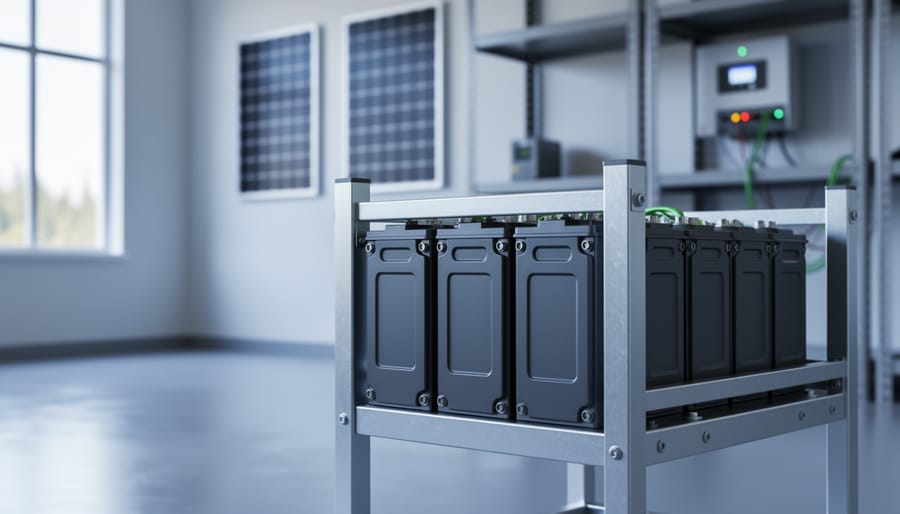
A second-life battery is an electric vehicle battery that has dropped below 70-80% of its original capacity and been retired from automotive use, but still holds enough charge to power homes, businesses, or community energy storage systems for years to come. These repurposed batteries offer BC residents and businesses a practical way to add energy storage at a lower entry point than new systems, while extending the useful life of EV batteries before they enter provincial recycling programs.
The concept is straightforward: when an EV battery can no longer deliver the range and performance drivers expect, it’s removed and tested. Batteries that pass safety and capacity thresholds are refurbished, paired with new battery management systems, and repackaged for stationary storage. In BC, this approach aligns naturally with the province’s Extended Producer Responsibility framework, which already requires battery producers to manage end-of-life collection and recycling. Second-life systems fill the gap between a battery’s first automotive chapter and its eventual material recovery, creating value while reducing waste.
For environmentally-conscious British Columbians, second-life batteries present a tangible way to support circular economy principles while exploring energy independence. The batteries work well for storing solar energy, smoothing out electricity use during peak hours, and providing backup power during outages. As more EVs reach the end of their warranty periods in the coming years, the supply of viable second-life batteries will grow, making this option increasingly accessible to households and small businesses looking for storage solutions that balance cost, sustainability, and performance.
What Makes a Battery Ready for Second Life
Electric vehicle batteries don’t hit a wall and suddenly stop working. They degrade gradually, and when they drop to around 70-80% of their original capacity, they’re no longer reliable enough for the demanding conditions of powering a car. An EV needs consistent, high-output power for acceleration, long-range driving, and quick charging. Once capacity dips below that threshold, range anxiety becomes real, and charging times stretch longer. For the vehicle owner, it’s time for a replacement.
But here’s the thing: a battery that can’t handle highway driving still holds plenty of usable energy for less demanding applications. Stationary energy storage doesn’t require the same burst power or rapid charging cycles. A home battery system storing solar energy or smoothing out grid demand operates in a far gentler environment. It charges slowly, discharges predictably, and doesn’t endure the temperature swings and vibration of a moving vehicle. That 70-80% remaining capacity translates to years of productive service in a second-life role.
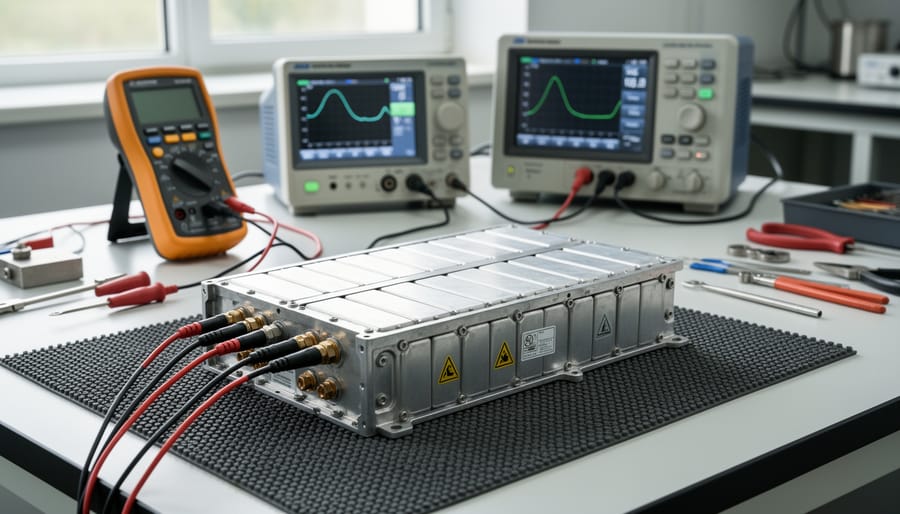
Before a retired battery earns a second life, it goes through rigorous testing. Technicians assess remaining capacity, check for cell-level damage, measure internal resistance, and verify thermal stability. Not every battery makes the cut. If cells are unevenly degraded, if safety systems have failed, or if physical damage compromises integrity, the battery heads straight to recycling. Only units that meet strict performance and safety standards get certified for repurposing. This process ensures second-life systems deliver reliable performance without cutting corners on safety, giving property owners confidence that their energy storage won’t create new problems while solving old ones.
How Second-Life Batteries Work in Energy Storage
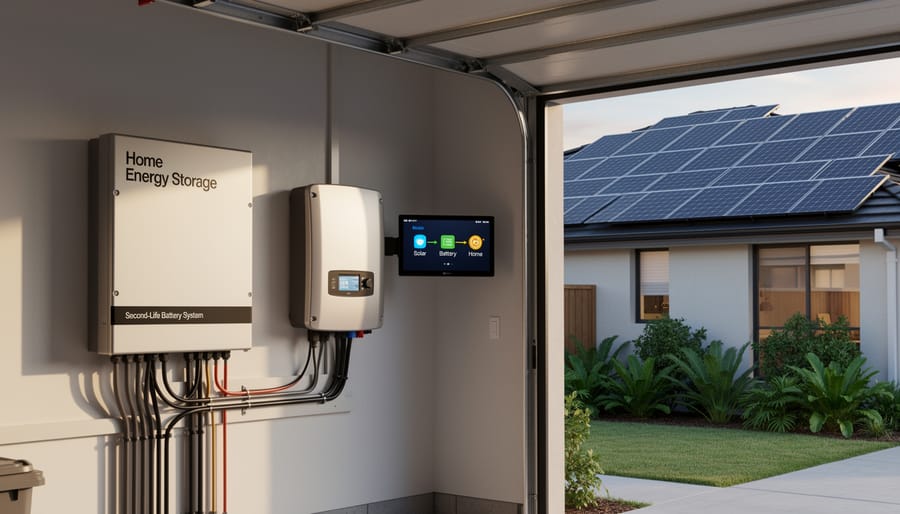
Transforming a retired EV battery into stationary energy storage involves several carefully managed steps. Once a battery pack no longer meets the performance requirements for vehicle use, it begins a new phase focused on reliability and safety in a less demanding application.
The integration process follows a clear sequence:
- Battery Assessment: Technicians test each pack to measure remaining capacity, internal resistance, and cell balance. Batteries typically need 70-80% of original capacity to qualify for stationary use.
- Refurbishment and Certification: Faulty cells are replaced or isolated, thermal management systems are checked, and the pack receives updated battery management software calibrated for stationary operation rather than vehicle performance.
- System Integration: The battery connects to a smarter inverter that manages charging from solar panels or the grid, coordinates discharge during peak demand periods, and ensures safe operation within the battery’s reduced performance envelope.
- Monitoring Setup: Remote monitoring systems track voltage, temperature, and charge cycles to detect degradation early and schedule maintenance before problems develop.
The practical difference between vehicle and stationary use matters here. An EV battery must deliver rapid acceleration and handle temperature extremes on the road. A home or commercial storage system operates in controlled conditions with gentler charge and discharge cycles. This shift extends usable life significantly because the battery works well within its remaining capacity.
System controllers handle the complexity. They decide when to store excess solar generation, when to discharge stored energy to offset grid use during expensive peak hours, and when to draw power from the grid during off-peak times. The battery simply responds to these commands, cycling through charge and discharge patterns that match building energy needs rather than driving demands.
Second-life systems integrate with existing electrical infrastructure. For solar installations, the battery stores daytime generation for evening use. For buildings without solar, batteries can still reduce costs by charging when electricity rates are low and discharging when rates climb.
Where Second-Life Batteries Fit in BC’s Battery Management Landscape
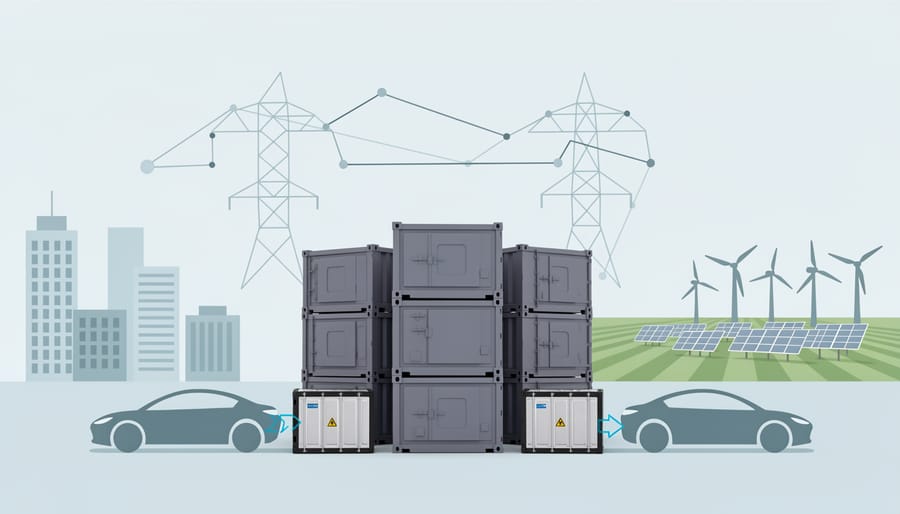
British Columbia stands alone in North America with its Extended Producer Responsibility legislation for electric vehicle batteries, creating a framework that places accountability on manufacturers throughout the battery lifecycle. Under this system, producers bear responsibility for collecting and managing EV batteries once they reach end-of-life, whether through recycling or approved second-life applications.
This regulatory approach fills a significant gap. Canada lacks a cohesive national framework for EV battery management, leaving much of the work to industry-led initiatives. BC’s EPR model establishes clear expectations: batteries don’t disappear when they leave vehicles. They enter a managed system where repurposing for energy storage becomes a legitimate pathway before final recycling.
Second-life applications complement rather than replace recycling programs. When a retired EV battery still holds sufficient capacity for stationary storage, EPR compliance can be met through certified repurposing channels. Once that battery degrades beyond useful storage capability, it enters the recycling stream where valuable materials get recovered and reused in new products.
Programs like Call2Recycle operate across multiple provinces, providing turnkey recycling services that handle regulatory complexities for battery producers. In BC, Call2Recycle offers approved programs for household and consumer batteries, while also serving as a registered Producer Responsibility Organization in Alberta and Ontario. These programs ensure that when second-life batteries finally retire, they have a clear path to material recovery.
The EPR framework also supports practical consumer choices by making recycling services accessible through curbside pickup and drop-off locations. For second-life battery users in BC, this means knowing your system has a managed end point built into provincial law, backed by established collection and processing infrastructure that treats battery stewardship as an ongoing responsibility rather than an afterthought.
Benefits of Choosing Second-Life Battery Storage
Choosing second-life battery storage offers compelling environmental and practical advantages that align well with BC’s sustainability goals. By giving retired EV batteries a second purpose, you extend their useful lifespan by years before they enter the recycling stream, delaying the energy-intensive processes required to recover lithium, cobalt, and other valuable materials. This extended use reduces overall demand for newly manufactured batteries, which require significant mining and processing resources.
From a practical standpoint, second-life systems provide accessible energy storage options for homeowners and businesses. While pricing varies based on capacity and installation requirements, repurposed batteries typically cost less than new storage systems, making solar-paired storage more attainable for BC residents who want to maximize their renewable energy investment. When solar panels generate more electricity than you need during the day, stored energy batteries fix that timing mismatch, you can draw from storage during evening peak hours instead of relying entirely on the grid.
Second-life batteries also support grid stability across BC’s energy network. During high-demand periods, distributed battery storage can help balance load, reducing strain on infrastructure. For commercial properties, this capability means better energy management and greater independence from grid fluctuations.
The environmental math is straightforward: each year a battery spends in second-life use postpones recycling and avoids manufacturing a replacement. Since BC’s EPR framework ensures proper recycling when storage capacity eventually degrades beyond usefulness, you’re participating in a closed-loop system that maximizes resource value at every stage. Second-life storage represents practical sustainability, extracting full value from existing resources while building resilient energy systems.
Considerations Before Installing a Second-Life System
Before committing to a second-life battery system, you’ll want to evaluate several practical factors that affect performance and long-term value.
Start with certification and warranties. Look for systems certified to Canadian Standards Association (CSA) safety standards and backed by clear warranty terms from both the refurbisher and installer. While warranty periods vary by provider, understanding what’s covered, and what triggers warranty exclusions, matters more than the length alone. Ask whether the warranty covers capacity degradation, system failures, or just manufacturing defects.
Set realistic performance expectations. Second-life batteries typically retain 70-80% of their original capacity, meaning they store less energy than new units. For home use, this often means choosing between accepting shorter backup duration or installing two batteries to meet your storage needs. Commercial applications with higher energy demands may require multiple repurposed units where a single new battery would suffice.
Compatibility with your existing solar installation deserves careful attention. Not all inverters and charge controllers work with repurposed batteries, particularly those from different manufacturers or vehicle platforms. Your installer should verify compatibility before ordering equipment. Systems designed for new batteries may require firmware updates or additional hardware to communicate properly with second-life units.
Choose installers with specific experience in second-life systems. These installations require different expertise than standard solar battery setups, technicians need to understand battery testing protocols, capacity assessment, and the integration challenges unique to repurposed cells. Ask potential installers about their training, previous second-life installations, and familiarity with BC’s EPR requirements for battery handling.
Finally, confirm the disposal pathway. Ensure your installer participates in programs like Call2Recycle for end-of-life management when the battery eventually needs recycling.
Common Questions About Second-Life Batteries
How long do second-life batteries typically last?
Second-life batteries can provide 5 to 10 years of service in stationary storage applications, depending on usage patterns and how much capacity they retained when retired from vehicles. Performance degrades gradually over time, but certified systems include monitoring to track capacity and health.
Are second-life batteries safe for home use?
Yes, when properly tested, refurbished, and certified by qualified installers. Batteries undergo rigorous safety assessments before repurposing, and certified systems include the same thermal management and monitoring safeguards as new battery installations.
What happens when a second-life battery can no longer store energy?
Once a battery reaches the end of its second-life usefulness, it enters the recycling stream where valuable materials like lithium, cobalt, and nickel are recovered. In BC, programs like Call2Recycle handle end-of-life battery recycling, ensuring materials are processed responsibly and reused in new products.
Can second-life batteries work with any solar system?
Compatibility depends on your existing solar inverter and system specifications. Most modern solar installations can integrate second-life storage, but you’ll need a qualified installer to assess voltage requirements, connection protocols, and whether your inverter supports battery coupling.
These questions reflect the most common concerns BC homeowners and businesses raise when evaluating second-life battery storage. Safety and longevity top the list, which makes sense given that these batteries have already served one demanding application.
The recycling question matters particularly in BC, where the province’s EPR framework creates clear pathways for batteries at every lifecycle stage. When a second-life battery finally exhausts its storage capacity, it doesn’t become electronic waste. Instead, it moves into established recycling programs that recover materials for manufacturing new batteries and other products. This closed-loop approach aligns with BC’s broader sustainability goals and ensures nothing gets landfilled.
Compatibility questions usually arise from homeowners who installed solar panels years ago and wonder whether adding second-life storage makes sense now. The answer often depends on inverter technology and system design rather than the batteries themselves. A certified installer familiar with both your existing setup and second-life integration can assess whether your system can accommodate repurposed batteries or if upgrades would be needed first.
Second-life batteries extend the value of EV battery investments while reducing environmental impact, a practical step toward BC’s clean energy future. By choosing certified second-life systems paired with solar installations, you support resource conservation and gain cost-effective energy storage. Work with installers experienced in BC’s EPR framework to ensure proper system integration and end-of-life planning. Ready to explore how second-life batteries fit your energy goals? Connect with qualified solar professionals familiar with battery repurposing standards and BC’s regulatory landscape to find the right solution for your home or business.