
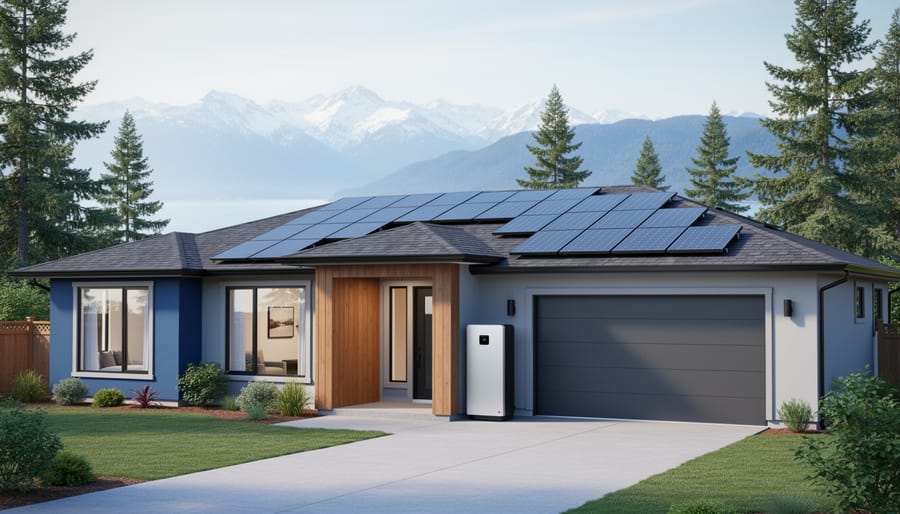
Determine if 7kW matches your household energy consumption by reviewing your BC Hydro bills from the past year—most BC homes using 900-1,100 kWh monthly find this system size ideal, while larger properties or those with electric heating may need 10kW or more. Calculate your potential savings using your actual electricity rates, factoring in BC’s two-tier pricing structure where costs jump significantly after 1,350 kWh in a two-month billing period, making solar particularly valuable for higher-consumption households.
Add battery backup specifically for BC’s increasing power outages—the province experienced record outages during recent winter storms, and a properly sized battery system (typically 10-15 kWh paired with 7kW solar) keeps essential appliances running during grid failures while maximizing your solar investment through time-of-use optimization. Unlike grid-tied systems that shut down during outages for safety reasons, battery backup maintains power to critical loads like refrigeration, heating controls, and communication devices.
Compare quotes from at least three BC-certified solar installers who understand local permitting requirements, snow load considerations for roof mounting, and can navigate CleanBC incentive applications that currently offer rebates reducing upfront costs by 15-25%. Request detailed proposals showing 25-year production estimates based on your specific location’s solar irradiance data—coastal regions like Vancouver receive different solar resources than interior cities like Kelowna, directly impacting system performance and payback periods.
Review real installations from BC homeowners who’ve installed similar systems, examining their actual production data across different seasons to set realistic expectations for winter months when solar generation drops to 20-30% of summer output.
Why 7kW is the Sweet Spot for Most BC Homes
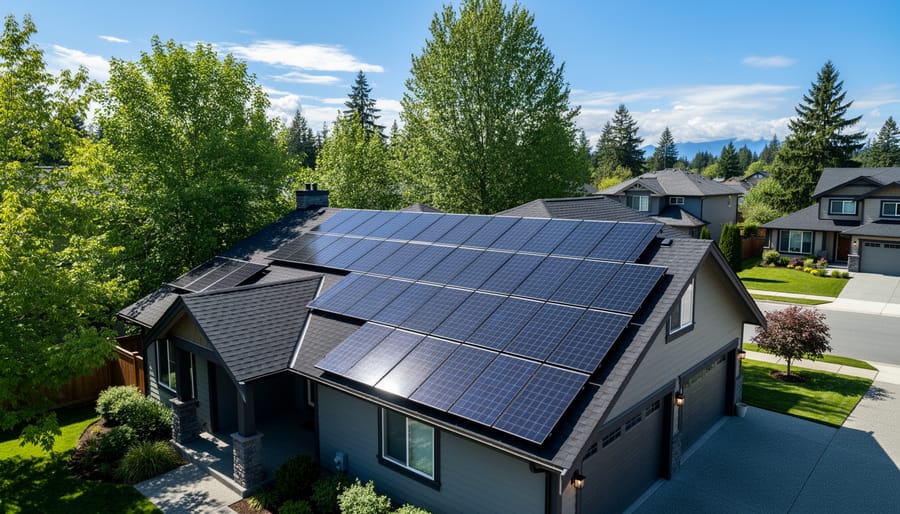
Understanding Your Home’s Energy Profile
Before investing in a 7kW solar system, it’s essential to understand your home’s energy consumption. The average BC household electricity usage sits around 11,000 kWh annually, though this varies significantly based on home size, heating systems, and lifestyle habits.
BC homes experience distinct seasonal energy patterns. Winter months typically see increased consumption due to shorter daylight hours and heating demands, while summer usage drops considerably. Homes using electric heating can experience winter bills two to three times higher than summer months. This seasonal variation makes battery backup particularly valuable for managing peak-demand periods.
A 7kW system generally produces 7,500-9,500 kWh annually in BC’s climate, making it well-suited for average-sized homes or those actively pursuing energy efficiency. However, your specific profile matters. Review your BC Hydro bills from the past year to identify your consumption trends. Look for patterns like evening peak usage or seasonal spikes. Understanding these details helps determine whether a 7kW system will meet your needs and how battery storage can optimize your energy independence throughout the year.
What a 7kW System Actually Produces in BC
A 7kW solar system in BC typically generates between 7,000 to 9,000 kWh annually, though this varies significantly by location and season. Coastal areas like Vancouver and Victoria see more consistent year-round production thanks to milder winters, while interior regions experience greater seasonal swings with excellent summer output but reduced winter generation.
During BC’s long summer days, your system might produce 35-45 kWh daily, easily covering most household needs and charging your battery backup. Winter months tell a different story, with daily production dropping to 10-15 kWh on cloudy days. This is where battery backup becomes valuable, storing excess summer energy and providing power during evening peak hours or brief outages.
Take the Johnson family in Kelowna as an example. Their 7kW system produced 8,400 kWh in its first year, offsetting 85% of their electricity costs. They note that strategic battery use during winter evenings maximizes their solar investment when production dips.
Understanding these realistic expectations helps you plan appropriately. Most BC homeowners find that even with seasonal variations, a properly sized system with battery backup significantly reduces reliance on grid power while providing energy security during outages.
Battery Backup: Your Insurance Against BC’s Power Challenges
When the Grid Goes Down: Real BC Stories
When winter storms swept through the Lower Mainland in January 2023, the Martinez family in Coquitlam barely noticed the widespread outages affecting their neighborhood. Their 7kW solar system with battery backup kept essential appliances running for three days, powering their refrigerator, heating system, and internet connectivity while neighbors sought warmth elsewhere.
Similarly, Dave Chen, a small business owner in Victoria, credits his battery backup system with saving thousands in potential revenue loss during a four-hour outage last fall. His home office remained operational throughout, allowing him to complete time-sensitive client work without interruption.
On Vancouver Island, the Thompsons installed their system after experiencing six power outages in one winter. “We have medical equipment that requires constant power,” explains Sarah Thompson. “The battery backup gives us peace of mind that we simply can’t put a price on.”
These stories highlight a common thread among BC solar adopters: battery backup isn’t just about energy independence, it’s about maintaining quality of life during BC’s increasingly unpredictable weather events. From coastal windstorms to interior ice storms, residents across the province are discovering that investing in resilient energy solutions pays dividends when the grid fails.
Battery Options That Work in BC’s Climate
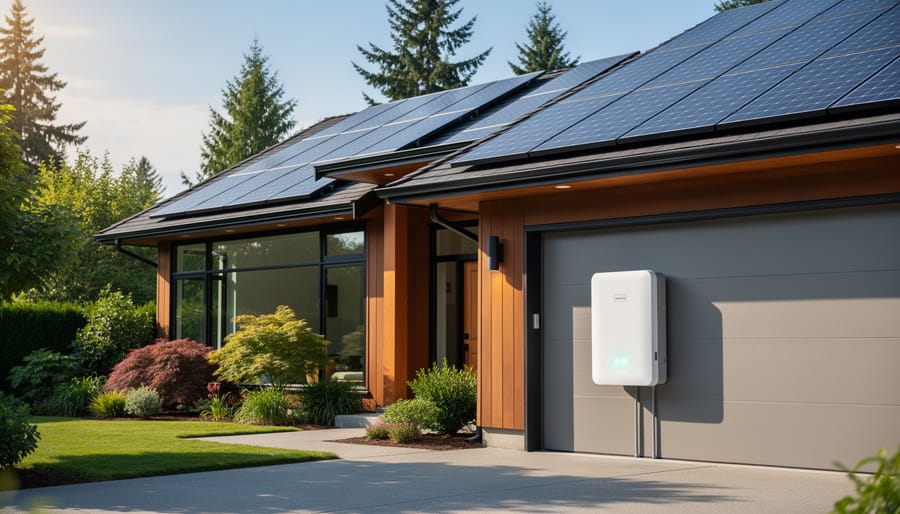
British Columbia’s diverse climate presents unique considerations when selecting battery backup for your solar system. From coastal rain to interior temperature swings, choosing the right technology ensures reliable performance year-round.
Lithium-ion batteries have emerged as the preferred choice for most BC installations. These systems handle our temperature fluctuations well, typically operating efficiently between -20°C and 45°C. They’re particularly suited to coastal areas like Vancouver and Victoria, where moderate temperatures prevail. A local Nanaimo homeowner recently reported their lithium-ion system maintained 95% efficiency throughout winter storms that knocked out grid power for 18 hours.
For colder interior regions like Prince George or Kamloops, lithium iron phosphate (LiFePO4) batteries offer enhanced cold-weather performance. These units maintain capacity better in sub-zero conditions and include built-in heating elements that activate when temperatures drop significantly.
Lead-acid batteries, while less expensive upfront, require more maintenance and have shorter lifespans in BC’s wet climate. However, they remain viable for budget-conscious installations with covered storage areas.
When evaluating battery storage options, consider warranty coverage specific to temperature ranges in your region. Most quality systems include thermal management features that protect against BC’s occasional heat waves and cold snaps.
The key is matching battery chemistry to your specific location. Coastal properties benefit from standard lithium-ion systems, while interior locations may justify the premium for cold-weather optimized options. Your installer should assess local temperature data when recommending the best fit for your 7kW system.
The True Cost of a 7kW System with Battery in BC
Upfront Investment and What’s Included
In British Columbia, a complete 7kW solar system with battery backup typically ranges from $22,000 to $32,000, depending on your specific requirements and property characteristics. This investment includes several essential components and services.
Your system package covers high-quality solar panels (typically 18-21 panels), a grid-tied inverter, a battery storage unit (usually 10-13.5 kWh capacity), mounting hardware, and all necessary electrical components. Professional installation by certified BC technicians is included, along with system design, engineering assessments, and electrical permits required by your municipality.
The investment also covers BC Hydro interconnection applications, structural assessments to ensure your roof can support the panels, and warranty registration. Most reputable installers provide monitoring systems so you can track your energy production from your smartphone.
Several BC incentives can reduce your upfront costs significantly. The CleanBC Home Rebate program offers up to $5,000 for battery storage, while the federal Greener Homes Grant provides up to $5,000 for solar installations. Some municipalities offer additional property tax exemptions for solar equipment.
For those concerned about upfront expenses, various financing options make solar accessible with monthly payments often lower than current electricity bills, allowing you to start saving from day one.
BC Rebates and Incentives You Can Access Today
BC homeowners investing in a 7kW solar system with battery backup can access several financial programs that significantly reduce upfront costs. The federal Canada Greener Homes Grant provides up to $5,000 for eligible solar installations, plus an additional $600 for pre- and post-installation energy assessments. Through this program, you can also access interest-free loans up to $40,000 to cover installation expenses.
At the provincial level, CleanBC initiatives support residential and commercial clean energy transitions. BC Hydro offers the CleanBC Go Electric Home Rebate Program, which includes incentives for battery storage systems that reduce grid demand during peak hours. These BC rebates and incentives can cover 20-30% of your total system cost when combined strategically.
Local municipalities also provide property tax exemptions for solar equipment, meaning your increased property value won’t result in higher taxes. For example, Victoria homeowner Sarah Chen saved $8,200 through combined federal and provincial programs on her 7kW system installation in 2023.
To maximize your savings, consult with certified solar installers who understand current program requirements and application timelines, as some incentives operate on a first-come, first-served basis with limited annual funding.
Your Real Savings Timeline
With BC Hydro’s residential rate averaging $0.12 per kWh, a 7kW solar system generating 7,000-8,500 kWh annually saves approximately $840-$1,020 yearly. After factoring in provincial tax exemptions and CleanBC incentives, your upfront investment of $18,000-$25,000 typically sees payback in 12-16 years. Adding battery backup extends this timeline by 2-4 years, but provides protection against grid outages and time-of-use rate increases.
Real Vancouver homeowner Sarah Chen recovered her investment in 14 years while reducing her carbon footprint by 4 tonnes annually. Your actual timeline depends on your household consumption, south-facing roof space, and energy usage patterns. Use our interactive savings calculator to input your specific BC Hydro bills and see personalized projections. Properties with higher daytime energy use see faster returns, while battery systems offer long-term value through energy independence and potential future rate protections.
How Battery Storage Maximizes Your Solar Investment
Understanding BC’s Net Metering Program
BC Hydro’s net metering program allows you to send excess solar energy back to the grid in exchange for credits on your electricity bill. When your 7kW system produces more power than you’re using during sunny days, the surplus flows to the grid and your meter runs backwards, banking credits. You can then use these credits during evenings or cloudy periods when your panels aren’t generating enough power.
Here’s where battery backup transforms this arrangement: instead of automatically sending excess energy to the grid, your battery stores it for your own use first. This means you’re maximizing self-consumption and reducing reliance on grid electricity during peak rate times. In BC, where we occasionally experience power outages due to storms or maintenance, batteries provide critical backup power that net metering alone cannot offer.
A Vancouver Island family recently shared how their battery system kept their home running during a winter storm while neighbors experienced outages. Their stored solar energy powered essentials for two days straight. With net metering plus battery storage, you’re not just offsetting costs but gaining energy independence and resilience against BC’s weather challenges.
Making Every Ray Count: Storage Strategies
BC’s dramatic seasonal shift from summer abundance to winter scarcity requires smart battery management. During long summer days, your 7kW system generates far more power than you’ll use immediately. Program your battery to prioritize charging during peak production hours (typically 10 AM to 3 PM), ensuring you capture surplus energy for evening use and cloudy periods.
Consider BC’s winter reality: December brings just 8 hours of weak daylight compared to June’s 16-hour bounty. Strategic battery use means reserving stored power for high-value applications like heating systems during grid outages rather than routine loads. A Vernon family reduced their winter grid dependence by 40% simply by scheduling heavy appliance use during midday sunshine and relying on battery backup only for essentials after dark.
Monitor your battery’s state of charge regularly through your system’s app. Most lithium batteries perform best when kept between 20-80% capacity, extending their lifespan significantly. This simple practice helped a Kelowna business maintain optimal battery health for seven years and counting, maximizing their solar investment.
Installation Realities in British Columbia
Navigating BC’s Installation Requirements
Installing a 7kW solar system with battery backup in BC requires navigating local permits and regulations, but the process is straightforward when you know what to expect. Before installation begins, you’ll need a building permit from your municipality and approval from your utility provider, typically BC Hydro or FortisBC. Most BC municipalities follow similar procedures, though requirements can vary between Vancouver, Victoria, Kelowna, and rural areas.
Your solar installer will usually handle the permit applications, including electrical drawings and engineering reports. Expect inspections at key stages: after mounting the panels, during electrical work, and before final connection to the grid. The system must meet Canadian Electrical Code standards and your utility’s interconnection requirements.
Plan for a timeline of 4-8 weeks from permit application to final approval, though some municipalities offer expedited processes for solar installations. One Surrey homeowner shared that working with a certified installer who understood local requirements cut their approval time in half.
Remember to check if your municipality offers fee reductions or fast-tracking for renewable energy projects. Many BC communities are streamlining solar permitting to encourage clean energy adoption. Your installer should provide a clear roadmap of all regulatory steps, keeping your project on schedule.
Finding Your Certified BC Installer
Choosing the right solar professional makes all the difference in your 7kW system’s performance and longevity. A qualified certified installer brings expertise in BC’s specific building codes, electrical requirements, and weather considerations that ensure your investment delivers maximum value.
Start by verifying credentials. Look for installers with Clean Energy BC membership and proper electrical licensing. Ask about their experience with battery backup systems specifically, as these require additional expertise beyond standard solar installations. Request references from BC homeowners with similar-sized systems and inquire about warranty coverage for both equipment and workmanship.
Key questions to ask potential installers include: How many 7kW systems with battery backup have you completed in our region? What monitoring systems do you provide? How do you handle permit applications and utility interconnection? Can you provide detailed production estimates based on our specific location and roof conditions?
Review their proposed equipment carefully. Quality installers will explain why they’ve selected particular panels, inverters, and battery models for your situation rather than simply offering the cheapest option.
Solar BC simplifies this process by connecting you with pre-vetted professionals who understand local conditions. Our network includes installers experienced with BC Hydro requirements, municipal permits, and regional climate factors. We’ve helped hundreds of BC residents find trustworthy professionals who deliver reliable systems backed by solid warranties. Request multiple quotes through our platform to compare approaches and pricing while ensuring you’re working with qualified experts.
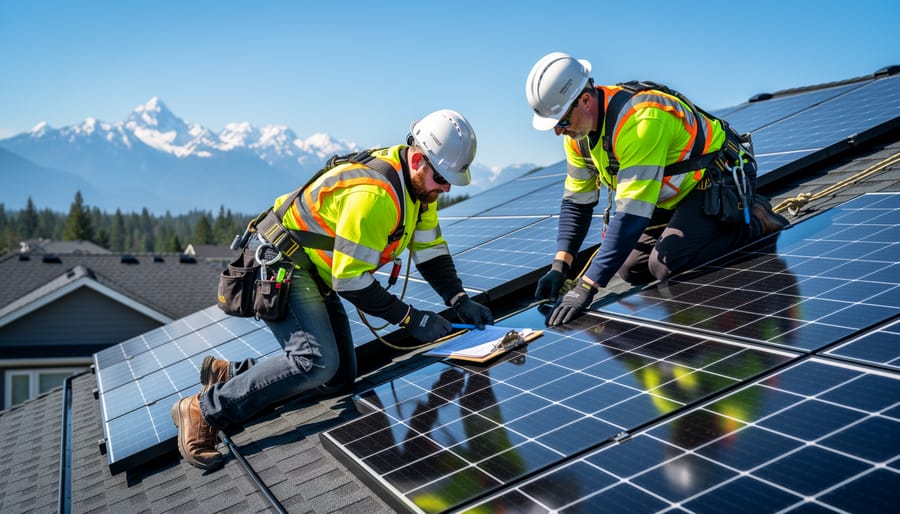
Is a 7kW System with Battery Right for Your Situation?
When to Consider Going Bigger or Smaller
A 7kW system works well for average BC households, but your specific situation might call for adjustments. Consider going bigger if you’re running energy-intensive equipment like heat pumps, electric vehicle chargers, or multiple refrigeration units. For example, a family in Kelowna with two EVs and a home office benefited from upgrading to a 10kW system to cover their 35kWh daily consumption comfortably.
Smaller systems around 5kW make sense if you’re in a condo, have lower energy needs, or want to offset just a portion of your bills while testing solar. A retired couple in Victoria reduced their system size after completing energy efficiency upgrades, saving on upfront costs while still meeting their reduced consumption.
Battery capacity also matters. Properties in rural areas experiencing frequent outages might need larger battery banks, while urban homes with reliable grid connections could opt for smaller backup solutions. The key is matching your system to your actual usage patterns, future plans like adding EVs, and how much backup power provides peace of mind during BC’s occasional winter storms. Many local installers offer consumption analysis to help determine your ideal configuration.
Property Requirements and Considerations
Your property’s characteristics play a significant role in determining whether a 7kW solar system will perform optimally. In BC, successful installations typically require a south-facing roof with minimal shading and adequate structural integrity to support the panels and battery equipment.
Roof condition is paramount. Most systems last 25-30 years, so if your roof needs replacement within the next decade, complete that work first. Asphalt shingle, metal, and flat membrane roofs all work well, though installation methods vary. Your roof should handle approximately 3-4 pounds per square foot of additional weight.
Shading presents BC’s most common challenge. Even partial shade from trees, chimneys, or neighboring buildings can significantly reduce output. A Kelowna homeowner recently increased their system efficiency by 40% simply by trimming overhanging branches. Consider seasonal shading patterns too, as winter sun angles differ dramatically from summer.
Property size matters less than you might think. A typical 7kW system requires roughly 400 square feet of unobstructed roof space. Battery backup units need a temperature-controlled indoor location, usually a garage or utility room with proper ventilation.
Before proceeding, request a site assessment from a certified installer. They’ll evaluate your specific conditions using shade analysis tools and structural assessments. Many BC installers offer free evaluations, helping you understand your property’s solar potential without commitment.
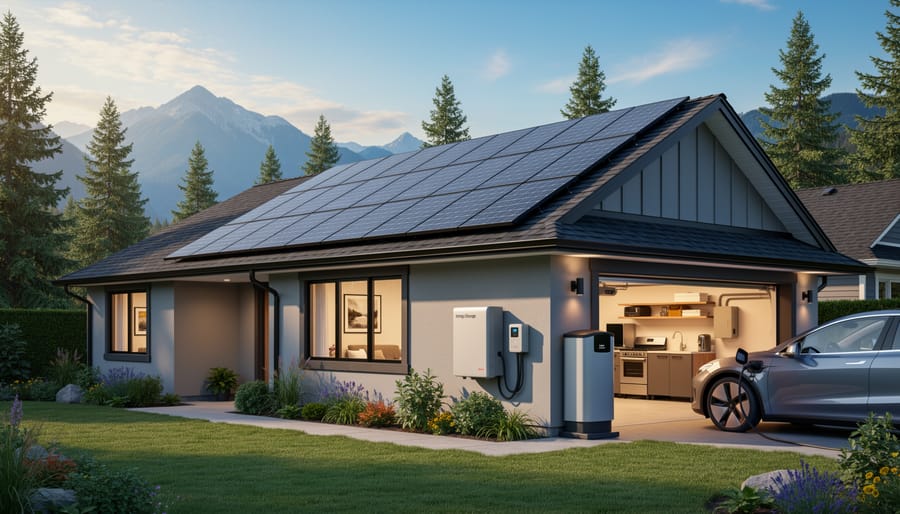
Investing in a 7kW solar system with battery backup represents a meaningful step toward both environmental stewardship and long-term financial savings. By reducing your reliance on grid electricity, you’ll decrease your carbon footprint while protecting yourself from rising energy costs. British Columbia’s generous incentive programs make this transition more accessible than ever, with many homeowners recovering their investment within 10-15 years while enjoying decades of clean energy production.
The battery backup component adds invaluable peace of mind, particularly as extreme weather events become more common across our province. Whether you’re in the Lower Mainland facing storm-related outages or in rural areas where grid reliability varies, having stored solar energy ensures your household remains powered during critical moments.
Ready to explore what solar can do for your property? Start by using Solar BC’s solar savings calculator to get personalized estimates based on your specific location, energy consumption, and roof characteristics. This free tool provides clarity on potential costs, savings, and payback periods tailored to your situation.
Next, connect with certified installers through Solar BC’s directory. These professionals understand British Columbia’s unique climate conditions, permitting requirements, and available incentives. They’ll conduct a thorough site assessment and design a system optimized for your needs.
Join the growing community of British Columbians already benefiting from solar energy. Your journey toward energy independence and environmental responsibility starts with one simple action today.