

Energy storage systems capture electricity when it’s abundant and release it when you need it most—transforming how BC homeowners power their lives while cutting costs and reducing grid dependence. Think of it as a large battery bank, typically paired with solar panels, that stores excess energy generated during sunny days for use during evening peaks, power outages, or cloudy winter stretches common across British Columbia.
The technology matters now more than ever for BC residents facing three converging realities: rising electricity rates, increasingly frequent extreme weather events disrupting grid reliability, and provincial incentives making renewable energy adoption financially accessible. Your storage system acts as an energy safety net, ensuring lights stay on during coastal storms or interior cold snaps while maximizing the value of every kilowatt-hour your solar panels produce.
Modern systems range from compact wall-mounted units storing 10 kilowatt-hours—enough to power essential appliances during outages—to whole-home solutions providing 20+ kilowatt-hours of backup capacity. The right size depends on your household’s energy consumption patterns, solar production capacity, and backup priorities. A family in Kelowna running air conditioning through summer heat waves needs different storage capacity than a Vancouver homeowner primarily concerned with winter heating backup.
Understanding energy storage fundamentals empowers you to make informed decisions about energy independence, evaluate whether the investment aligns with your sustainability goals, and join the growing community of British Columbians reshaping residential energy consumption across the province.
What Is a Residential Energy Storage System?
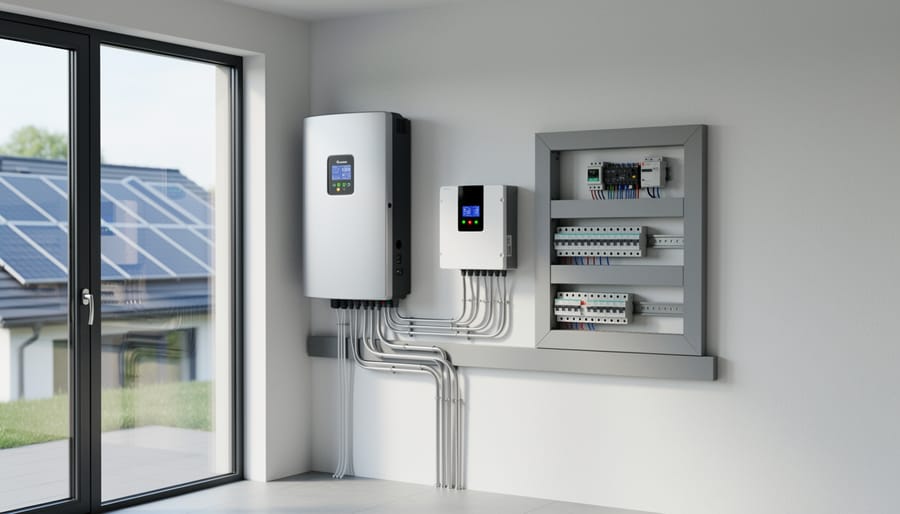
The Battery: Your Home’s Energy Reservoir
Think of the battery in an energy storage system like a large thermos that holds coffee – instead of keeping your drink hot, it stores electrical energy for when you need it. Just as you fill your thermos in the morning to enjoy coffee throughout the day, your battery charges when electricity is abundant (like during sunny afternoons with solar panels) and releases that power when it’s needed most.
Modern battery storage systems typically use lithium-ion technology, similar to what powers your phone or laptop, just much larger. These batteries are designed to cycle thousands of times, charging and discharging reliably for years. Some BC homeowners also choose lead-acid batteries, which work like advanced car batteries and offer a lower upfront cost.
The battery’s capacity, measured in kilowatt-hours (kWh), determines how much energy it can store. A typical home battery ranges from 10-15 kWh, enough to power essential appliances during an outage or shift your energy use away from expensive peak-rate periods. For BC residents, this means keeping your lights on during winter storms or maximizing your solar investment year-round.
How It Connects to Your Home
Installing an energy storage system in your BC home is more straightforward than many homeowners expect. The battery unit connects directly to your electrical panel, working seamlessly with your existing setup. If you already have solar panels, the system stores excess energy your panels generate during sunny days. When evening arrives or clouds roll in, your home automatically draws from this stored power instead of pulling from the grid.
For homes without solar, the system can still provide value by storing cheaper electricity during off-peak hours and using it during expensive peak times. During power outages, the system instantly switches over to provide backup power to essential circuits in your home, keeping your lights, refrigerator, and heating systems running.
Most installations take just one to two days and don’t require major renovations. A qualified electrician assesses your panel capacity, installs the battery unit (typically in a garage or utility room), and configures the system to work with your home’s energy patterns. The system includes monitoring software that lets you track energy production, storage levels, and usage from your smartphone. Many BC homeowners find that once installed, their energy storage system operates quietly in the background, automatically optimizing energy flow without requiring daily management.
Why BC Homeowners Are Making the Switch
Protection During BC’s Storm Season
British Columbia’s storm season brings heavy rainfall, strong winds, and occasional power outages that can leave homes and businesses in the dark for hours or even days. Energy storage systems provide reliable backup power during these weather events, automatically switching on when the grid goes down.
Consider a family in Coquitlam who installed a battery storage system after experiencing three multi-day outages during winter storms. When the next atmospheric river hit, their lights stayed on, their refrigerator kept running, and they could charge devices while neighbors waited for power restoration. The system seamlessly transitioned to battery power within milliseconds of detecting the outage.
Local businesses also benefit from this protection. A small bakery in Victoria uses their energy storage system to maintain operations during frequent windstorms that affect the area. They avoid losing inventory to spoilage and can continue serving customers, protecting both their revenue and community reputation.
Storage systems can be configured to power essential circuits like heating, refrigeration, and medical equipment, or your entire home depending on battery capacity. This flexibility means you prioritize what matters most during outages while maintaining comfort and safety throughout BC’s unpredictable weather patterns.
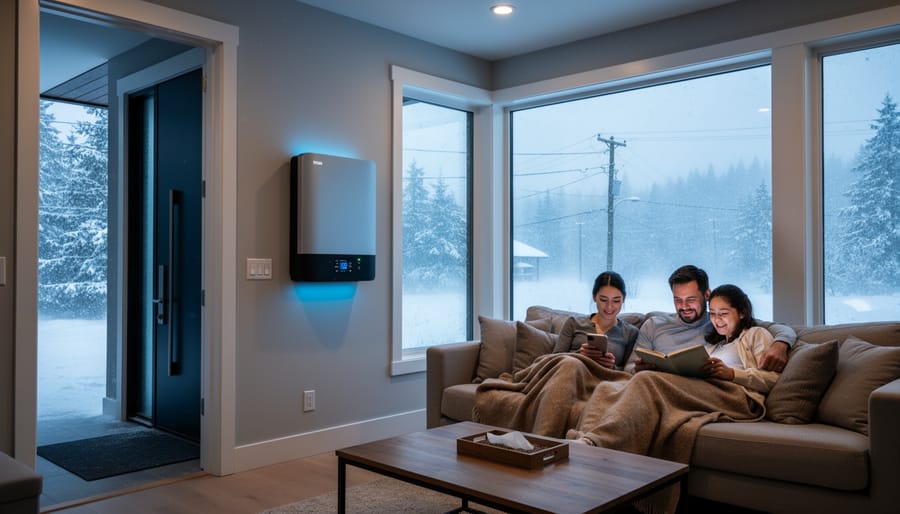
Making Solar Power Work Around the Clock
Solar panels generate electricity during daylight hours, but your home needs power after the sun sets too. This is where energy storage systems become essential. Without storage, excess solar energy produced during the day would simply flow back to the grid, and you’d draw grid power at night, missing out on maximizing your solar investment.
Energy storage systems capture surplus solar energy during peak production hours and store it for later use. When evening arrives and your panels stop generating power, your battery system automatically kicks in, supplying your home with the clean energy you produced earlier. This means you can run your appliances, lights, and heating systems on solar power even at midnight.
For BC homeowners, this is particularly valuable during our shorter winter days. While solar panels work during cloudy weather, production is reduced. A battery system ensures you make the most of every kilowatt-hour generated. Some households even choose off-grid solar systems with robust storage, achieving complete energy independence. The result? Lower electricity bills and continuous access to renewable energy, regardless of the time of day.
Taking Control of Your Energy Bills
Energy storage systems give you powerful control over electricity costs through strategic timing. In BC, many utilities offer time-of-use rates, where electricity costs more during peak hours (typically 4-9 PM) and less overnight. Your battery charges when rates are low and powers your home during expensive peak periods, automatically reducing your bills without changing your lifestyle.
Peak demand charges add another layer of savings. Some utilities charge based on your highest electricity usage within any 15-minute window during the month. A battery system smooths out these consumption spikes by providing stored power during high-demand moments, helping you avoid premium charges. For example, a Vancouver family reduced their monthly bills by 35% after installing a storage system, using stored energy during dinner preparation and evening activities when grid electricity costs the most. The system paid for itself in predictable monthly savings while giving them energy independence.
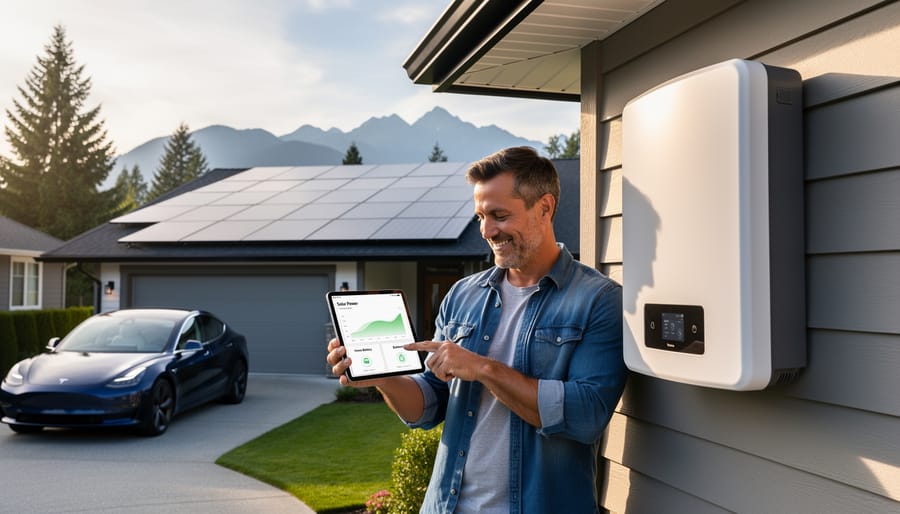
Real BC Homes, Real Results
When Sarah Chen installed her energy storage system in her Burnaby home in 2022, she had one primary goal: keeping her family comfortable during BC’s increasingly frequent power outages. “We lost power three times during winter storms that year,” Sarah explains. “With two young kids and my husband working from home, we needed a reliable backup solution.”
Sarah opted for a 13.5 kWh battery system paired with her existing solar panels. The initial challenge was navigating permit requirements and finding a certified installer familiar with her neighborhood’s electrical infrastructure. Once installed, the results exceeded her expectations. During a January 2023 outage that affected her area for 14 hours, her system kept essential appliances running smoothly. “We barely noticed the outage,” she says. “The fridge stayed on, we had heat, and the kids could even watch TV.”
Beyond emergency backup, Sarah discovered unexpected savings. By storing solar energy during the day and using it during evening peak hours, her household reduced electricity costs by approximately 40 percent. “The system paid for itself faster than we anticipated, especially with BC Hydro’s time-of-use rates.”
In Kelowna, retired couple Mark and Jennifer Patterson faced a different challenge. Their rural property experienced voltage fluctuations that damaged electronics and made grid reliability unpredictable. “We invested in an energy storage system primarily for power quality,” Mark notes.
Their 10 kWh system, installed without solar panels, charges during off-peak hours when electricity rates are lower and provides clean, stable power throughout the day. The couple particularly values the system’s monitoring capabilities. “We can see exactly how much energy we’re using and when,” Jennifer adds. “It’s helped us identify energy-wasting appliances and adjust our habits.”
The Pattersons report that their system has eliminated the voltage issues that previously plagued their home electronics. They’ve also reduced their monthly electricity bills by roughly 25 percent through strategic charging and usage patterns. “For us, it wasn’t just about going green,” Mark emphasizes. “It was about taking control of our energy reliability and costs in a practical way that made sense for our rural lifestyle.”
Sizing Your System: What BC Homes Actually Need
Understanding Your Energy Usage
Before investing in an energy storage system, take time to understand how much electricity your household actually uses. Start by reviewing your BC Hydro bills from the past year to identify your monthly consumption patterns. Winter months typically show higher usage due to heating needs, while summer may reveal different patterns depending on air conditioning use.
Most BC homes consume between 8,000 and 12,000 kWh annually, though typical BC home energy consumption varies significantly based on size, occupancy, and lifestyle. Look for your peak usage hours—often mornings and evenings when everyone’s home.
Next, identify which appliances and systems you’d consider essential during a power outage. Prioritize basics like your refrigerator, a few lights, phone chargers, and heating system components. This helps determine what size battery you’ll need without overbuying capacity.
Consider booking a home energy audit to get professional insights into your consumption patterns and efficiency opportunities. Many BC homeowners discover they can reduce their storage system size—and costs—by first addressing energy waste through simple improvements like LED lighting or better insulation.
Matching Storage to Your Goals
Your energy storage needs depend on what matters most to you. Let’s break down three common approaches BC homeowners take.
If you want complete peace of mind during outages, full home backup requires larger capacity systems, typically 20-30 kWh or multiple battery units. A family in Kelowna chose this route after experiencing extended wildfire-season outages, ensuring their entire household runs normally regardless of grid conditions.
For budget-conscious homeowners, essential circuit backup focuses on keeping critical loads running—think refrigerator, heating system, and a few outlets. Systems of 10-15 kWh handle these needs effectively. A Victoria couple powers their heat pump, internet, and kitchen appliances through winter storms with a 13.5 kWh system, spending about 40% less than full backup would cost.
Solar optimization prioritizes storing excess daytime generation for evening use, reducing grid dependence rather than emphasizing backup. Even smaller 7-10 kWh systems help BC homeowners avoid peak-rate charges and maximize their solar investment.
Start by listing your priorities: which appliances are non-negotiable? How frequent are outages in your area? What’s your budget range? Many BC installers offer free assessments where they review your electrical panel and usage patterns, providing customized recommendations that match both your goals and your home’s specific needs.
What Energy Storage Actually Costs in BC
Let’s be upfront about what you can expect to invest in a residential energy storage system in British Columbia.
A complete home battery system typically ranges from $15,000 to $25,000 installed. This includes the battery unit itself (usually $8,000-$15,000), inverter equipment, electrical upgrades, permits, and professional installation. Popular systems like the Tesla Powerwall 2 or LG CHEM RESU fall into this range, offering 10-15 kWh of usable storage for an average BC home.
The price varies based on several factors. Your existing electrical panel may need upgrades to safely accommodate the system. If you’re adding batteries to an existing solar installation, you might need additional equipment. Geographic location matters too—installation costs in remote communities naturally run higher than in Metro Vancouver or Victoria.
Here’s the encouraging news: several financial options help make energy storage more accessible. BC Hydro periodically offers incentive programs for residential battery storage. The Canada Greener Homes Grant provides up to $5,000 for eligible home energy upgrades, which can include battery systems when paired with solar. Many installers also offer financing plans that spread the cost over 5-10 years, with monthly payments often comparable to typical BC Hydro bills.
Consider the Henderson family in Kelowna, who invested $18,500 in their battery system in 2022. Between available rebates and their financing plan, their effective monthly cost was $175—money they view as building equity in their home while gaining energy independence.
The key is viewing this as a long-term investment. With typical battery warranties spanning 10 years and systems often lasting 15-20 years, you’re investing in decades of backup power, potential utility savings, and protection against rising electricity costs. Request quotes from at least three certified installers to understand what works for your specific situation and budget.
Getting Started: Your Path to Energy Independence
Ready to take the next step toward energy independence? The path to installing an energy storage system in your BC home is more straightforward than you might think.
Start by assessing your energy needs and goals. Review your BC Hydro bills from the past year to understand your consumption patterns. Consider why you want energy storage: Is it backup power during outages, maximizing solar investment, or reducing reliance on the grid during peak rate periods? This clarity will guide your decisions moving forward.
Next, connect with qualified professionals who understand BC’s unique requirements. Solar BC plays a vital role here, helping homeowners find certified installers with proven track records in our province. Look for companies with Clean Energy BC membership and installers certified by the Canadian Standards Association. During consultations, reputable installers will evaluate your property, discuss your energy goals, and recommend appropriately sized systems rather than pushing the largest option.
Understanding BC’s permitting landscape is essential. Most residential energy storage installations require electrical permits from your local municipality. If you’re adding solar panels simultaneously, building permits may apply. Your installer should handle this process, but expect timelines of two to six weeks depending on your location. Some BC municipalities have streamlined approval processes for battery storage, making installation faster than ever.
The installation itself typically takes one to three days for battery-only systems. Your installer will mount the battery unit, connect it to your electrical panel, and configure the system. If you’re in a rural area prone to outages, they’ll ensure your backup circuits power essential appliances like refrigerators, heating systems, and lights.
Financial planning matters too. Explore available financing options and confirm any applicable rebates or incentives with your installer. Many BC homeowners find that monthly financing payments align closely with their energy savings, making the transition financially manageable.
The journey to energy independence begins with a single conversation. Reach out to Solar BC to connect with experienced professionals who can turn your energy storage goals into reality.
Energy storage systems are transforming how BC homeowners interact with clean energy, offering practical solutions for backup power, cost savings, and reduced environmental impact. While these systems aren’t the perfect fit for every household, they’re becoming increasingly accessible as technology advances and installation costs decline. For homes with existing solar panels, battery storage maximizes your investment by capturing excess energy instead of sending it back to the grid. Even without solar, storage systems can help you take advantage of time-of-use rates and provide peace of mind during power outages.
The real success stories from BC communities show that early adopters are already experiencing tangible benefits, from lower electricity bills to greater energy independence during extreme weather events. As our province continues its transition toward cleaner energy sources, storage systems play a vital role in making that shift practical and reliable for individual households.
Ready to explore whether energy storage is right for your home? Calculate your potential savings using our interactive tools or connect with certified installers through Solar BC who understand local regulations, incentives, and the unique energy needs of British Columbia homes. Taking that first step toward understanding your options is easier than you might think.