
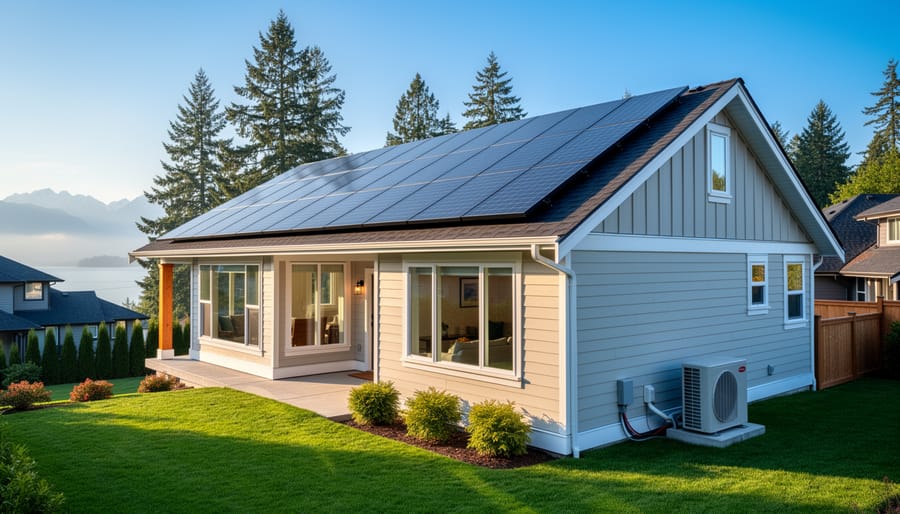
Yes, solar panels can absolutely run your air conditioning—and BC homeowners are already doing it successfully to slash their summer cooling costs. The key lies in properly sizing your solar system to match your AC’s energy demand, which typically ranges from 3,000 to 5,000 watts for residential units. A standard 5-kilowatt solar array generates enough electricity during peak sunshine hours to power a central air conditioner, with excess energy stored in batteries or fed back to the grid for nighttime use.
The economics make compelling sense for BC residents facing rising electricity rates. While your AC draws significant power, solar panels produce maximum output precisely when you need cooling most—during hot, sunny afternoons. Modern net metering programs allow you to bank daytime solar credits for evening AC operation, effectively eliminating the battery requirement for grid-connected homes.
Your solar system size depends on three factors: your AC unit’s wattage, daily runtime hours, and whether you’re offsetting total home energy or just cooling costs. Most BC homeowners install 6-8 kilowatt systems to comfortably handle AC alongside other household needs, with payback periods of 10-15 years becoming increasingly common as equipment costs decline and provincial incentives expand.
The Simple Truth: Solar Power and Air Conditioning
Yes, solar panels can absolutely run your air conditioning system! Here’s the straightforward answer: solar panels convert sunlight into electricity that powers your home, including energy-hungry appliances like air conditioners. The beauty of this arrangement is that solar generation peaks during the hottest, sunniest parts of the day—exactly when you need cooling most.
A typical central air conditioning unit in a British Columbia home uses between 3,000 to 5,000 watts of power when running. Window units or mini-splits require less, usually around 500 to 1,500 watts. Meanwhile, a standard residential solar panel system ranging from 5 to 10 kilowatts can generate more than enough electricity to cover these demands during daylight hours.
Let’s look at a practical example. The Chen family in Kelowna installed an 8-kilowatt solar system on their home. On a sunny July afternoon when their central AC was working hardest, their solar panels were generating 7 kilowatts of power—more than enough to run the air conditioner while still powering their refrigerator, lights, and other appliances. Any excess electricity they generated was sent back to the grid through BC Hydro’s net metering program, earning them credits for evening use.
The timing works in your favor too. British Columbia’s summer days provide long hours of intense sunlight, meaning your panels produce maximum power precisely when air conditioning demand is highest. During those peak afternoon hours when temperatures climb and your AC runs continuously, your solar system is operating at full capacity, creating a natural synergy between energy production and consumption that makes solar-powered cooling both practical and cost-effective.
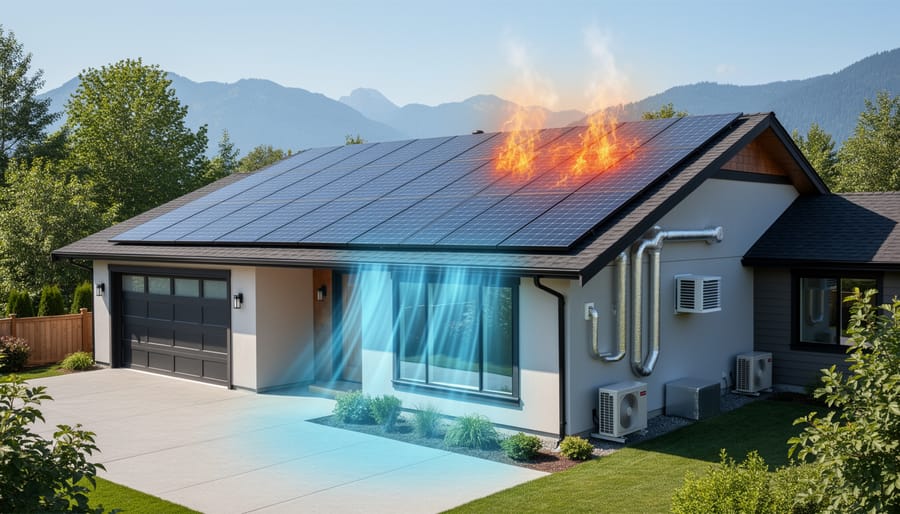
How Much Solar Do You Actually Need?
Understanding Your AC’s Power Appetite
Before diving into solar solutions, let’s look at what you’re actually powering. A typical central air conditioning system in BC homes consumes between 3,000 to 5,000 watts (3-5 kW) when running. For example, a standard 2-ton AC unit commonly installed in Vancouver-area homes draws about 3,500 watts per hour of operation.
Window units and mini-split systems, popular in Okanagan properties, are more modest. A window AC might use 500-1,500 watts, while an efficient ductless mini-split system typically consumes 600-2,000 watts depending on capacity. These differences matter significantly when sizing your solar array.
Consider a Victoria homeowner with a 12,000 BTU mini-split drawing 1,200 watts. Running it for 6 hours on a warm summer day consumes 7.2 kWh of electricity. During BC’s peak summer months when you need cooling most, this aligns perfectly with peak solar production hours, making solar an ideal match for AC power needs.
Understanding your specific unit’s consumption helps determine how many solar panels you’ll need. Check your AC’s nameplate rating or your BC Hydro bill during summer months to establish your baseline power requirements.
Sizing Your Solar System Right
Getting your solar system size right makes all the difference in keeping your AC running smoothly while meeting your other energy demands. The first step is understanding your total household energy needs, not just your air conditioning usage. A typical BC home uses 900-1,100 kWh monthly, with AC adding 300-600 kWh during warmer months.
To determine your ideal system size, you’ll need to calculate solar panel output based on your location. BC’s coastal regions receive about 3-4 peak sun hours daily in summer, while interior areas can reach 5-6 hours. This seasonal variation is crucial since your cooling needs peak exactly when solar production is highest.
Here’s a practical example: The Martinez family in Kelowna installed a 6kW system (about 15-18 panels) that generates approximately 7,200 kWh annually. This covers their entire household consumption, including running their 3-ton AC unit during summer afternoons. Even when considering how solar panels on cloudy days perform at reduced capacity, their system still meets 85-90% of their annual needs.
Most BC homeowners find that a 5-8kW system adequately powers their AC while handling other appliances. Start by reviewing your past year’s electricity bills to identify usage patterns, then consult with a local solar installer who understands BC’s unique climate conditions and can recommend the right sizing for your specific situation.
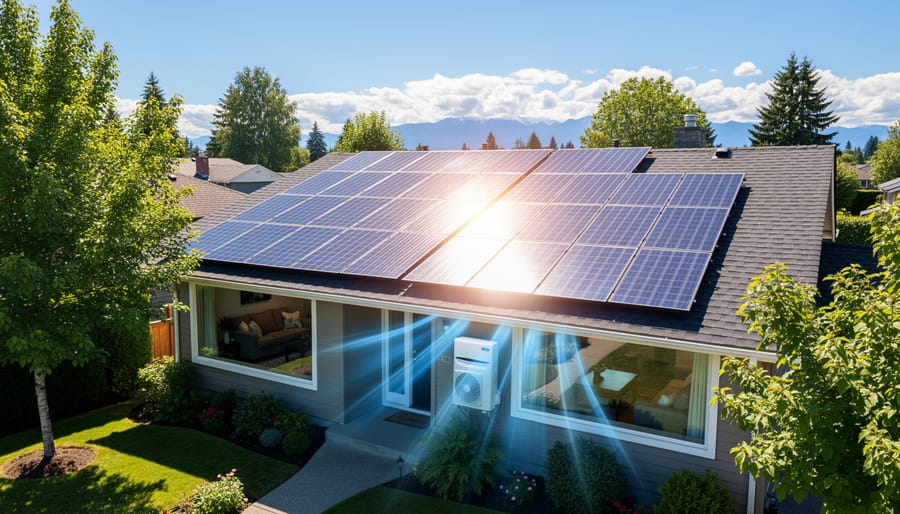
A Real Kelowna Home’s Success Story
The Richardson family in Kelowna installed a 7.2 kW solar panel system in spring 2022, and they’ve been running their central air conditioning all summer without worry. Their setup includes 18 panels paired with a battery storage system, generating enough power to cover their AC unit plus everyday appliances like their refrigerator, washer, and lighting.
During July 2023, their hottest month on record, the system produced an average of 35 kWh daily while their home consumed about 28 kWh, including running the AC for 6-8 hours on peak days. The excess energy either charged their batteries for evening use or fed back into the grid, earning them credits on their BC Hydro bill.
Sarah Richardson notes that their electricity costs dropped by 85% compared to the previous summer, and they haven’t experienced any power interruptions during cooling season. Their investment of $18,500 qualified for federal and provincial rebates, bringing the actual cost down to approximately $13,200, with an expected payback period of 9 years.
When the Sun Sets: Handling Nighttime Cooling Needs
Grid-Tied Systems: Your Evening Safety Net
Most BC homeowners worry about what happens when the sun sets and their AC is still running. The good news? With a grid-tied solar system, you’re never left in the dark—or the heat.
Grid-tied systems connect your solar panels directly to BC Hydro’s electrical grid, creating a two-way relationship that works beautifully for AC users. During sunny summer days when your panels generate more electricity than you need, that excess power flows back to the grid. Through BC Hydro’s net metering program, you earn credits for every kilowatt-hour you contribute. Think of it as banking sunshine for later use.
When evening arrives and your air conditioner kicks in, you simply draw power from the grid as usual. Those daytime credits you accumulated offset your evening consumption, often reducing your bill to nearly zero during peak solar months. For many BC households, summer energy bills drop by 70-90% thanks to this arrangement.
Take the Chen family in Kelowna, who installed a 6 kW system in 2022. Their panels produce abundant energy during July and August, allowing them to run their AC guilt-free throughout the evening. Their July electricity bill? Just $12 after net metering credits.
The beauty of this system is its simplicity. You don’t need expensive batteries, you maintain reliable power 24/7, and your daytime solar production effectively subsidizes your evening comfort. BC Hydro handles the balancing act, while you enjoy cool, sustainable comfort without worrying about when the sun shines.
Battery Storage: True Energy Independence
Adding a battery system to your solar setup transforms your AC from a daytime-only appliance into 24/7 comfort. Solar batteries store excess electricity generated during sunny days, letting you run your air conditioning through BC’s warm summer evenings without pulling power from the grid. This creates true energy independence, especially valuable during peak evening hours when grid electricity costs more.
For BC homeowners, battery storage options typically range from $8,000 to $15,000 for systems capable of running an AC unit overnight. A standard battery system can store 10-13 kWh, enough to power a central AC for several hours after sunset. This investment makes particular sense if you’re on a time-of-use rate plan or experience frequent power outages.
Consider the Johnsons in Kelowna, who added battery storage to their existing solar array. They now run their AC guilt-free through hot summer nights, with their battery recharging each day from their panels. While the upfront cost is significant, BC’s net metering program and potential federal incentives help offset expenses, with most systems paying for themselves within 10-12 years.
Making Your Solar-AC Setup Work Harder for You
Smart Timing Strategies
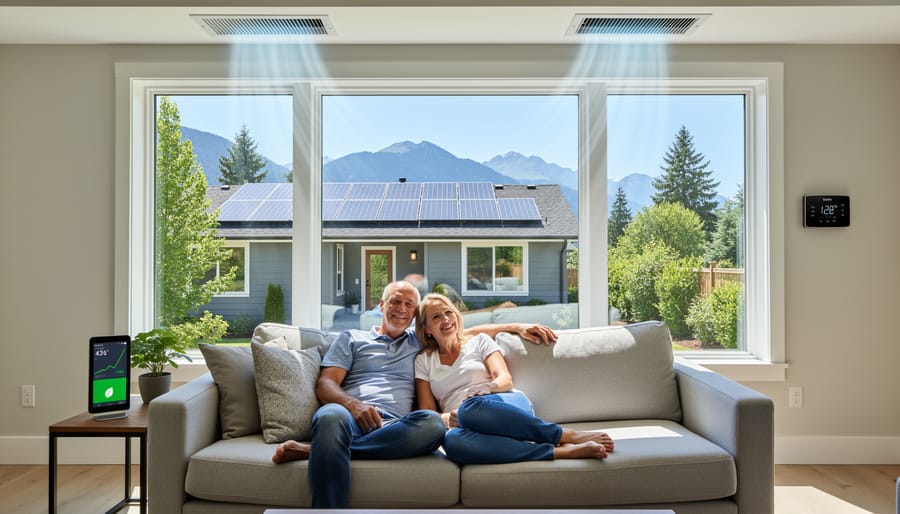
Maximizing your solar panel’s ability to run your AC comes down to smart timing. The key is aligning your cooling needs with peak solar production hours, typically between 10 AM and 4 PM in BC.
Consider pre-cooling your home during these sunny midday hours when your panels are generating the most power. Lower your thermostat by a few degrees before peak production, then allow the temperature to rise slightly in late afternoon. Your home acts like a thermal battery, staying comfortable while drawing minimal grid power during evening hours when solar production drops.
A programmable or smart thermostat makes this strategy effortless. Set it to cool more aggressively during solar peak times and ease off as the sun sets. Many BC homeowners report significant savings using this approach, particularly during our warm summer months.
The Johnsons in Kelowna programmed their AC to run primarily between 11 AM and 3 PM, matching their solar array’s output. They reduced their summer electricity bills by 60% compared to running AC on-demand throughout the day. This simple scheduling change meant their solar panels covered nearly all their cooling costs without requiring expensive battery storage.
Energy-Efficient AC Choices Matter
Choosing the right air conditioner makes a significant difference in how well your solar panels can meet your cooling needs. The key metric to understand is SEER (Seasonal Energy Efficiency Ratio), which measures how efficiently an AC unit converts electricity into cooling. Think of it like fuel economy for your car—higher numbers mean better efficiency.
Modern high-efficiency units rated SEER 16 or above work exceptionally well with solar systems. For example, a SEER 18 unit uses roughly 30% less energy than an older SEER 14 model, meaning your solar array can power it more easily. Many BC homeowners upgrading from older AC units find their existing solar systems suddenly have excess capacity for other uses.
In British Columbia, you have access to several incentives that make upgrading worthwhile. CleanBC offers rebates for energy-efficient heat pumps (which provide both heating and cooling), potentially saving you hundreds on your purchase. Some local utilities also provide additional rebates for high-efficiency cooling equipment.
When sizing your solar system, share your AC’s efficiency rating with your installer. A Surrey family recently reduced their required solar array size by 20% simply by choosing a SEER 19 mini-split system instead of their planned SEER 14 central unit, lowering their upfront solar investment considerably while maintaining comfortable temperatures year-round.
Beyond AC: Your Whole Home Benefits
A properly sized solar system does much more than keep your home cool. During BC’s sunny summer months, your solar panels can simultaneously power your air conditioning while handling other energy-intensive needs. Consider a family in Kelowna who installed an 8kW system—they now run their central AC, charge their electric vehicle overnight using stored solar energy, and keep their backyard pool pump running without worry about escalating electricity bills.
The key is right-sizing your installation from the start. When you work with a qualified solar installer, they’ll assess your complete household energy profile, not just your AC requirements. This means accounting for that EV charger in your garage, your pool equipment, and everyday essentials like refrigerators and washing machines. Many BC homeowners discover their solar systems generate surplus energy during peak summer days, which can be sold back to the grid through net metering programs, effectively turning your roof into a revenue source while powering your entire home comfortably.
What It Really Costs (And Saves) in British Columbia
Let’s talk real numbers. Installing a solar system capable of running your air conditioning in BC typically costs between $15,000 and $30,000, depending on your AC’s power requirements and your home’s energy needs. A standard 5-kilowatt system sufficient for most residential AC units runs approximately $12,000 to $18,000 after available rebates and incentives.
The good news? BC residents can access multiple financial supports that significantly reduce upfront costs. The federal Greener Homes Grant offers up to $5,000, while some municipal programs and utility rebates add further savings. Combined, these programs can cover 20-30% of your installation costs.
Your payback period depends on several factors, but most BC homeowners see returns within 10-15 years. Given that quality solar panels last 25-30 years, you’re looking at 15-20 years of essentially free electricity. With BC Hydro’s rates rising steadily, these savings become increasingly valuable over time.
Consider the Johnsons in Kelowna, who installed a 6-kilowatt system in 2021 for $16,000 after rebates. During the hot summer of 2023, their AC ran constantly, yet their electricity bills dropped by 75%. They’re projecting full cost recovery by 2033, followed by decades of savings that could exceed $40,000.
The real value extends beyond dollar figures. You’re protecting yourself against future rate increases, which have averaged 3-4% annually in BC. Every year you wait, electricity becomes more expensive, making solar increasingly attractive.
Battery storage adds $8,000-$15,000 to your investment but provides backup power during outages and maximizes self-consumption. Many BC residents find this worthwhile, especially in regions experiencing more frequent summer power disruptions.
Bottom line: while the upfront investment is substantial, solar systems pay for themselves and continue generating value for decades, all while reducing your environmental impact and increasing your energy independence.
Getting Started: Your Next Steps
Ready to harness the sun to power your air conditioning? Here’s how to take the first step toward solar-powered cooling in BC.
Start by assessing your current situation. Review your recent BC Hydro bills to understand your summer energy consumption, particularly on hot days when your AC runs most. Note your monthly kilowatt-hour usage and any patterns in your cooling costs. This information will help solar installers design a system tailored to your needs.
Next, evaluate your property’s solar potential. Does your roof receive good sun exposure, especially during peak summer hours? South-facing roofs with minimal shade work best, though east and west orientations can also be effective. Consider whether your roof is in good condition and can support solar panels for the next 25-plus years.
Connect with certified solar installers who understand BC’s climate and energy landscape. Request quotes from at least three providers, asking specifically about sizing systems to handle air conditioning loads. Experienced installers will conduct detailed assessments and propose solutions that match your cooling requirements and budget.
Explore available incentives and financing options. While BC’s programs change periodically, federal incentives and utility rebates may significantly reduce your upfront costs. Many installers offer financing plans that allow you to start saving immediately.
Use online solar calculators to estimate your potential savings and system size requirements. These interactive tools help you visualize the financial benefits and understand how quickly your investment pays for itself through reduced electricity bills and increased home value.
The answer is clear: yes, solar panels can absolutely power your air conditioning in BC homes. With proper system sizing and the right setup, you can enjoy cool comfort throughout those warm summer months while dramatically reducing your electricity bills and carbon footprint. British Columbia homeowners are already experiencing these benefits firsthand, proving that solar-powered cooling is both practical and rewarding.
The environmental impact alone makes solar AC worth considering. By running your air conditioner on clean, renewable energy, you’re directly reducing greenhouse gas emissions while supporting BC’s climate action goals. Financially, the long-term savings are substantial, especially with provincial incentives helping offset installation costs.
Ready to explore if solar is right for your home? Use Solar BC’s online calculator to estimate your potential savings and system requirements. Better yet, connect with experienced local installers who understand BC’s unique climate and can design a system perfectly suited to your cooling needs. Take the first step toward energy independence today and join the growing community of BC residents powering their homes with sunshine.